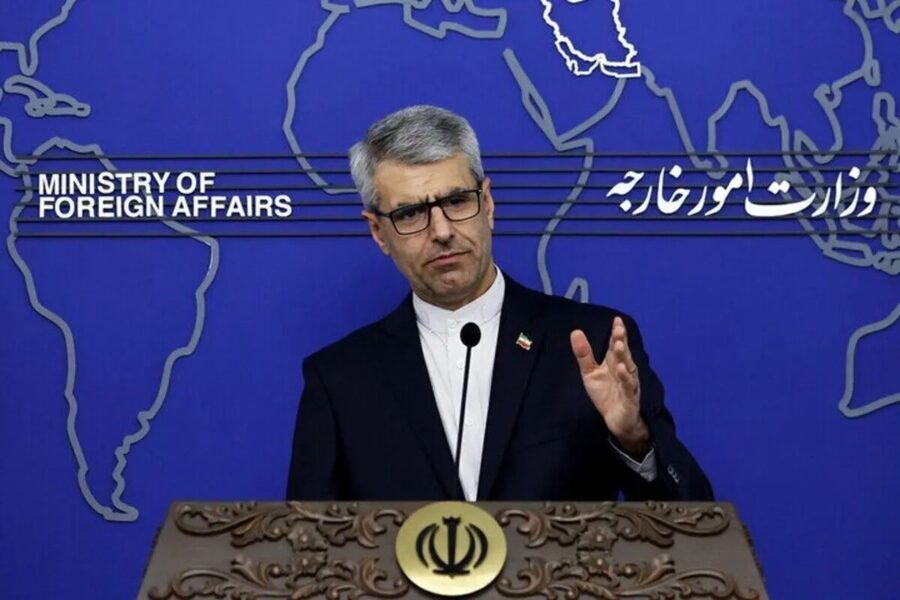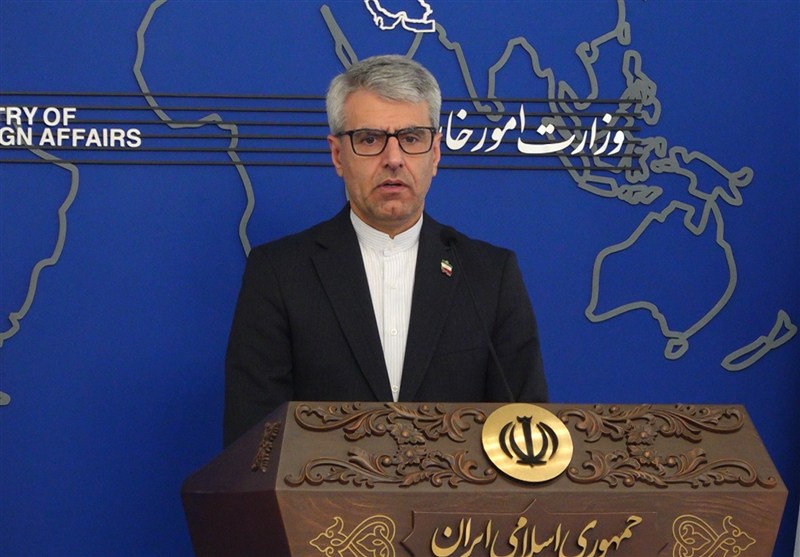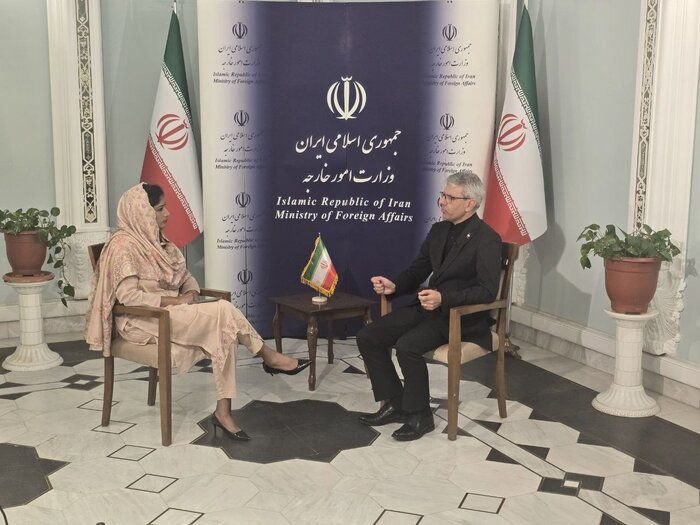
According to Iraf, Esmaeil Baghaei, the spokesperson of the Islamic Republic of Iran’s Ministry of Foreign Affairs, coinciding with the visit of Seyed Abbas Araghchi to India to attend the BRICS foreign ministers’ meeting, gave an interview to the “India Today” network explaining Iran’s positions on regional issues, nuclear negotiations, and bilateral relations with various countries.
Baghaei referred to Iran’s negotiations with the United States over its nuclear program, saying: “We have been active in diplomacy with the United States on the nuclear issue for more than a decade. Negotiations began in 2012 and led to the JCPOA in 2015. After the U.S. unilateral withdrawal from the JCPOA in 2018, Iran managed its reduction of commitments with patience and responsibility, but the other parties failed to compensate for this action.”
Emphasizing Iran’s right to peaceful nuclear energy use, he added: “Our main disagreement with the United States is not about the principles of international law, but about accepting the principle that Iran, as a member of the NPT, must be able to exercise its rights for peaceful purposes. Iran has never sought nuclear weapons, and repeated reports by the International Atomic Energy Agency have confirmed this.”
Negotiation Red Lines and Intermediate Points
The Iranian Foreign Ministry spokesperson said regarding the details of negotiations: “We have not yet entered into the details of the nuclear program, because in less than a year, negotiations have taken place twice without reaching a result. Iran has shown maximum restraint in the face of U.S. non-commitment, and our main focus now is ending conflict and ensuring the security of the Strait of Hormuz.”
He added: “Under international law, blockade is considered an act of war, and Iran has been forced to take legal measures to protect national security and prevent exploitation by adversaries. Iran and Oman are the guarantors of safe passage of ships in the Strait of Hormuz, and no other country bears responsibility for this strategic route.”
Military Power and Readiness for Any Scenario
Baghaei said regarding U.S. and Israeli threats: “Iran’s armed forces are prepared, and the country has significant military surprise capability. Anyone who dares set foot on Iranian soil will deeply regret it. Iran is determined to defend its territory, its people, and international principles.”
He further referred to Iran’s naval capabilities and strategic infrastructure, adding: “Iran does not use any action that violates international law, and our goal is not to create leverage against the world, but to respond to the misuse of waterways and territories of neighboring countries by the United States and Israel.”
Iran’s Relations with India and Other Countries
The Foreign Ministry spokesperson highlighted the importance of Tehran–New Delhi relations, saying: “Relations between Iran and India have always been based on mutual respect and shared interests and have never been against India. India’s decisions regarding its relations with other countries are its own matter, and Iran respects this principle.”
He also referred to the Iranian foreign minister’s participation in the BRICS foreign ministers’ meeting, saying: “Iran and India are both members of BRICS and the Shanghai Cooperation Organization, and there is good cooperation and coordination between the two countries. This meeting provides an important opportunity for bilateral and multilateral discussions.”