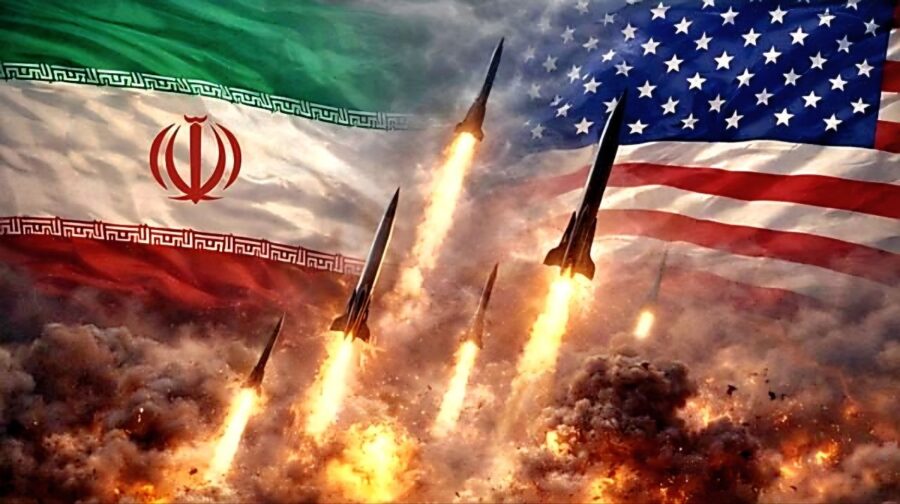
Tehran-IRAF- 14 days have passed since the start of the war launched against Iran by U.S. President Donald Trump and Israeli Prime Minister Benjamin Netanyahu. While Iran’s enemies believed that the assassination of the Leader of the Islamic Revolution could cause psychological and political collapse in Iran, subsequent developments disrupted that calculation. The selection of Ayatollah Mojtaba Khamenei as the third Leader of the Islamic Republic of Iran demonstrated that the country’s political mechanisms are capable of regenerating and maintaining continuity even under crisis conditions.
In this regard, the reporter from IRAF NEWS BASE, conducted an interview with Professor Jeffrey Karliner, a Boston University professor and former advisor to U.S. presidents.
Jeffrey Karliner served during the Carter and Reagan administrations as a senior economist and staff director at the Council of Economic Advisers. He also worked as the executive director of the National Bureau of Economic Research in Cambridge, Massachusetts, and as deputy director of the Peterson Institute for International Economics in Washington, D.C.
The United States and Israel have once again attacked Iran. Trump has claimed that the goal of the war against Iran is to prevent Iran from obtaining nuclear weapons and to eliminate the threat Iran poses to U.S. interests, while U.S. security institutions, including the National Security Council, reject this claim. What is your assessment?
Trump wants Iran to completely abandon its uranium enrichment program. He also wants Iran’s influence in the Middle East to be weakened and the current Iranian government—led by Ayatollah Khamenei and defended by the Islamic Revolutionary Guard Corps—to be eliminated. He would like a government to come to power in Iran that is more friendly toward the United States and not hostile toward Israel. It is unclear exactly what he was thinking when he decided to attack Iran or whether these goals will actually be achieved.
In your view, what are the objectives of Trump and Netanyahu in attacking Iran, and is this related to the “Greater Israel” project?
Trump and Netanyahu want to eliminate Iran’s ability to defend itself against air attacks as well as its ability to launch missiles and carry out other attacks against Israel. They also want to destroy Iran’s nuclear program and, more broadly, its military capabilities, while reducing Iran’s power in the region. So far they have not attempted to destroy Iran’s energy infrastructure or other major infrastructure, although that situation could change.
Trump believed that by assassinating Iran’s leader the governing structure in Iran would collapse; however, 14 days into the war Iran is still standing and fighting its enemies. In addition, Iran has selected a new leader. Why has order been maintained in Iran despite the assassination of its leader?
Iran’s top leadership had already prepared for such an attack and had designated individuals at lower levels to replace senior leaders if they were killed. The intelligence organizations CIA and Mossad were aware of this and must have informed Trump that even if all senior leaders were killed, the government would not collapse.
American experts on Iran also say that although there are people inside Iran who oppose the system, they do not have strong organization, powerful leadership, access to weapons, or the ability to overthrow the government. Experts within the U.S. government must have told Trump this. He certainly would have liked the system to collapse when he launched the attack, but he likely knew that it would not fall easily.
Iran has attacked U.S. bases in the Middle East and regional order appears to be unraveling. Will countries in the region attack Iran?
It is unlikely that Middle Eastern countries will attack Iran. They do not want the region to become even more unstable, which could harm their interests.
This war has affected the movement of oil tankers and ships in the Strait of Hormuz, and the real result has been rising oil prices. What impact does this have on the global economy?
If the war continues and the Strait of Hormuz remains closed to oil tankers, energy prices will increase significantly and the global economy will move toward recession. Higher energy prices would benefit Russia, since its economy depends heavily on energy exports, but it would harm China because China is highly dependent on energy imports from the Persian Gulf.
Although the United States is a net energy exporter, higher oil and gas prices would also harm the U.S. economy overall. Rising prices would also be politically very unpopular. If the war becomes highly unpopular in the United States due to rising energy prices, it is unlikely that Trump would continue it for a long time.
What is your view of Iran’s new leader and the prospects for the continuation of the war?
Iran’s new leader is the son of the previous leader. He worked closely with his father and will likely pursue similar goals for Iran. However, his objectives may differ somewhat, or he may adopt different policies because of the heavy losses Iran has suffered in the current war. Iranians themselves probably have a better understanding of the new leader’s views than an outsider like me.
Read More:
Leadership of Ayatollah Seyyed Mojtaba Khamenei; One Thousand Sunni Scholars Declare Allegiance
Trump in the Quagmire of War with Iran; No Exit Strategy in Sight
Attack on Iran’s Historical Sites is an Attack on the Shared Heritage of Humanity