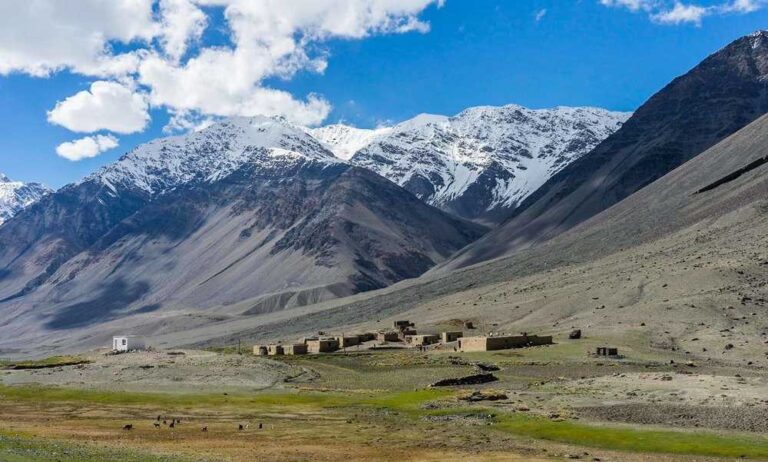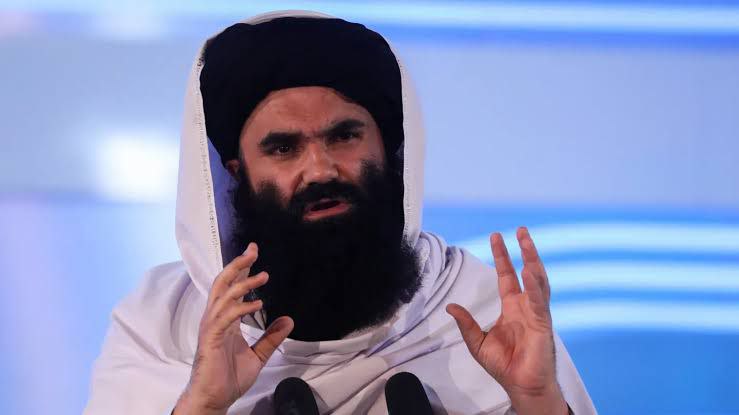
According to Iraf News Agency, Sirajuddin Haqqani, the Acting Minister of Interior for the Taliban, at a gathering in Zabul province, referred to the historical role of Mullah Mohammad Omar. He described him as a figure who, according to the Taliban, was able to chart a new course for Afghanistan during the era of civil wars.
Haqqani claimed that the “steadfastness and will” of the former Taliban leader paved the way for ending internal conflicts and establishing a framework that today forms the basis of the current government in Afghanistan.
He further emphasized that the unity the Taliban speak out, following the withdrawal of foreign forces is rooted in that very period, and in his view, Afghanistan has now become “the owner of a unified Islamic system.”
However, this narrative has faced critical reactions within Afghanistan.
Critics argue that the Taliban’s revision of history overlooks important social and political realities of the past two decades and erases the bitter experiences of many citizens.
They believe that, in a context where extensive restrictions have been imposed on civil liberties, political activities, and women’s rights, the talk of “national unity” is more of a political claim than a reflection of Afghanistan’s actual societal situation.
In this context, analysts also remind that the Taliban’s power structure is heavily ethnocentric; according to published data, around 90% of the senior and mid-level leadership of the Taliban is made up of Pashtuns—an issue that Pakistani officials have recently pointed to, considering it one of the factors contributing to regional tensions.
Analysts argue that, the Taliban’s emphasis on Mullah Omar’s role in the current structure is part of the group’s effort to solidify its official narrative of history and legitimize a system that faces widespread internal and international criticism.
Who Was Mullah Omar?
Mullah Mohammad Omar, the leader and founder of the Taliban, was born around 1959 in Kandahar province, Afghanistan.
He was from the Pashtun ethnic group and studied in religious schools. In the 1980s, he participated in the war against Soviet forces.
In 1994, Mullah Omar, along with a group of students and local commanders, founded the Taliban movement, and in 1996, after capturing Kabul, he adopted the title of “Amir al-Mu’minin” (Commander of the Faithful) and took leadership of the “Islamic Emirate of Afghanistan.”
Due to his highly secretive nature, he rarely appeared in public, and there are few images of him.
After the fall of the Taliban regime in 2001, his whereabouts remained unclear for years, until it was later reported that he passed away on April 23, 2013, in Zabul province due to tuberculosis.
His death was not officially announced until two years later.
Mullah Omar had at least five children, and his son, Mullah Yaqub, is now one of the senior figures in the Taliban.