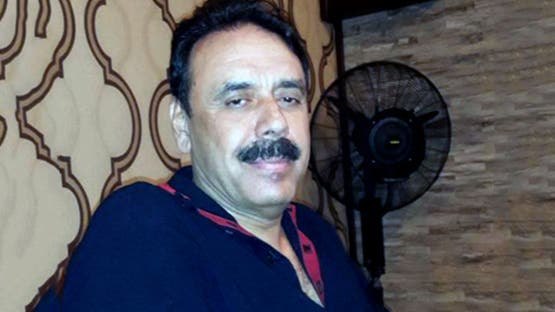
According to Iraf News Agency, On Wednesday January 7, Jan Achakzai, in a sharp note on the social media platform X described the claim by Zalmay Khalilzad, former U.S. Special Representative for Afghanistan, that the Doha Agreement was solely a matter between the U.S. and the Taliban as “misleading” and “disregardful of regional consequences.”
He emphasized that the agreement was initially designed to create regional stability, and the Taliban’s commitments—from preventing the use of Afghanistan’s soil to attack other countries to forming an inclusive government—were responsibilities toward the entire region.
According to Achakzai, Pakistan, Iran, Tajikistan, and other neighboring countries of Afghanistan were direct stakeholders in the peace promised by the Doha Agreement. However, Islamabad is now facing a wave of cross-border attacks and the destabilizing activities of the Tehrik-e-Taliban Pakistan (TTP), a group which, he claims, uses Afghanistan’s soil as a “safe haven.”
Referring to the increase in terrorist attacks in Pakistan following the signing of the Doha Agreement, Achakzai said, “If the Taliban cannot or will not honor their commitments, Pakistan has the right to question the legitimacy of this agreement and its implementers.”
He added that Khalilzad’s narrow framework ignores the violations of women’s rights, ethnic exclusion, and the Taliban’s failure to form an inclusive government—issues which, according to him, are “not just internal Afghan matters but direct security threats to Pakistan.”
Achakzai urges the U.S. to “revoke” the Doha Agreement, as “the Taliban have already violated it.”
Khalilzad: The Doha Agreement Does Not Involve Pakistan
This comes as Zalmay Khalilzad, the former U.S. Special Representative for Afghanistan, emphasized in a recent statement that the Doha Agreement between Washington and the Taliban “has nothing to do with Afghanistan’s relations with Pakistan.”
He stated that a separate security agreement is necessary to address the security issues between Kabul and Islamabad.
Khalilzad suggested that such an agreement could bind both countries to prevent groups like ISIS and the Tehrik-e-Taliban Pakistan (TTP) from using their territories against each other.
He also proposed that a third-party entity monitor the implementation of the potential agreement.
According to Khalilzad, the Taliban has shown “willingness” to engage in talks on this matter, and now “the ball is in Pakistan’s hands.”
Pakistan Army: Afghanistan is the Epicenter of Terrorism
These remarks from Khalilzad came at a time when Major General Ahmed Sharif Chaudhry, the spokesperson for Pakistan’s army, labeled Afghanistan as the “main hub for terrorist activities” during a recent press briefing. He claimed that Afghan citizens played a role in last year’s major attacks in Pakistan.
Chaudhry also presented figures from the anti-terrorism operations of 2025, stating:
- More than 75,000 intelligence-based operations carried out
- 5,397 recorded terrorist attacks
- 71% of the attacks took place in Khyber Pakhtunkhwa
- 2,597 terrorists killed
- 1,235 security forces and civilians killed
- 27 suicide attacks, two of which were carried out by women
Chaudhry referred to the Taliban as the “Foundation organization of the TTP” and claimed that the $7.2 billion worth of military equipment left behind by the U.S. is now in the hands of the Taliban and other terrorist groups.
He also called for the Taliban to make a tangible commitment to the Doha Agreement.
Taliban’s Response: Pakistan’s Remarks Are Provocative
In response to these claims, Zabihollah Mujahid, the Taliban’s spokesperson, condemned the statements made by the Pakistani military, calling them “irresponsible and provocative.”
He emphasized that Afghanistan is a sovereign country with a strong security structure, and no threats are emanating from its soil towards other nations.
It is worth noting that the Doha Agreement, signed in 2020 between the U.S. and the Taliban, included provisions that the Taliban would not allow any groups or individuals to use Afghanistan’s soil to attack other countries. The agreement also emphasized the severance of the Taliban’s ties with terrorist organizations, preventing their training, recruitment, and operational activities.
The security section of the Doha Agreement was specifically designed to prevent Afghanistan from becoming a sanctuary for armed groups and to ensure regional stability. Under this framework, the Taliban was tasked with stopping groups like the TTP and ensuring that Afghan territory would not be used to threaten neighboring countries.