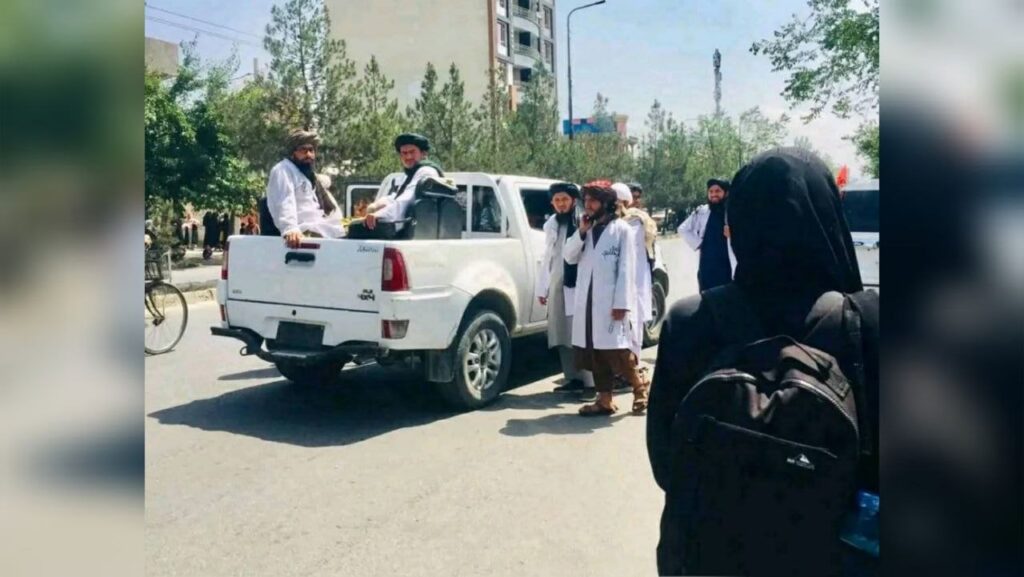
A new United Nations report says the Taliban further tightened restrictions on women, minorities and critics across Afghanistan during the spring, documenting broader enforcement of morality and dress regulations, arbitrary detentions, and growing limits on daily life.
According to IRAF, the report, released Monday by the United Nations Assistance Mission in Afghanistan (UNAMA) and covering the period from April 1 to June 30, says social space for women, minorities and those opposed to the Taliban continued to shrink.
UNAMA said the Taliban’s enforcement of its Promotion of Virtue and Prevention of Vice law, along with dress regulations, extended across schools, markets, hospitals and other public spaces, effectively limiting women’s freedom of movement and access to public life.
Among the documented cases, the report said a woman was stopped while shopping for food, while the shopkeeper who sold goods to her was slapped and summoned for questioning. In another case, a teacher was removed from her classroom over clothing deemed inconsistent with Taliban requirements.
The report also said at least 30 women were detained in the western province of Herat during the first week of June over what Taliban authorities described as “improper hijab.”
Following those arrests, the Taliban issued a 10-page document outlining their dress requirements for women, including covering the entire body except the eyes, wearing loose and thick clothing, avoiding perfume or adornment, and refraining from clothing resembling that of men or non-Muslims. According to UNAMA, the document was also distributed to mosque imams, and compliance with the prescribed dress code was emphasized in Friday sermons.
UNAMA further reported that Taliban authorities instructed shops and health clinics not to admit women without a male guardian. The measure was also enforced at cosmetics stores in Kandahar.
In Logar province, the report said a woman who went out alone to buy food received a verbal warning, while the male shopkeeper who served her was slapped and taken to the Ministry for the Promotion of Virtue and Prevention of Vice for questioning. He was released after signing a written pledge not to sell goods to unaccompanied women in the future.
The U.N. mission also documented at least 389 arbitrary detentions during the three-month reporting period, along with 65 cases of alleged mistreatment by morality police. According to the report, most incidents were linked to alleged violations of women’s dress rules, men’s beard and hairstyle requirements, or playing and listening to music.
UNAMA described the documented incidents as reflecting the routine realities faced by Afghan citizens under Taliban rule, saying the cumulative effect of these measures has further narrowed civic and social space across the country.