Iran’s Foreign Ministry said on Monday that Pakistan remains the principal mediator in matters related to Iran and the United States and dismissed reports that China had assumed such a role, while stressing that no negotiations are currently underway between Tehran and Washington.
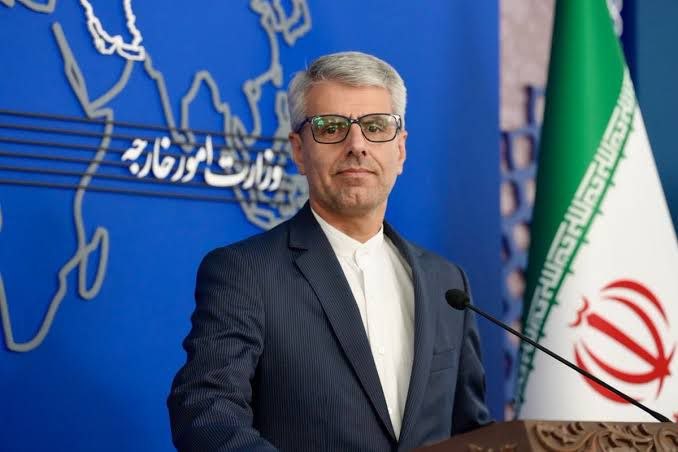
Speaking at a weekly press conference, Foreign Ministry spokesperson Esmaeil Baghaei said Iran continues diplomatic consultations with Oman as well as regional and extra-regional countries in an effort to reduce tensions and safeguard its national interests.
Baghaei also accused the United States of carrying out recent attacks that killed Iranian civilians. He claimed that an Iranian family on Qeshm Island was killed in a U.S. strike and said five Iranian citizens were also killed in what he described as a U.S. airstrike in Iraq. He further referred to the death of 23-year-old taekwondo athlete Nima Moradi, saying he was among those killed in an attack on an Iranian commercial vessel in the Caspian Sea.
Addressing reports that Saudi Arabia had played a role in preventing an alleged attack on Iran, Baghaei said regional countries should share responsibility for maintaining stability.
“All countries in the region should feel responsible for the security and future of the region, and any effort to prevent the expansion of the crisis is a positive step.”
He added that Washington’s military presence in the region had contributed to instability.
“The U.S. war against the Islamic Republic of Iran is not directed solely at Iran; it has targeted the security of the entire region.”
Baghaei said Iran welcomed regional efforts aimed at preventing further escalation but argued that deterrence remained the country’s primary safeguard.
“Experience has shown that what ultimately deters the enemy from escalating hostile actions against the Islamic Republic of Iran is the country’s strength and deterrence capability.”
The spokesperson also accused the United States of violating all of its commitments under a memorandum of understanding governing maritime traffic through the Strait of Hormuz.
According to Baghaei, Iran had fully implemented its obligations after the memorandum was signed on June 18, but Washington abandoned the arrangement before the agreed implementation period had expired.
“The Islamic Republic of Iran had begun implementing all of its commitments with full responsibility from the day the memorandum of understanding was signed.”
He said the agreement had provided both sides with 30 days to restore shipping conditions in the Strait of Hormuz to their pre-war status.
“The United States did not even allow this deadline to expire and launched extensive attacks against the Islamic Republic of Iran on the twenty-first and twenty-second days of implementing the memorandum.”
Baghaei said Washington later declared the memorandum terminated, resumed what he described as an illegal naval blockade, revoked licenses for Iranian oil sales and abandoned its remaining commitments.
He added that Iran has proposed a temporary central shipping corridor through the Strait of Hormuz until a permanent route can be agreed upon.
On reports that China had become involved as a mediator between Tehran and Washington, Baghaei denied any change in the existing mediation framework.
“The mediator in matters related to Iran and the United States is Pakistan, and Qatar also helps whenever necessary. We have very friendly relations with China and maintain very close cooperation in all areas of mutual interest.”
He said Beijing shares Iran’s concerns over rising tensions but is not serving as a new mediator.
“China, like us, is concerned about the escalation of destructive and aggressive unilateralism by the United States. It is also concerned about the worsening conflict and insecurity in the region. Therefore, our Chinese friends are making efforts and using their good offices to prevent further escalation. In this respect, China, like several other countries, is helping; however, to say that we have added a new mediator to the existing mediators is, in the precise sense of the term, not the case.”
Responding to a question about Iran’s follow-up over what Tehran says was a Ukrainian attack on an Iranian commercial ship in Russian waters, Baghaei said Ukrainian officials had described the incident as accidental, but Iran rejected that explanation.
“Ukrainian officials, both in direct contact with the foreign minister and in messages they sent to us, stressed that this action was unintentional; however, very clear evidence and indications, including the explicit statements of the President of Ukraine, indicate that this attack was deliberate.”
He said Iran would judge Kyiv based on its actions.
“We have heard the explanations of the Ukrainian officials, and we are waiting to see whether they will take any practical action that confirms and substantiates their claim that this crime was unintentional.”
Baghaei added that Tehran would pursue accountability.
“We will certainly take whatever measures are necessary, both to hold Ukraine accountable and to ensure that such a mistake and crime is never repeated by the Ukrainian side.”
The remarks came as Iran says it is maintaining diplomatic engagement with regional partners following recent military tensions, while rejecting reports of direct negotiations with the United States or any expanded mediation role for China.