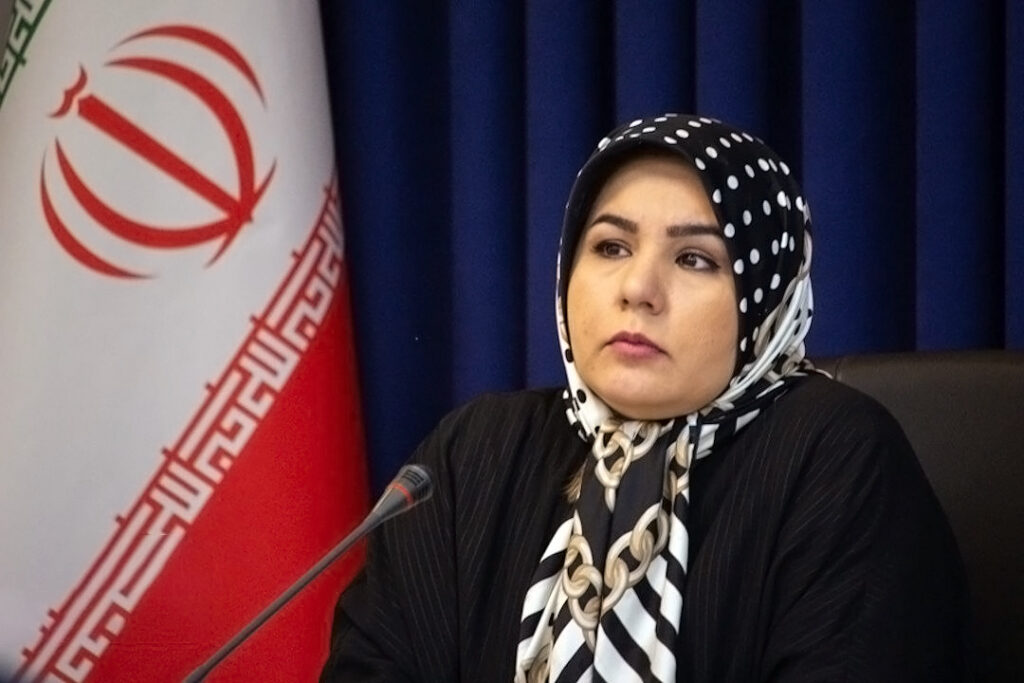
Tehran- IRAF- Dr. Zahra Farivar, the former head of international agreements affairs, believes that from the very beginning she predicted sanctions would not be fully lifted. The main reason, she argues, lies in the nature of U.S. sanctions, since many of them, such as the Countering America’s Adversaries Through Sanctions Act (CAATSA) or the Iran and Libya Sanctions Act (ILSA), are laws passed by the U.S. Congress. This means that even if the U.S. president or administration wishes to remove them, it would not be possible unless Congress approves such a decision. At present, there is no clear prospect for such approval in Congress.
According to Farivar, this issue can also be seen in the experience of the JCPOA (the nuclear deal). At that time, it was promised that the sanctions issue would be taken to Congress, but that never happened. As a result, the agreement could not remain stable, and the next president withdrew from it.
She continues that the experience of Syria also shows that even with changes of government, sanctions are not fully lifted; they are merely suspended for limited periods. For example, after the fall of Assad’s government, despite the establishment of a new administration aligned with the United States, sanctions have remained in a suspended state and are only extended through executive orders for short periods (such as 100 days), rather than being permanently lifted.
Therefore, in her view, there is no clear outlook for the complete removal of sanctions. Moreover, sanctions are not limited to the nuclear issue alone. Some are labeled under human rights, “terrorism,” or other accusations. Even if nuclear-related sanctions were lifted, these other sanctions would remain in place.
Farivar further stated in her interview with IRAF that inside Iran there is also a challenge: the Iranian parliament passed the Strategic Action Plan for Lifting Sanctions, which obliges the Atomic Energy Organization of Iran to enrich uranium to 60 percent. This creates tension with the prospects of sanctions relief. The question arises: how can domestic laws be aligned with negotiations and the expectations of the other side? Are these domestic laws expected to be amended or repealed?
For this reason, she believes that the legal dimensions of the negotiations faced numerous ambiguities, and there was no clear outlook for their success. Perhaps these complexities led some international law experts to argue that both sides were essentially buying time to prepare for a possible confrontation (war), since during this period each side could strengthen its capabilities.
Nevertheless, she emphasized:
“We should have taken measures so that even if negotiations failed or moved toward military confrontation, our duty would be to pursue legal action in international forums. The United States initiated the war and had no legitimacy for its actions. Even reliance on the ‘doctrine of preemptive action’ is not widely accepted in international law. Therefore, we must file our complaint in international forums. This step is not only legally necessary but will also pave the way for claiming war damages and compensation in the future.”
Farivar referred to the experience of the Iran–Iraq war, stating that similar actions were taken during that period. The then Secretary‑General of the United Nations identified Iraq as the initiator of the war and even established a fact‑finding team to assess damages. Although Iran did not seriously pursue compensation for the eight‑year war at that time for various reasons, she believes that this time a more serious approach should be adopted.
Therefore, she argues that a strong legal team should be mobilized immediately to document damages, correspond with international institutions, and initiate legal claims, while also planning for compensation demands. The ultimate goal of these legal actions should be to obtain compensation. If Iran can once succeed in receiving compensation from an aggressor, she says, future aggressors may hesitate before committing such acts again.
In response to the question of whether international institutions can be relied upon, she said:
“Yes, there is reason for some hope. The International Court of Justice (ICJ), which is the judicial organ of the United Nations, has previously issued rulings in Iran’s favor. Cases such as the nationalization of the oil industry, which resulted in a decision in Iran’s favor, and other cases demonstrate this. Even in the case related to the U.S. withdrawal from the JCPOA—which is still ongoing—the ICJ issued provisional measures. The exchange of humanitarian goods such as medicine took place based on this interim order.”
However, she acknowledged that the environment of international law is partly influenced by power politics, but emphasized that this should not prevent Iran from taking action. At the very least, Iran should try to increase the legal costs for the opposing side and confront them with legal challenges.
It is worth noting that while the United States was still negotiating with Iran, on the ninth of Esfand ( 1st of March), it launched another attack on Iran in cooperation with the Zionist regime, resulting in the martyrdom of the Supreme Leader of the Islamic Revolution, dozens of commanders, and hundreds of Iranian citizens. These criminal attacks are continuing and are targeting civilian objectives, including hospitals, schools, and the country’s vital infrastructure.