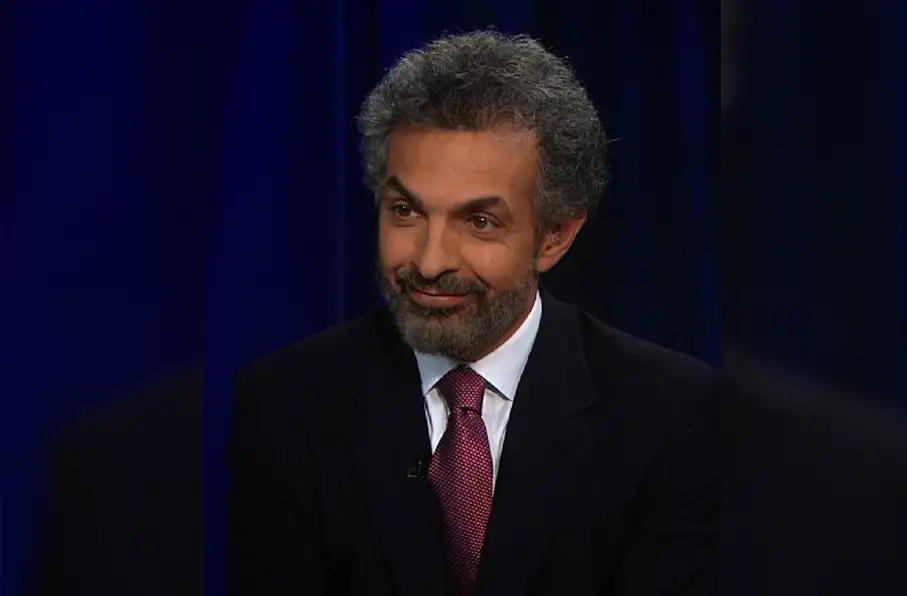
According to Iraf, Mohseni had stated at a press conference in Europe that women in Afghan cities enjoy considerable freedoms — including driving and moving about without wearing the hijab — and that there is little meaningful difference between the current situation and the era of the Republic.
Fierce Criticism from Afghan Women Activists
Mohseni’s remarks have triggered widespread reactions across Afghan social media, with women’s rights activists writing extensively about the issue on Twitter and Facebook.
Sima Nouri, an Afghan women’s activist, wrote in response: “Saad Mohseni’s whitewashing of the Taliban in international forums is participation in silencing the voices of Afghan women.” She added that in conditions where, under new Taliban laws, even women’s voices in public spaces have been restricted, Mohseni’s narrative of “freedom of movement” is an attempt to normalize a misogynistic system.
Zahra Sepehr, also an Afghan women’s social activist, criticized the remarks and said: “Reducing gender apartheid to women walking in the streets is concealing the catastrophe of the systematic exclusion of millions of girls from schools and universities.” She stressed that “roads in Kabul under the rule of the gun cannot be called freedom.”
Batoul Seyyed Haidari, psychologist and women’s rights activist, echoing similar criticisms, described Mohseni’s remarks as participation in silencing the voices of Afghan women.
Meanwhile, Hila Najibullah, daughter of Afghanistan’s former president, also published sharp remarks criticizing what she called “the presentation of a false image of the situation of women in Afghanistan.”
She said that certain men and media managers in international forums create the impression that the situation of women has not changed significantly compared to the period of the Republic, while the reality of Afghan women’s lives tells a different story.
According to her, women in Afghanistan face sweeping restrictions, pressures, and interrogations, and girls remain deprived of their right to education. Najibullah also emphasized that Afghan women are not represented in such discussions and that their voices have been pushed to the margins.
Zahra Joya, journalist and women’s rights activist, wrote: “The Taliban have erased women from public life.” She claimed that the intensity of the suppression is such that in certain cases, ignoring Taliban laws can endanger women’s lives. She added that in addition to the Taliban, individuals in the public sphere are also working to discredit the voices advocating for women’s rights.
Reactions were not limited to women activists. Mojeeb Mehrdat, Afghan poet and journalist, fiercely criticized Mohseni and wrote: “Saad Mohseni has shifted every ethical boundary.” He also accused the Moby Group director of exploiting Afghanistan’s crisis for his own interests.
Among the reactions, Seyyed Ahmad Mousavi Moballegh offered a different perspective, calling for attention to the “behind-the-scenes” nature of these remarks. Referring to the role of media outlets under Saad Mohseni’s management over the past two decades, he said these statements should not be regarded merely as a personal opinion. In his view, Mohseni’s remarks may be part of a new media project aimed at normalizing the situation in Afghanistan under Taliban rule.
Mousavi Moballegh also claimed that media outlets affiliated with Mohseni have over the past years been among the most significant media partners of the United States and Western institutions, and that the promotion of a new narrative about Afghanistan may also be pursued within the framework of a broader political and media project.
Mohseni’s remarks have provoked this volume of reaction at a time when the issue of Afghan women’s rights remains one of the most significant points of contention between the Taliban and the international community, and the restrictions imposed on women’s education, employment, and social presence continue to face sweeping criticism from human rights institutions and civil activists.