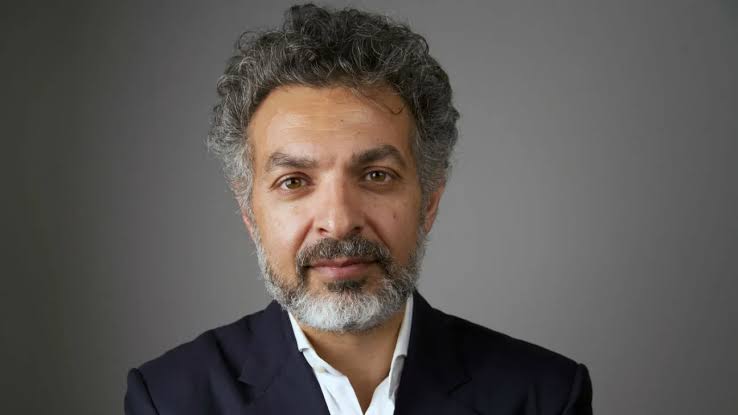
According to Iraf, Mohseni in his most recent statements has claimed that the situation of women in Afghanistan’s major cities does not differ greatly from the era of the Republic, and that women move about in cities without covering their faces and also drive.
He also said that many Taliban leaders send their daughters to school, without elaborating on the type of these schools — he makes these remarks about girls going to school at a time when nearly four years have passed since girls’ schools were closed on Taliban orders.
Accusations of Whitewashing the Taliban and Media Complicity
These statements by Saad Mohseni were met with a sharp reaction from Seddiqullah Tawhidi, former head of the Afghan media watchdog organization Nai.
Tawhidi, in a sarcastic message addressed to Mohseni, wrote: “Dear Saad, if only you had not produced and aired provocative programs on Tolo back then, perhaps the vehicle of Moby Group colleagues would not have been targeted in a Taliban terrorist attack.”
He added that it appears the Taliban, from Mohseni’s perspective, have now “become good” and are respecting women’s rights — because they have allowed him and his media outlets to continue operating.
Tawhidi also claimed that the Tolo and Tolo News networks have turned into “a propaganda platform in favor of the Taliban” and criticized what he described as the whitewashing of the group’s conduct. He continued: “I do not know to what extent a person can be without conscience to pursue the whitewashing of the Taliban.”
In the continuation of these reactions, Abdul Mannan Shiwai Sharq, former Deputy Minister of Information and Culture of Afghanistan, also published a critical commentary questioning the conduct of a segment of media organizations and their owners.
He claimed that during his tenure at the Ministry of Information and Culture, he had encountered files on unpaid taxes by certain media outlets, including Tolo Television.
According to him, previous governments — from the era of Hamid Karzai through to the end of the Republic — used these files as leverage and as a form of “hush money” against media outlets.
Shiwai Sharq claimed that whenever the issue of paying overdue taxes was raised, certain media outlets would attempt to influence the course of pursuing these files by producing special programs and conducting interviews with government officials. He also criticized the recent stances of certain media organizations, writing that these entities have now become “a pulpit and platform for Taliban propaganda” and do not even stand guard over the blood of journalists killed in the group’s attacks.
Separately, Bahar Sohaili, women’s rights activist, also sharply criticized Saad Mohseni’s remarks, accusing him of profiting from Afghanistan’s current situation.
Sohaili, reacting to the broadcast of forced confessions by women’s rights activist Manija Siddiqui on media outlets under Mohseni’s management, wrote: “For a broker like Saad Mohseni, what difference does it make — whether the voice is that of Manija Dawlat or the tribune of terrorists who forced Manija Siddiqui to speak with her face and head covered?”
She described the arrest and imprisonment of protesting women and their display before media cameras as an instance of suppression, torture, and a violation of human dignity, adding that certain individuals and institutions have been able to gain greater wealth and influence from the ongoing atrocities in Afghanistan.
Saad Mohseni’s remarks have also drawn criticism from a number of other civil activists and social media users. Critics say that while Afghan girls remain barred from education beyond the sixth grade and sweeping restrictions are imposed on women’s presence in social, educational, and professional spheres, describing the current situation as close to conditions during the Republic period bears no correspondence with existing realities.
This is not the first time that the Moby Group CEO’s positions on how to engage with the Taliban have sparked controversy. Over the past years, he has repeatedly spoken of the necessity of maintaining media operations in Afghanistan and engaging with the country’s current rulers — positions that, according to critics, have in certain instances led to the normalization and legitimization of Taliban policies.