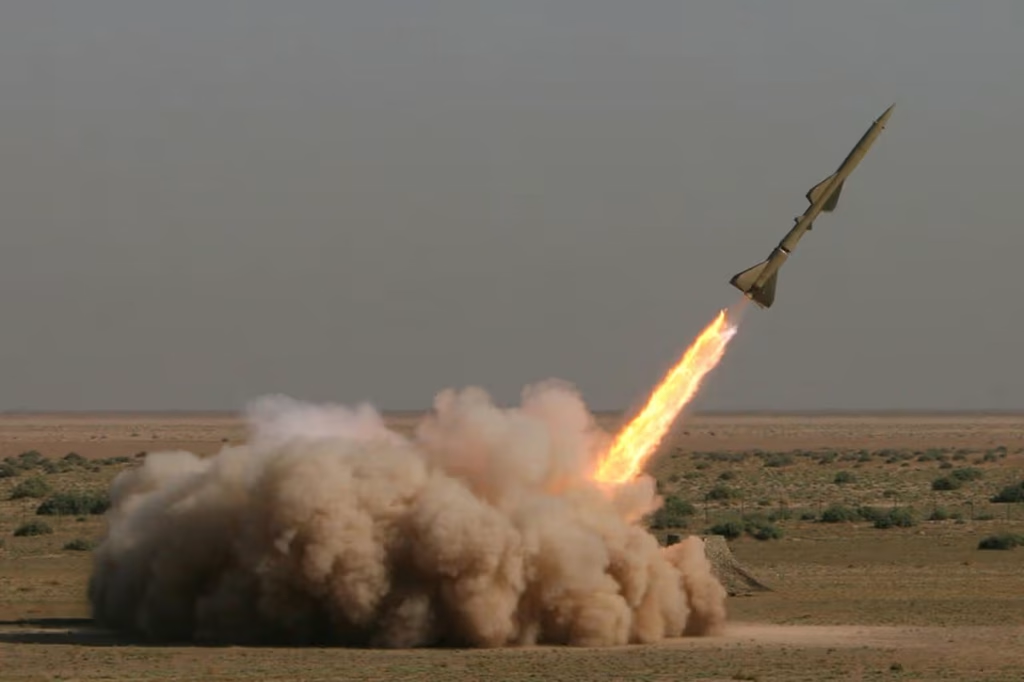
According to Iraf, the Public Relations Office of the Islamic Revolutionary Guard Corps issued an official statement in the early hours of this morning (Saturday, June 6, 2026) announcing that in response to U.S. military strikes on the coastal areas of Sirik and Qeshm Island, the IRGC Aerospace Force had targeted enemy positions in the region with missiles.
This exchange of drone and missile fire — which occurred following Donald Trump’s claim that Iran’s missile capability had been exhausted — has brought the security balance of communication lines and ports in the Persian Gulf region into a new phase of active territorial air defense.
Air Defense Confrontation at Qeshm and Sirik, and the Halting of a Violating Tanker
An examination of the field facts of the past 12 hours shows that tensions began at 1:30 a.m. Tehran time on Saturday. IRGC naval units issued air defense warnings to four oil tankers seeking to exit the Strait of Hormuz waterway, following which one of the tankers was targeted and halted, while three other vessels were forced to retreat toward their point of origin.
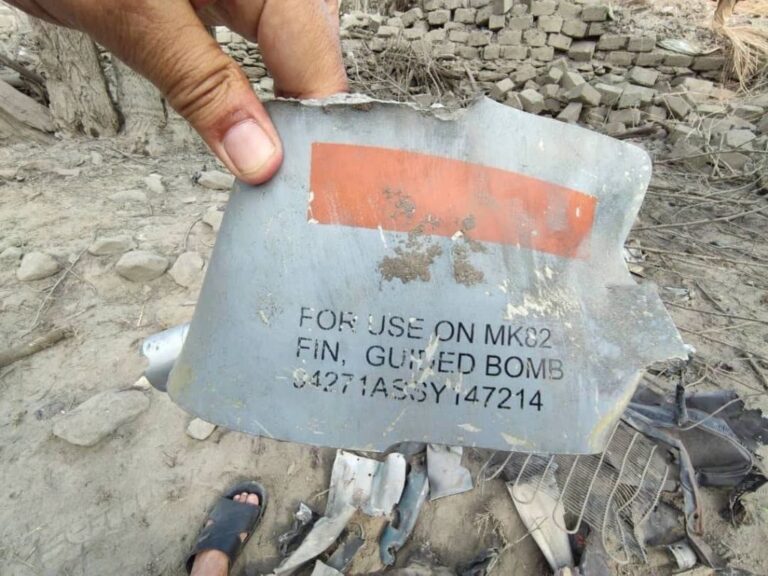
Subsequently, at 2:30 a.m., CENTCOM offensive drones, in a retaliatory action, struck two coastal telecommunications towers belonging to Iran’s air defense network on Qeshm Island and in the Goruk area (Sirik) with two projectiles.
CENTCOM confirmed in its official statement that these strikes took place after four Iranian drones had been launched toward the Strait of Hormuz and shot down by American forces. The history of clashes at these strategic coastal points underscores the vital importance of Iran’s surveillance radars over the international waters of the Persian Gulf and the Sea of Oman.
The Wall Street Journal, in its assessment of this air defense confrontation, wrote that the exchange of fire demonstrates the breakdown of traditional red lines in the region. Axios, citing Pentagon officials, also reported that the targeting of Iran’s telecommunications towers was part of Washington’s new doctrine to reduce Iran’s radar dominance over maritime traffic in the Persian Gulf.
Missile Response Targeting Ali Al-Salem in Kuwait and the Fifth Fleet in Bahrain
The second phase of this morning’s field developments was accompanied by Iran’s retaliatory missile strikes against the depth of American support bases. IRGC Aerospace Force units fired several ballistic missiles from positions in Fars and Bushehr provinces, targeting the U.S. “Ali Al-Salem” air base in Kuwait and the facilities of the U.S. Navy’s Fifth Fleet headquarters in Bahrain. Images received from Fars and Bushehr provinces clearly showed the trails of the launched missiles across the night sky.
Simultaneously with these launches, Bahrain’s Interior Ministry reported that air raid sirens had sounded in Manama and called on residents to take shelter in safe locations. CENTCOM, several hours later, issued a statement claiming that six of the launched ballistic missiles had been intercepted by air defense systems and that the seventh had failed to reach its target.
CENTCOM also denied claims of damage to the Fifth Fleet headquarters in Bahrain and announced that there were no reports of casualties among American forces. Fox News reported in its coverage that the launch of ballistic missiles from deep within Iranian territory had placed the Patriot air defense systems deployed in Kuwait and Bahrain on full alert.
However, Major General Mohsen Rezaei, in a conversation with CNN, stated that the damage inflicted on American positions would be very severe. The Washington Post, in its analysis of the event, wrote that Rezaei’s remarks are indicative of Tehran’s insistence on a balance of terror in the face of Trump’s threats.
Diplomatic Polarization and Contradictory Stances on Regional Developments
At the political and diplomatic level, these military developments have been accompanied by parallel international and regional reactions. Russian President Vladimir Putin, in a statement supporting Iran’s nuclear rights, declared that Tehran has no intention of acquiring nuclear weapons but has the right to pursue uranium enrichment for peaceful purposes.
Foreign Policy reported that Putin’s positions in St. Petersburg have effectively placed obstacles in the way of Washington’s diplomatic efforts to build a consensus against Iran. Iran’s Interior Minister also reported that all member states of the Shanghai Cooperation Organization have declared their resolute support for the Islamic Republic in the face of recent American aggression.
By contrast, Pakistani Prime Minister Shehbaz Sharif, in a markedly different stance, emphasized the necessity of crisis control and referred to Donald Trump in flattering terms as a “man of peace” — a position analysts attribute to Islamabad’s efforts to secure Washington’s financial support amid Pakistan’s border tensions with the Taliban in Afghanistan.
Trump’s claim that “we are aware of the exact number and location of Iran’s remaining missiles and drones” — covered by domestic news agencies — is also assessed as part of this psychological warfare. These geopolitical developments, coinciding with the internal challenges of neighboring countries — including a new United Nations report on Afghanistan facing the devastating consequences of drought — reflect the interconnection of security and environmental crises across the geographic expanse of South Asia.