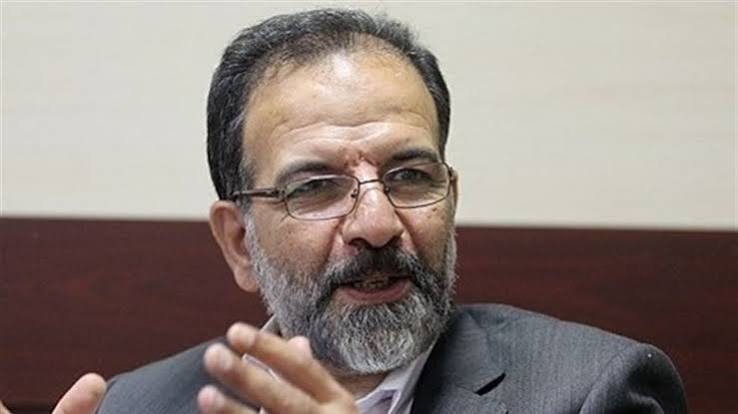
As security cooperation between the United States and Pakistan intensifies, with both sides stressing the need to combat “terrorist” groups, particularly Islamic State Khorasan (IS-K), renewed attention has been drawn to Washington’s role in Afghanistan’s security dynamics. While some analyses suggest that the United States may be seeking to reengage with the Afghanistan issue, Jafar Ghanadbashi, Iran’s former ambassador to Libya, says the latest developments do not signal a US military return to Afghanistan. Rather, he views them as part of a broader Washington strategy to preserve its regional influence, contain China and use neighboring countries to exert pressure on Iran.
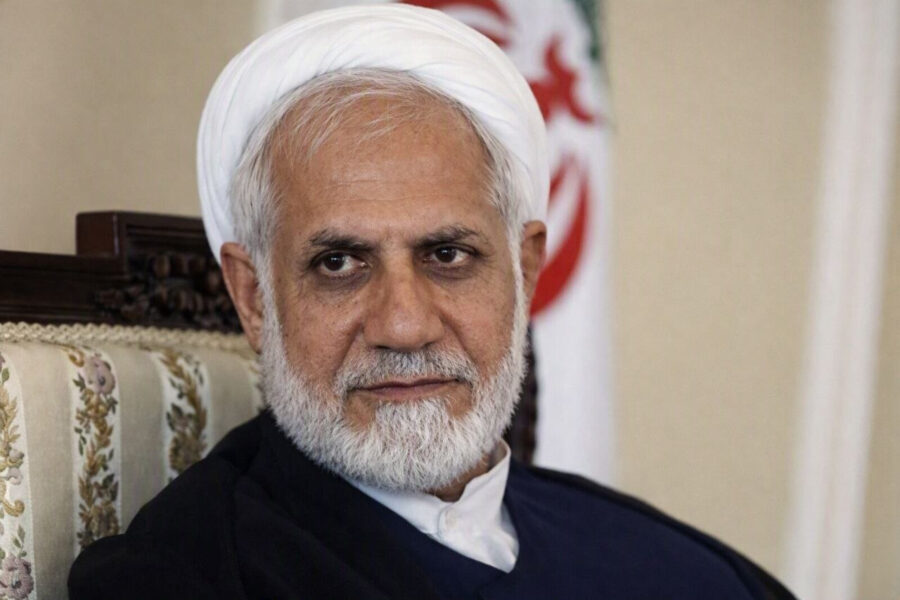
In an exclusive interview with IRAF, Jafar Ghannadbashi, Iran’s former ambassador to Libya, said that Washington currently has no plan for a direct military return to Afghanistan. He said the United States is instead seeking to maintain its strategic ties with Islamabad in order to preserve its regional influence, compete with China and use Pakistan’s capabilities in pursuing anti-Iran policies.
US-Pakistan Ties Go Beyond Afghanistan
Ghannadbashi said recent cooperation between Washington and Islamabad should not be analyzed solely through the lens of Afghanistan, noting that the two countries have a long history of relations and that Pakistan has traditionally been one of the United States’ allies.
He said Pakistan’s military has maintained extensive ties with the United States, while a significant portion of the country’s military equipment is American-made. Therefore, he said, the relationship between the Pakistani military and the United States is not new but a historical and deeply rooted one.
The former Iranian ambassador to Libya added that there have always been tendencies within Pakistan’s political and military establishment to preserve relations with the United States, while Washington is also interested in maintaining those ties.
Referring to economic factors behind the continuation of the relationship, he said Pakistan depends on cooperation with Gulf countries to meet part of its economic needs. Many oil-rich countries in the region also prefer to cooperate with countries that maintain good relations with the United States.
Ghannadbashi said Pakistan’s desire to maintain relations with Washington is partly driven by its need to benefit from the economic, financial and trade capacities of Arab countries in the region. If Pakistan were to move toward confrontation with the United States, he said, such cooperation would naturally be affected.
Competition with China
The international affairs analyst pointed to China’s role in US-Pakistan relations, saying that competition with China is another issue of importance to Washington.
He said China has expanded its relations with Pakistan in recent years and sought to strengthen Islamabad’s position vis-à-vis India. The United States, he said, does not want Pakistan to come completely within China’s sphere of influence.
Ghannadbashi said Washington is therefore seeking to maintain its relationship with Pakistan so that it does not lose its position in the region amid its geopolitical competition with China.
He added that Pakistan is important to the United States because it is a major country in South Asia, while its proximity to China, India, Afghanistan and Iran makes it an important player in regional affairs.
Counterterrorism as Cover for US Strategic Goals
Ghannadbashi said the United States usually pursues regional cooperation under the banner of fighting terrorism, adding:
“The issue of terrorism has in many cases been an excuse for the presence of the United States in West Asia and the Indian subcontinent.”
He said:
“Americans have never had a one-sided and complete fight to eliminate terrorist groups; rather, in various cases, they have tried to use the existence of these groups to advance their strategic goals.”
The former Iranian diplomat said:
“If the pretext of terrorism did not exist, the grounds for many of the United States’ military and security presences would also not exist. Therefore, a distinction must be made between the slogan of fighting terrorism and the real objectives of the United States in the region.”
A US Return to Afghanistan Would Be Costly and Unlikely
Asked about the possibility of a US return to Afghanistan, Ghannadbashi said:
“In my opinion, the military return of the United States to Afghanistan is not on Washington’s agenda under the current circumstances.”
Referring to Trump’s statements about Bagram Air Base, he said:
“Trump had repeatedly said that the United States should take control of Bagram Air Base near Kabul again, but this issue is far from the existing realities.”
He added:
“A return by the United States to Afghanistan entails very high costs, politically and economically and militarily. The United States was forced to withdraw after years of presence in Afghanistan, and the current conditions in Afghanistan are also not suitable for accepting a renewed US military presence.”
Ghannadbashi stressed:
“The Americans do not want to enter again into a war that has cost them heavily. Therefore, if they want to take action, it will be more through indirect channels and by using regional actors.”
He said:
“There is a possibility that the United States may seek to pursue its security objectives through Pakistan or some proxy forces, but this does not mean a direct return of the United States to Afghanistan.”
US Dual Policy Toward the Taliban and Takfiri Groups
Asked about the impact of closer US-Pakistan ties on the Taliban’s position, Ghannadbashi said:
“The United States has always had a dual policy toward the Taliban and IS-K.”
He added:
“On the one hand, Washington declares that it fights terrorist groups, but on the other hand, it has made the existence of these groups an excuse for its presence and influence in the region.”
The regional affairs analyst continued:
“The United States currently has no decision to directly confront the Taliban ruling Afghanistan, because such action would be costly for the country.”
He added:
“Even regarding some Takfiri groups, there is a view that the United States may use their capabilities to put pressure on Iran or on movements that do not align with Washington’s policies.”
Taliban-Pakistan Tensions Not Determined by US Cooperation Alone
Ghannadbashi said US-Pakistan talks could affect the behavior of Islamabad and the Taliban, but should not be viewed as developments that could, by themselves, alter Afghanistan’s political dynamics.
He said:
“The relationship between Pakistan and the Taliban is influenced by various factors, and mutual pressures between them will continue.”
He stressed:
“What matters is how Pakistan can use its diplomatic capabilities and steer US policy in a direction that is compatible with Islamabad’s interests.”
Ghannadbashi said:
“Due to the weakness and confusion of US diplomacy during the Trump era, countries such as Pakistan are trying to manage the direction of Washington’s movement to some extent and take advantage of these circumstances for their own interests.”
US Faces Declining Global Acceptance
The former Iranian ambassador to Libya said in conclusion:
“The conditions of the world today are completely different from the time when the United States entered Afghanistan.”
He added:
“During the Trump era, the United States has faced resistance in many parts of the world, and the country’s diplomacy has encountered serious problems.”
Ghanadbashi said:
“Today, cooperation with the United States in many countries is no longer considered an advantage as it was in the past; rather, it may even carry a political cost for some governments.”
He said:
“Therefore, a return by the United States to Afghanistan is neither possible in terms of Afghanistan’s internal conditions nor does it hold an important place in Washington’s current strategy. The main objective of the United States is more to preserve its regional influence, compete with China and use the capabilities of the countries surrounding Iran.”
Following the US military withdrawal from Afghanistan in August 2021, Washington announced that it had ended its direct presence in the country, while continuing to monitor security developments in Afghanistan and the activities of terrorist groups in the region. In recent months, rising tensions between Pakistan and the Taliban over the activities of armed groups, along with security talks between Islamabad and Washington on counterterrorism, have once again highlighted Pakistan’s role in Afghanistan’s regional dynamics. The developments come as US-China competition in South Asia intensifies, while Afghanistan remains an important arena for regional and extra-regional competition.