As reported by IRAF, thousands of Afghan pilgrims have begun traveling to Iraq after receiving visas only days before Arbaeen, forcing many to make the long journey after the religious observance itself.
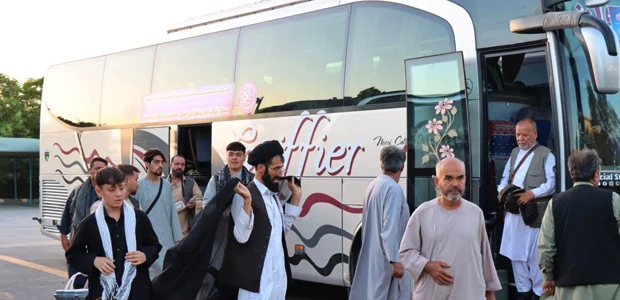
The pilgrims, who have traveled from remote parts of Afghanistan to reach Iran, are entering through the Dogharoon border crossing before continuing toward Iraq. At the border, they are received at the Hajj Qasem Soleimani service station, where they can rest, have a meal and coordinate the next stages of their journey with organizers from the People’s Arbaeen Headquarters.
Of 15,000 Iraqi visas that have been approved, about 6,000 Afghan pilgrims have entered Iran through Dogharoon in recent days, according to published reports. More are expected to arrive in the coming days.
Many of the pilgrims then head directly toward the Chazabeh border crossing. The journey from parts of Afghanistan to Iran can take 30 to 40 hours by bus, leaving pilgrims with little time to rest before continuing to Iraq.
Delayed visas leave pilgrims facing a compressed journey
The late issuance of Iraqi visas has been one of the main challenges facing Afghan pilgrims this year. IRAF reporting found that thousands were still waiting for visa approval and issuance shortly before Arbaeen.
Although the delays were resolved two or three days before Arbaeen, the late issuance meant that many pilgrims could not reach Iraq in time for the main day of the pilgrimage.
The delay has compressed the entire journey. Pilgrims who could have arrived in Iran several days earlier, rested at service stations run by Afghan migrants in Mashhad and then traveled to Iraq at a slower pace are now having to cover the long route with little time to stop.
The tighter schedule has added to the physical strain, particularly for elderly pilgrims, children and families who have already spent many hours traveling from Afghanistan to Iran.
It has also reduced the time available for some pilgrims to rest in cities such as Mashhad and visit the shrine of Imam Reza.
The compressed journey could also increase costs for pilgrims traveling on limited budgets, as they have less time to organize their travel and must reach Iraq within a shorter period.
Despite the fatigue, costs and logistical difficulties, many pilgrims have continued their journey to reach the holy sites and visit the shrines of Imam Hussein and Hazrat Abbas.
Service stations remain open for Afghan pilgrims
As Afghan pilgrims arrive later than the main wave of Arbaeen travelers, several service stations along routes through Semnan, Tehran and Qom remain ready to receive them in coordination with the People’s Arbaeen Headquarters.
The support continues in Iraq, where service stations in Najaf, Karbala and along the route between the two cities provide accommodation, food and other services.
Many service stations normally wind down their operations after Arbaeen. But some have continued operating because of the delayed arrival of Afghan pilgrims.
That continued support is particularly important as the main wave of pilgrims has already begun returning and some service stations have reduced their activities or closed.
For many pilgrims, the journey continues to Mashhad
The journey does not necessarily end in Iraq. Some Afghan pilgrims are expected to return to Mashhad after visiting Najaf and Karbala to take part in mourning ceremonies during the final 10 days of the Islamic month of Safar, marking the death of the Prophet Muhammad, the martyrdom of Imam Hassan al-Mujtaba and the martyrdom of Imam Reza.
For these pilgrims, the religious journey begins in Afghanistan, passes through Iran, continues to Iraq and then returns to Mashhad, where it ends with a visit to the shrine of Imam Reza.
Iran’s role in supporting the pilgrims extends beyond their entry through Dogharoon. From the border and service station there to facilities along the routes through Semnan, Tehran and Qom and services at Chazabeh, volunteer networks provide assistance throughout much of their journey through Iran.
If pilgrims return to Mashhad during the final days of Safar, that support network will again be called upon to host them.
Despite the long journey, fatigue, costs and logistical obstacles, Afghan pilgrims continue to make their way to Iraq, determined not to miss the opportunity to visit the holy sites and pay tribute to Imam Hussein and the Prophet’s family.