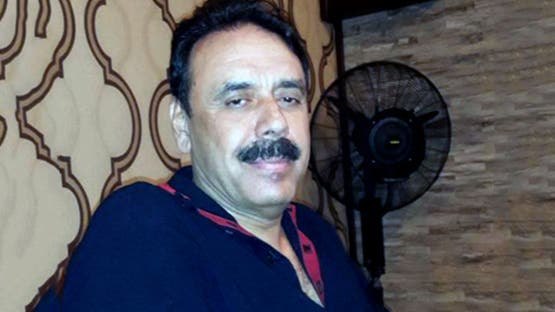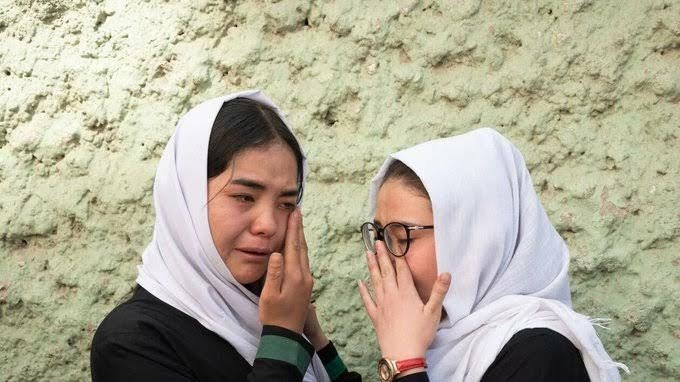
As Afghanistan approaches the fifth anniversary of the Taliban’s return to power, restrictions on girls’ education remain one of the country’s most contentious domestic and international issues. In an interview with IRAF, university academic Ali-Asghar Davoudi said the Taliban’s policy toward women’s education is rooted in ideological, political and security considerations, arguing that isolating the Taliban is not the solution, while the continued ban on girls’ education remains the biggest obstacle to the group’s legitimacy.
Since regaining power in 2021, the Taliban have imposed wide-ranging restrictions on Afghan women and girls, including bans on girls attending secondary schools and universities. The measures have become one of the main obstacles to the group’s efforts to gain broader international legitimacy and engagement. The Taliban say the restrictions are based on their interpretation of Islamic Sharia, while critics argue they deny women and girls their right to education and undermine Afghanistan’s long-term social and economic development.
Speaking to IRAF on the fifth anniversary of the Taliban’s rule, Davoudi said the group’s policy on girls’ education should be understood through three dimensions: ideology, politics and security.
From an ideological perspective, he said the Taliban are the product of a combination of Deobandi thought and Pashtun tribal traditions, creating a patriarchal outlook that largely confines women’s role to housekeeping, childbearing and raising children.
“Within this intellectual framework, any factor that increases women’s awareness, intellectual independence and social participation is regarded as a threat to the traditional order envisioned by the Taliban. For this reason, girls’ education faces strong opposition from the group, because educated women will no longer be obedient to traditional and tribal structures as in the past, and this could undermine the intellectual and social foundations the Taliban seek to preserve.”
Davoudi said the policy is not driven solely by ideology.
“The Taliban need to present an identity distinct from Afghanistan’s previous governments in order to justify their presence in power. They portray themselves as implementers of ‘Islamic Sharia’ and seek, through restrictions such as the ban on girls’ education, to convey to the traditional segment of society that only the Taliban government is the true executor of ‘Islamic rulings,’ although this interpretation represents a particular reading of Hanafi jurisprudence influenced by the Deobandi movement.”
Turning to the international implications, Davoudi said the ban on girls’ education has become the principal barrier to the Taliban gaining international recognition.
“The ban on girls’ education has been the most important factor preventing the Taliban from being recognized internationally. This decision has pushed the Taliban further into political isolation and has made any broad engagement by the international community with the group conditional on revising its policies toward women.”
He added that Afghanistan has changed significantly since before 2001.
“Afghanistan today is no longer the closed and traditional society it was before 2001. During the two decades of the republic, the expansion of education, the increased presence of women in universities, the development of the media and connections with the outside world have created a different society. For this reason, Afghanistan’s middle class, academics and educated segments of society do not accept this Taliban policy and regard it as one of the main causes of growing public dissatisfaction.”
Davoudi said that while some traditional sections of Afghan society may continue to support such policies, among the country’s modern and educated population the restrictions have not strengthened the Taliban’s legitimacy but have instead widened the gap between society and the authorities.
Addressing the security dimension of the policy, he said the Taliban seek to maintain exclusive control over power and prevent the emergence of potential opposition movements.
“From their perspective, the entry of educated women into administrative, educational, economic and managerial spheres could, in the future, generate new political and social demands and challenge the monopolistic structure of power.”
He added:
“Women who receive an education will naturally seek access to the labor market, participation in governing the country and a role in decision-making structures. This increases social and political pressure on the Taliban, and for this reason educational restrictions are part of the group’s security strategy for maintaining control over society.”
Davoudi also said the Taliban do not hold a unified position on women’s education.
“Within the Taliban there are two main currents: one, largely based in Kandahar, adopts a hardline approach close to Salafi and Wahhabi currents, while the other, mainly associated with the Haqqani network and more pragmatic figures, takes a more realistic and pragmatic view of social issues.”
He continued:
“Many members of the pragmatic current do not accept the extensive restrictions on women’s education, and some have even criticized these policies unofficially. However, at present, the Kandahar faction holds the upper hand in Taliban decision-making, preventing any policy change.”
Davoudi said he hopes internal differences within the Taliban could eventually create an opportunity to moderate the group’s policies and open the way for girls’ education.
He warned that excluding women from education would carry severe long-term consequences for Afghanistan’s development.
“No country can achieve sustainable development by excluding half of its population from education and knowledge production. Afghanistan, which already faces widespread economic, social and developmental challenges, is losing a large part of its human capital through this policy.”
He argued that the policy also creates contradictions within the Taliban’s own governance model.
“Even according to the Taliban’s own logic, this policy faces serious contradictions. If the Taliban seek gender segregation in healthcare and medical services, they must train female doctors, nurses, midwives and healthcare workers. But when girls are not allowed to study, providing such human resources becomes practically impossible.”
He added:
“This contradiction is not limited to healthcare. It will also become evident in education, technology, the humanities, the economy and other fields. Depriving women of education means depriving society of half of its scientific, economic and managerial capacity.”
Davoudi also highlighted the social and psychological effects of the restrictions.
“Afghan girls today can see, through the internet and the media, the progress of women in other countries, while they themselves remain deprived of the most basic educational rights. This situation can intensify feelings of frustration, despair and social anger among the younger generation.”
He warned:
“If this trend continues, it may eventually lead to broader protests, social movements and increased confrontation between society and the Taliban.”
Discussing the international approach toward the Taliban, Davoudi said isolating the group has produced limited results.
“A complete boycott of the Taliban has not produced significant results so far.”
He added:
“Alongside political and economic pressure, channels of dialogue should remain active so that the Taliban’s pragmatic currents can gain greater influence against the hardline faction.”
He further said:
“Making recognition of the Taliban conditional on lifting educational restrictions and offering economic incentives could, in the long term, create the conditions for changing the group’s behavior.”
Davoudi stressed that Afghan society itself would ultimately play the decisive role in bringing about change.
“Although the Taliban have raised the cost of any form of protest through severe repression, ultimately it is Afghan society that can create the conditions for reforming the Taliban’s policies by expanding civil resistance.”
He also called on the international community:
“The international community should assist the people of Afghanistan by providing education on methods of civil resistance, supporting civil society organizations and strengthening social capacities.”
In his concluding remarks, Davoudi said neighboring countries also bear responsibility.
“Although countries such as Iran, Pakistan, China and the Central Asian states are compelled to engage with the Taliban because of security and geopolitical considerations, such engagement should not mean ignoring women’s rights.”
He proposed that Iran use online education initiatives to support Afghan girls.
“The Islamic Republic of Iran can use the capacity of virtual education, establish online schools and universities, and transfer educational experience to make it possible for Afghan girls to continue their education, while at the same time using political dialogue to encourage the Taliban to lift educational restrictions.”
Davoudi concluded:
“Achieving economic development, human capital, political stability and a sustainable future for Afghanistan will not be possible without girls’ education and the active participation of women in different social and economic spheres.”