According to Iraf, while the government of Tajikistan has taken fresh steps toward reviving the “Script of the Ancestors” — the Persian script — critics of the Taliban say the group is pursuing policies in Afghanistan that have led to the weakening of the Persian language’s standing and the erasure of its signs from the public sphere, a process they refer to as “Persian-phobia.”
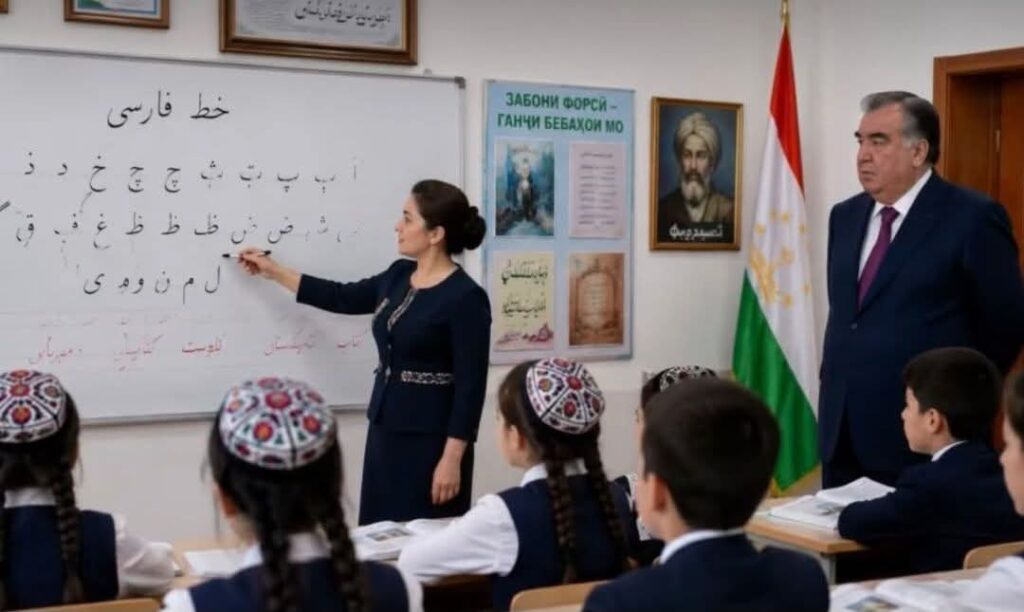
Emomali Rahmon, President of Tajikistan, has recently instructed the country’s Ministry of Education and responsible institutions to strengthen the teaching of the “Ancestral Alphabet” — the Persian script — in schools and educational centers. Under this directive, the quality and scope of instruction in reading and writing the Persian script within Tajikistan’s educational system will be expanded, and dedicated instructional books will be prepared for this purpose.
The Tajik language, considered one of the branches of Persian, was written in the Persian script until the early twentieth century. However, following the Soviet Union’s domination of Central Asia, the Latin script was first substituted for the Persian script in 1928, and then in 1940 the Soviet government imposed the Cyrillic alphabet on Tajikistan. Researchers regard this move as part of Soviet policy aimed at distancing Tajiks from the shared cultural and literary sphere of Persian speakers.
With the collapse of the Soviet Union, the inclination toward reviving Persian identity in Tajikistan grew. The country’s language law of 1989 recognized Tajik as sharing common roots with Persian, and the teaching of the Persian script was gradually incorporated into the educational system. Although Tajikistan’s official alphabet has remained Cyrillic, the question of returning to the Persian written heritage has been a recurring subject in cultural and academic circles in recent decades.
Now, Emomali Rahmon has ordered that the Persian script — referred to as the Script of the Ancestors — be taught in all schools.
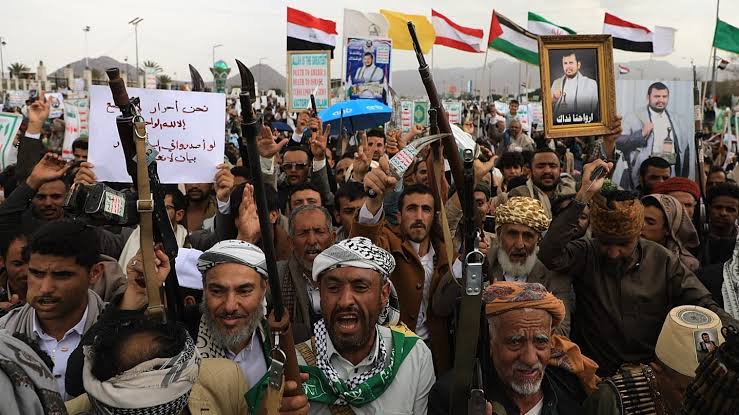
At the opposite end of the spectrum, the Taliban’s rule is working to erase the Persian language from official correspondence, schools, signboards, and street names — a process that has provoked serious concern among Persian speakers.
Published reports indicate that in certain government institutions under Taliban administration, the use of Persian in official documents, signboards, and administrative correspondence has been reduced or eliminated entirely. The Taliban’s Ministry of Higher Education has in some cases issued official documents exclusively in Pashto and English, and Persian signage has been removed from a number of government offices and state institutions.
Persian — or Dari — is one of Afghanistan’s two official languages and the historic language of a large body of the country’s scientific, literary, and cultural output. From the classical works of poets such as Rumi, Sanai, Jami, Bedil, and Naser Khosrow, to the bulk of contemporary Afghan press, universities, and administrative correspondence, all have been built upon this language.
Not long ago, the removal of Persian titles from university facades and street signs carried out by Taliban forces triggered widespread reactions. The banning of books by Persian authors and the prohibition on printing certain prominent works further brought the process of Persian-phobia into sharper relief.
Cultural activists and a number of Afghan academics say that the Taliban’s language policies not only threaten Afghanistan’s linguistic diversity, but could also inflame ethnic and cultural divisions.
They express concern over the future of the Persian language in Afghanistan at a time when Tajikistan — after decades of distancing itself from the Persian script — is now striving to reacquaint its younger generation with the shared written heritage of Persian speakers.
While Dushanbe invokes the “Script of the Ancestors” as part of its historical and cultural identity, many experts believe that Afghanistan under Taliban rule is witnessing a restriction of one of the most important components of its cultural identity — the Persian language — from the public sphere.