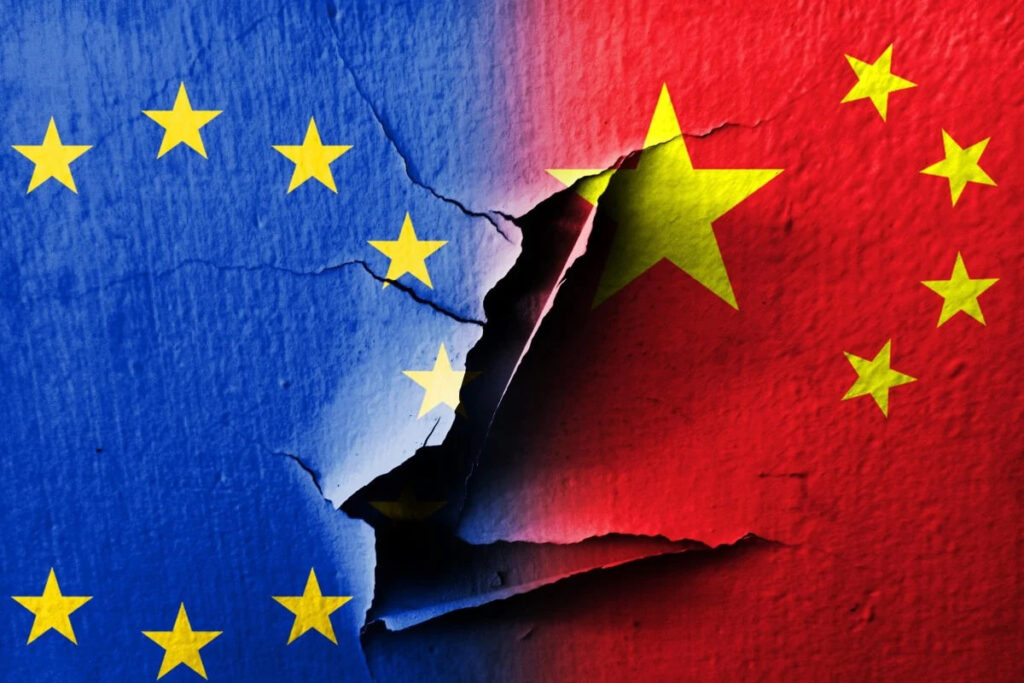
According to Iraf, amid a diplomatic surge of Western leaders in Beijing, the confrontation between China and the EU over investment restrictions has reached a critical stage. Kou Shun, Trade Representative of the Chinese Embassy in Madrid, said today (Thursday, May 14) that Beijing is “highly dissatisfied” with Europe’s countermeasures over the past three months, including restrictions, regulatory controls, and targeted sanctions. He warned that continued restrictive policies could push Beijing toward “closing doors” and fundamentally redefining its relationship with Brussels.
Beijing at the Center of Global Diplomacy: From Trump’s Visit to European Leaders’ Maneuvers
Beijing’s stern warning comes as the city hosts a new round of high-level talks with the presence of Donald Trump and U.S. tech giants. Simultaneously, recent visits by the Prime Ministers of the U.K. and Spain, along with French President Emmanuel Macron, illustrate a “strategic duality” within the Western camp: European leaders are both competing to maintain their market share in China and pushing for EU legislation to limit Chinese influence in sensitive sectors, including cybersecurity. Beijing has described this dual approach as inconsistent with Europe’s purported “open-mindedness” and a threat to global economic stability.
Clash of Paradigms: Cybersecurity vs. Market Access
At the core of recent tensions is the European Parliament’s push to increase oversight of strategic industries and restrict “high-risk” technology suppliers. While Western companies argue that China’s subsidized exports and uneven market access create an unfair playing field, Beijing contends that Europe’s new rules, labeled “high-risk,” are primarily tools for trade warfare and weakening global supply chains. The Chinese trade official stressed pragmatically that “the world is ruthless,” and nations should respect each other’s commercial environment and domestic laws rather than applying political pressure.
Final Assessment: Erosion of Europe’s Economic Deterrence
Brussels’ attempt to “reduce strategic dependence” on China comes at a time when Washington is sending top economic executives, including Elon Musk and Tim Cook, to Beijing to rebuild ties, potentially leaving Europe in a state of “self-imposed isolation.” Beijing has reminded European partners that any shift in China’s approach toward the continent could signal an end to the era of win-win cooperation. On the ground, the reality is that “closing doors” by Beijing carries a far heavier cost than Brussels’ restrictions for European industries—a truth underscored by the recent diplomatic traffic in Beijing.