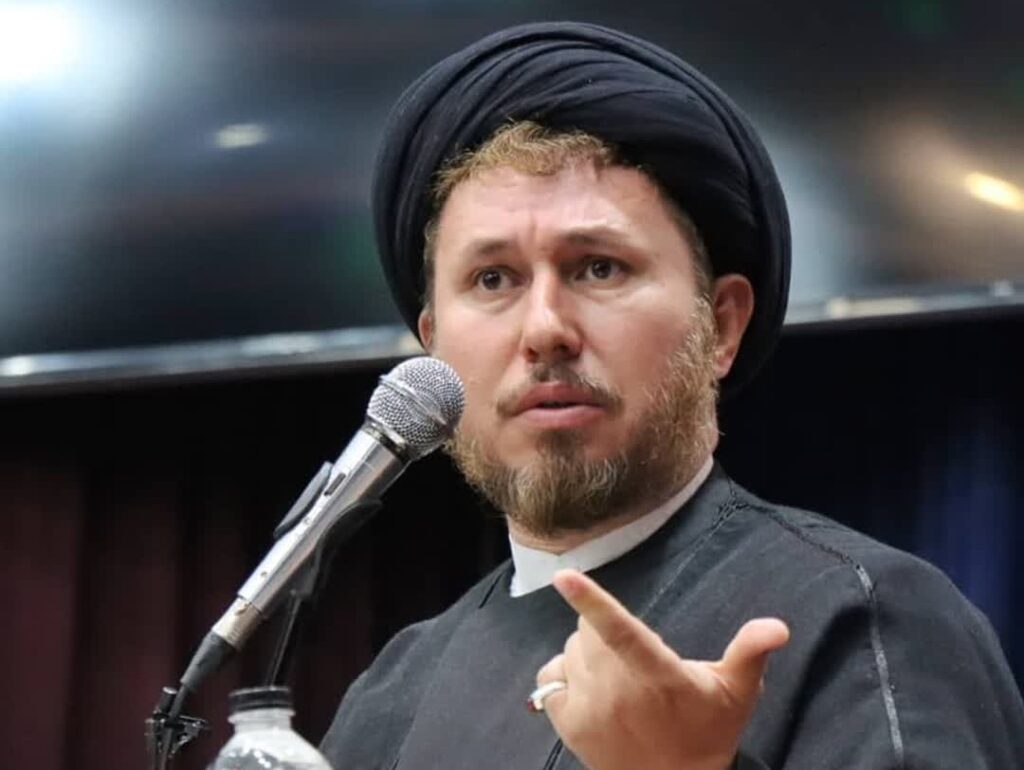
On the occasion of the birth anniversary of the Prophet Muhammad and Imam Jaafar al-Sadiq, Hojjat al-Islam Dr. Seyed Basir Ehsani said the Prophet’s conduct should be viewed as a practical roadmap for Afghanistan rather than merely a collection of advice. He pointed to the Constitution of Medina as an example of how the Prophet established a framework for coexistence among different groups and tribes with a history of conflict, while respecting their distinct identities under a shared system and law.
Speaking exclusively to IRAF, Hojjat al-Islam Seyed Basir Ehsani said: “After the Prophet (PBUH) migrated to Medina, he did not merely make slogans about creating brotherhood among Muslims, but established deep social and economic ties between the Muhajirun and the Ansar. This shows that without justice in the distribution of opportunities and resources, lasting brotherhood will not be possible.”
He added: “In Afghanistan, too, if we want Islamic brotherhood to be realized and remain sustainable, we must accept that no ethnic group or sect has superiority over another and that national interests must take precedence over tribal and group interests.”
Ehsani highlighted the Prophet Muhammad’s moral qualities, saying: “Patience in power, fair implementation of the law, and mercy and forgiveness are among the most important characteristics of the Prophet Muhammad that Afghan society needs today. After the conquest of Mecca, the Prophet (PBUH), instead of seeking revenge, chose the path of pardon and forgiveness. This behavior can be a great lesson for a society that has experienced decades of war and violence.”
He continued: “Alongside forgiveness, the equal enforcement of the law for everyone is also necessary. The Prophet Muhammad emphasized that even if Fatimah, his daughter, committed theft, the law would be enforced against her. This principle shows that justice must not be subject to ethnicity, sect, social status, or proximity to power, because discrimination before the law is one of the most important factors in destroying trust and brotherhood in society.”
Ehsani further said: “A society in which people are hopeless about their future and part of the population feels deprived of their basic rights cannot achieve lasting peace and solidarity. Paying attention to people’s rights, providing opportunities for education and employment, and creating hope for the future are part of this merciful approach in the Prophet’s conduct.”
The Meaning of a United Islamic Community
Explaining the concept of a united Islamic community, Ehsani said: “A united Islamic community means people of different colors, languages, and ethnicities standing together on the basis of shared beliefs and human dignity. In this regard, the Prophet Muhammad emphasized the rejection of ethnic and racial superiority in his Farewell Sermon and considered piety to be the criterion of superiority. Therefore, in a united Islamic community, everyone is equal and brothers.”
He said: “In Afghanistan, a united Islamic community will have meaning when the law is the same for all ethnic groups and sects, opportunities for participation in the administration of the country are equally available to everyone, and no group imposes its history, culture, and identity on others. The media and education system should also focus on the common interests of the people rather than reinforcing divisions.”
Ehsani stressed: “A united Islamic community does not mean homogenizing society and ignoring differences. Pashtuns, Tajiks, Hazaras, Uzbeks, and other ethnic groups in Afghanistan can preserve their cultural and ethnic identities while working for a common future and the public interests of the country. Real unity means respecting differences and giving priority to commonalities.”
Addressing the relationship between Islamic sects, Ehsani said that despite jurisprudential and theological differences, Muslims share deep common ground, including belief in monotheism, prophethood and the hereafter, as well as the Quran, the qibla, prayer, fasting, Hajj and ethical values such as justice, honesty and kindness toward others.
He continued: “To strengthen unity in Afghanistan, we should not ignore the sects or impose one sect on another; rather, we should invest on the basis of these commonalities. Holding joint meetings between Shia and Sunni scholars, cooperating on social issues, and emphasizing shared Islamic teachings in schools, the media, and religious pulpits can be effective in reducing distances.”
He said: “The Holy Quran explicitly warns Muslims against division and says: ‘And hold firmly to the rope of Allah all together and do not be divided.’ Therefore, unity does not mean that all Muslims think alike on jurisprudential issues; rather, it means that despite differences, they regard one another as Muslims and brothers and stand together in the face of common problems.”
The Role of Religious Scholars in Shia-Sunni Unity
Ehsani described the role of religious scholars in bringing Shia and Sunni Muslims closer together as highly important, saying: “The first duty of scholars is to be practical examples of unity themselves. If Shia and Sunni scholars stand alongside one another, participate in joint ceremonies, and engage in respectful dialogue with one another, this behavior will be more influential for the people than thousands of speeches.”
He added: “Another duty of scholars is to manage the pulpit and the media. Sometimes some speakers, in order to attract attention, emphasize historical and jurisprudential differences and increase sectarian sensitivities. Instead of magnifying differences, scholars should focus on justice, combating corruption, defending the deprived, and other common issues in society, and show people that jurisprudential differences do not mean rejecting brotherhood.”
Ehsani said: “In social and political crises as well, scholars should have a common language. If war, insecurity, or a social crisis occurs, Shia and Sunni scholars should stand together in calling for peace and the preservation of people’s lives and dignity, rather than each siding with a particular faction.”
Referring to the views of religious authorities and leaders on unity, he said: “The emphasis of Imam Khomeini, Imam Shahid, and Ayatollah Sistani on Shia-Sunni unity shows that unity is not a temporary and political issue, but is rooted in religious teachings. The duty of believers is also to put this recommendation into practice in their daily lives.”
He stressed: “We must correct our view toward followers of other sects and abandon stereotypical judgments. A Shia should regard his Sunni neighbor and colleague as his religious brother, and a Sunni should have the same view toward his Shia brother. Because unity and solidarity begin with these everyday behaviors of the people.”
He continued: “We must also avoid fueling divisions on social media and in gatherings. A rumor, a fabricated hadith, or an insulting statement can destroy years of trust among people. A true Muslim must be careful about his words and behavior and must not allow sectarian differences to turn into hostility.”
Building Trust Through Social Solidarity
Ehsani said: “Participating in each other’s happiness and sorrow can also help strengthen brotherhood. Visiting one another on religious occasions, mutual respect for religious ceremonies, and cooperation in charitable activities are simple behaviors that have a profound impact on social cohesion. When helping those in need, we should not ask whether a person is Shia or Sunni; poverty and deprivation know no sect.”
Addressing the causes of division among Muslims, he said that foreign powers and various political currents have used ethnic and sectarian differences to advance their interests, adding that whenever Muslims have been divided, the ground has been prepared for others to exert influence and exploit those divisions.
Ehsani added: “Any statement or action that leads to takfir, insult, and incitement against a sect will ultimately harm all Muslims. Instead of focusing on points of disagreement, we must use our shared capacities to confront poverty, injustice, underdevelopment, and other problems facing society.”
Lessons from the Prophet Muhammad’s Conduct
Ehsani also pointed to lessons from the Prophet Muhammad’s conduct in confronting threats, saying: “For confronting threats, Islamic society needs, above all, practical unity, awareness, and the strengthening of internal capacities. The Prophet (PBUH) was firm on fundamental principles, but used tolerance and flexibility in the manner of interaction and resolving disputes.”
He continued: “The Treaty of Hudaybiyyah is an example of the Prophet’s foresight and realism. At a time when some provisions of the treaty might have seemed difficult for Muslims, he chose the path of dialogue and peace, and this very treaty paved the way for important developments later. This conduct teaches us that in politics and social relations, an emotional reaction and confrontation are not always the best approach, and sometimes dialogue and intelligent engagement can create greater interests.”
He said: “On the other hand, confronting rumors and propaganda also requires raising awareness. Today, religious scholars, academics, intellectuals, and the media have a duty to raise awareness in the face of fake news, hate speech, and divisive propaganda. An informed society is less likely to be influenced by sectarian and ethnic provocations.”
In his concluding remarks, Ehsani said: “The best way to neutralize any conspiracy against Afghan society is to build a strong, just, and united society. If we can reduce poverty, unemployment, injustice, and mistrust and build trust among ethnic groups and sects, the grounds for exploiting divisions will also disappear. Today, more than ever, we need to return to the conduct of the Prophet Muhammad, strengthen Islamic brotherhood, and place Afghanistan’s public interests above ethnic and sectarian differences.”