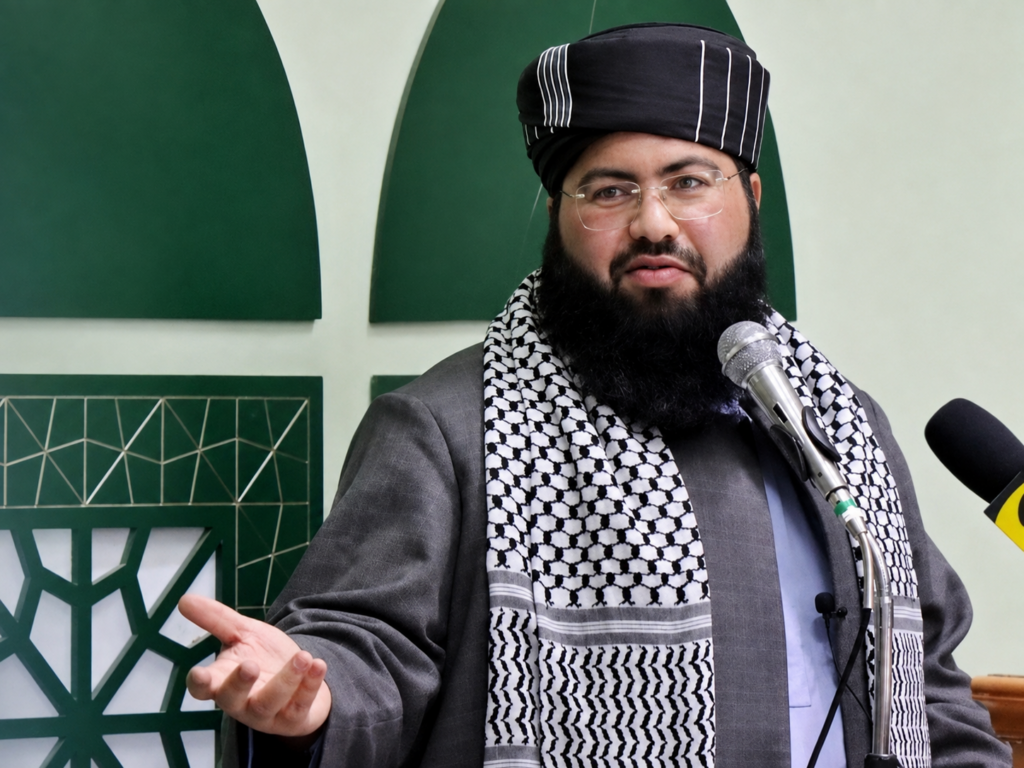
Mawlawi Mohammad Yaqub Norzai (Samani), secretary of the Supreme Council of Scholars and Elites of Sunni Migrants Residing in the Islamic Republic of Iran, said that the Prophet Muhammad was not only a messenger of revelation but also a practical teacher of ethics and social governance, adding that the path to saving Afghan society after decades of cultural and social damage caused by war and various crises lies in Shia-Sunni unity and a return to the moral and social values of the Prophet’s example.
On the occasion of Unity Week and the birth anniversary of the Prophet Muhammad, Mawlawi Mohammad Yaqub Norzai (Samani), secretary of the Supreme Council of Scholars and Elites of Sunni Migrants Residing in the Islamic Republic of Iran and director of the Noor Center for Studies and Research, told IRAF in an exclusive interview that there is a need to revisit the life and teachings of the Prophet Muhammad.
He identified mercy, justice, humility, unity, and the pursuit of knowledge as among the most important values needed by Afghan society and stressed the importance of strengthening Islamic brotherhood between Shia and Sunni Muslims.
He said: “Mercy and tolerance, justice and trustworthiness, humility and a simple way of life, unity and the resolution of ethnic and religious disputes, as well as the pursuit of knowledge and commitment to education, are among the most important characteristics that should be observed in the individual and social lives of Muslims.”
Referring to the principle of “mercy to the worlds,” Norzai said: “Prophetic mercy is not merely an individual feeling, but can serve as the basis for social relations, and in Afghan society, internalizing this principle can transform the atmosphere of dialogue from hostility and confrontation into interaction.”
He continued: “The Prophet Muhammad demonstrated justice and trustworthiness in practice, and every individual who assumes responsibility in the family, marketplace, neighborhood, or any other part of society can help rebuild some of the damaged public trust by observing these principles.”
The secretary of the Supreme Council of Scholars and Elites of Sunni Migrants Residing in Iran also described humility and a simple way of life as other important teachings of the Prophet’s example, saying: “In a society where extravagance and consumerism can weaken social ties, a simple way of life and being close to the people can help strengthen trust and social solidarity.”
On the need for unity among Afghanistan’s ethnic groups and religious denominations, he said: “The Constitution of Medina showed that unity is not achieved through the elimination of the other, but is possible through accepting diversity and creating a just framework for coexistence. In Afghanistan’s multi-ethnic society, every individual can put this model into practice in their relationship with a neighbor, colleague, and fellow citizen from another ethnic group and religious denomination.”
Norzai added: “After the migration to Medina, the Prophet Muhammad, through the covenant of brotherhood, brought the Muhajirun and Ansar, who differed in their backgrounds and social ties, closer together within the framework of Islamic brotherhood. This bond was formed not merely through commands and directives, but within the context of real life, neighborhood relations, and social interaction.”
He stressed: “This example also offers a clear lesson for the Shia and Sunni situation in Afghanistan; the first step is to redefine a shared identity based on faith. Jurisprudential and theological differences are specialized matters and should not become an excuse for separation and hostility among ordinary people.”
The director of the Noor Center for Studies and Research said: “Real unity must take shape in people’s daily lives, in neighborhoods, markets, scholarly gatherings, and social relations. Jurisprudential and religious differences can remain, but they must not turn into social resentment and hatred.”
Noting that belief in the oneness of God, the Prophethood of Muhammad, the Holy Quran, prayer, fasting, Hajj, belief in the Hereafter, and respect for the Ahl al-Bayt are among the most important commonalities between Shia and Sunni Muslims, Norzai said: “These commonalities can provide a solid foundation for Islamic unity.”
On ways to counter division among Muslims, he said: “Muslims must return to their shared beliefs, refrain from the language of takfir and humiliation, and remain vigilant against rumors and provocative reports. Any report that creates hatred and division among Muslims must be verified before it is accepted and republished.”
He added: “Sustainable unity cannot be created through slogans alone, but emerges from family, economic, and neighborhood relations. Muslims must also recognize their common enemy, including the United States and the Zionist regime, and adopt a united position against their divisive policies.”
The Sunni scholar also spoke about the responsibility of Afghan religious scholars in strengthening Islamic brotherhood, saying: “Scholars, because of their scholarly standing and the public trust they enjoy among the people, bear a heavier responsibility for preserving and strengthening Islamic brotherhood and building the Muslim community.”
He continued: “Religious scholars must explain the commonalities among Islamic denominations to the people accurately and faithfully, keep the pulpit free from divisive language, and refrain from conveying statements that merely serve to humiliate and provoke followers of other denominations.”
Norzai stressed: “The conduct of a religious scholar is as important as his words. A scholar who maintains communication and interaction with scholars from other denominations demonstrates the model of brotherhood and mutual fellowship to the people in practice. Scholars must also encourage people to verify rumors and biased reports and avoid hasty judgments.”
In his final message to Shia and Sunni Muslims in Afghanistan, he said: “What Muslims share, namely belief in one God, love for one Prophet, and reliance on one Quran, is deeper and more authentic than the jurisprudential and historical differences that are sometimes used as a pretext for hostility.”
Norzai added: “Religious brotherhood is not a slogan to be spoken about only during Unity Week; rather, it is a duty that must be present in the marketplace, neighborhood, classroom, and everyday speech of every Muslim. Cleansing one’s language of humiliation and takfir, verifying divisive statements, and extending a hand of friendship to fellow citizens of every ethnic group and religious denomination are among the most important examples of putting the example of the Prophet of Mercy into practice.”