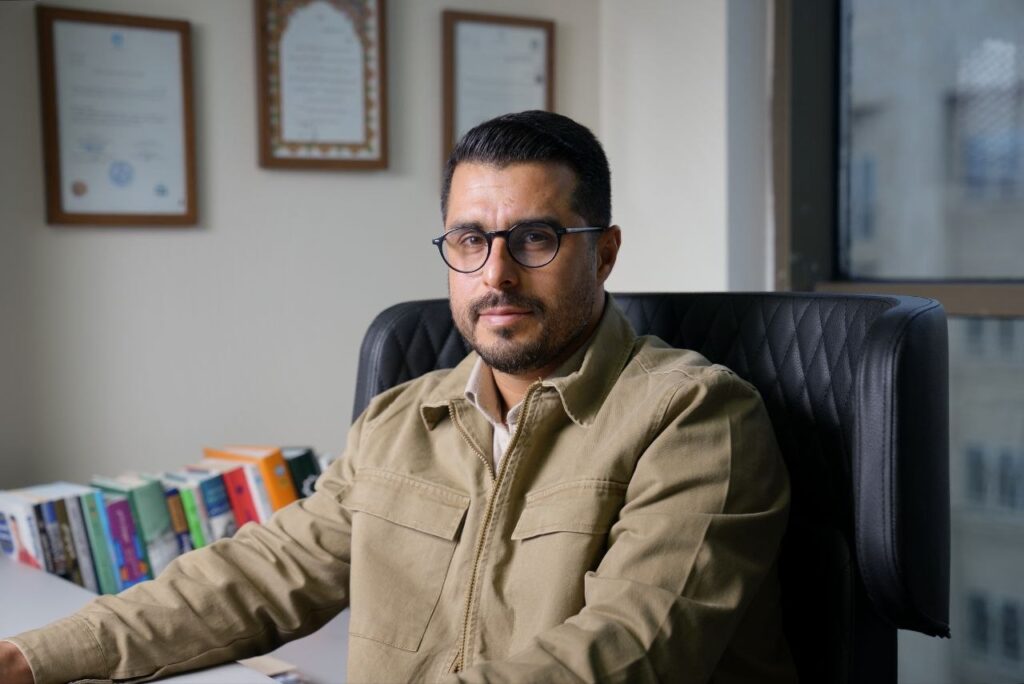
Meisam Mahdipour, editor-in-chief of the Iranian news and analysis outlet IRAF, has criticized an Iranian media outlet for advocating and promoting Iran’s formal recognition of the Taliban government. In an opinion piece, he addressed Iran’s longstanding concerns and challenges regarding Afghanistan over the past two decades, warning against recognizing the Taliban without first resolving those challenges.
Years of working in the media makes it easy to understand the pressures facing a newsroom: the schedule is empty, a story needs to be completed, an expert is unavailable, airtime is approaching, and eventually someone has to be put in front of the camera. But what happened at AAN goes beyond the pressures of filling a news schedule. It points to a more serious weakness in understanding the subject and selecting the right person to comment on one of Iran’s most complex foreign-policy files.
Afghanistan is not a country whose complexities can be understood simply through a single visit, a few conversations and a review of the news. Understanding Afghanistan requires simultaneous familiarity with the Taliban’s power structure, ethnic and religious dynamics, security networks, the informal economy, water and border disputes, armed groups, financial structures, regional actors, and two decades of volatile relations between Tehran and Kabul.
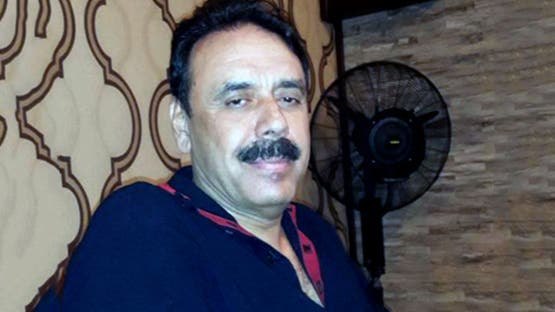
Dear Sheikhpour, my good friend, as far as I know, your field experience in Afghanistan is limited to a single trip. Naturally, no one would expect someone with such limited exposure to have mastered all the layers of this issue. The main criticism, however, should be directed at the media outlet that, instead of turning to experts in the field, put an in-house staff member in front of the camera and allowed the discussion to move abruptly from the “economic importance of Afghanistan to Iran” to the proposition that recognizing the Taliban could provide a way to circumvent sanctions.
This is precisely where an individual’s lack of expertise combines with an editorial weakness, producing a claim that may appear “strategic” on the surface but quickly runs into problems when confronted with a few basic questions about Afghanistan and sanctions.
Therefore, Mr. Sheikhpour, if you are to speak about Afghanistan with greater caution in the future, it may be useful to first answer a few questions:
1. Russia recognized the Taliban in 2025, yet no other country subsequently chose to follow that path. What exactly did Moscow gain strategically in return for granting the Taliban this major political concession? Which of Russia’s security, economic or political problems concerning Afghanistan were resolved after recognition?
2. If Iran’s failure to recognize the Taliban is the reason for stalled strategic relations between Iran and Afghanistan, please name just one strategic agreement that the two sides are ready to implement and for which the only legal obstacle is Iran’s failure to recognize the Taliban.
3. If Afghanistan is supposed to be “Iran’s trump card for circumventing sanctions,” how do you explain the case of Aryan Bank? It is a bank in Kabul backed by capital from Iran’s Bank Melli and Bank Saderat. If operating in Afghanistan provides a way around sanctions, why has this banking structure itself not remained immune from sanctions restrictions?
4. What about Iran’s water rights over the Helmand River? Iran and Afghanistan have had a formal treaty since 1973, yet the full implementation of Iran’s water rights remains disputed. Is it logical to first surrender Iran’s most important political concession—recognition—and then negotiate over the implementation of a more than 50-year-old treaty? Or should recognition be part of Iran’s package of demands and concessions?
5. What guarantees have been secured regarding Afghanistan’s construction of dams affecting water resources flowing into Iran? Where does eastern Iran’s water security figure in your calculations for recognizing the Taliban?
6. What about the border disputes and clashes of recent years? Before formal recognition, should there not be a clear and measurable agreement on the border regime, the conduct of Taliban forces, disputed points and mechanisms to prevent future clashes?
7. And what about the security of Sistan and Baluchestan? What verifiable guarantee has Iran received that Afghan territory will not be used for the presence, transit, training, support or communications of armed groups hostile to Iran?
8. What about reports and allegations concerning links between armed anti-Iranian Baloch elements and parts of the Taliban’s structure? The Taliban denies such links. Is there a joint, verifiable mechanism for establishing whether these allegations are true?
9. Where do ISKP, transnational jihadist networks, arms and drug trafficking, and the movement of armed elements across Iran’s eastern border figure in your calculations? Should recognition come before security guarantees are obtained, or afterward?
10. And what about Afghanistan’s Shiite community? When Khatam al-Nabieen Seminary, one of the most important Shiite religious and educational centers in Afghanistan, along with its mosque, hosseiniya, library and affiliated schools, is sealed, on what grounds should Iran surrender one of its most important political levers without first resolving the issue of the religious rights of Afghanistan’s Shiites?
11. What legal guarantees have been secured for the Ja‘fari school of jurisprudence, Shiite religious education, personal-status matters, the operation of religious schools and seminaries, and freedom of religious observance?
12. The issue is not limited to Shiites. What share do Tajiks, Hazaras, Uzbeks, Turkmens and other segments of Afghan society have in the country’s actual power structure? What happened to Iran’s longstanding demand for an “inclusive government”?
13. If an inclusive government is no longer an issue for Iran, what fundamental change has occurred in the Taliban’s structure that would justify changing Tehran’s policy, which it has maintained for years? And if it remains an issue, why should Iran fulfill the Taliban’s most important political demand before that condition has been met?
14. What about the status of the Persian language and the rights of Afghanistan’s Persian-speaking community? What specific and measurable guarantees has Iran received in this regard?
15. What binding agreement exists concerning the millions of Afghan migrants and their return? How have border management, identity documents, the acceptance of returning nationals, illegal migration and Kabul’s responsibilities been addressed?
16. And most importantly, explain the economic mechanism behind the claim that Afghanistan could help Iran “circumvent sanctions.” Which Afghan bank is supposed to process Iran-related sanctioned transactions? In what currency? Through which correspondent bank? And how would Tehran’s recognition of the Taliban shield that bank from U.S. secondary sanctions?
17. Afghanistan is a landlocked country. To connect to the global economy, it depends on Iran, Pakistan and Central Asia. Which independent corridor, exactly, is supposed to become Iran’s “lifeline” without ultimately passing through the financial and commercial networks of third countries?
18. Iran already has an ambassador in Kabul without recognizing the Taliban, conducts trade, exchanges economic delegations, and negotiates over water, borders, migration and consular affairs. What major economic benefit for Iran would be unlocked only by formally recognizing the Taliban?
19. And finally, a question based on the most basic logic of negotiation: when the Taliban wants formal recognition and Iran holds that concession, why should Tehran give it away for free?
If the Islamic Republic of Iran is eventually to recognize the Taliban, the strategic importance of Afghanistan actually makes it more reasonable for that recognition to come at the end of a major deal—not at the beginning. It should be exchanged for clear guarantees and concessions on water rights, border security, anti-Iranian armed groups, the rights of Shiites and Persian speakers, an inclusive government, migration, and Iran’s economic interests.
Afghanistan matters—very much so. But Afghanistan’s importance is not a reason to simplify its complexities.
The difference between an Afghanistan expert and someone who comments on Afghanistan becomes clear precisely at this point. A newsroom schedule can be filled with any interview; a knowledge gap cannot.