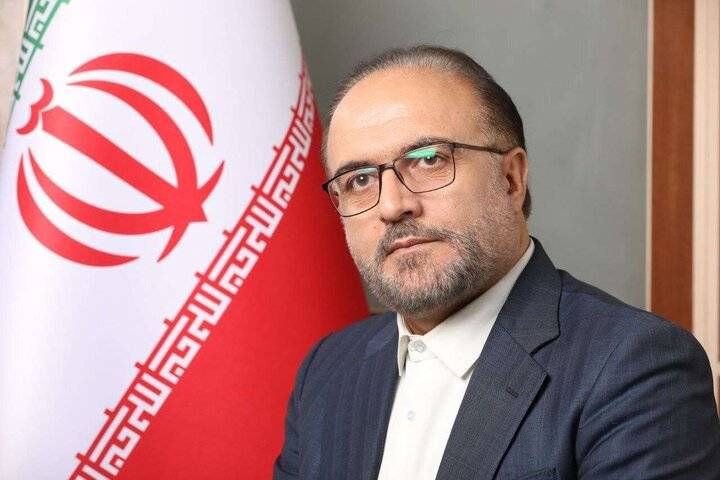
As U.S. economic pressure on Iran intensifies, expanding trade with neighboring countries, particularly Afghanistan, could help reduce the Iranian economy’s vulnerability to economic warfare. Afghanistan, given its geographic proximity and trade and transit potential, is also an important market for Iran. In an interview with IRAF, Iranian lawmaker Alireza Zandian discussed the potential for expanding economic ties with neighboring countries and Afghanistan.
Alireza Zandian, a member of Iran’s Parliament representing Bijar, said recent threats by U.S. President Donald Trump against Iran should not be viewed as an entirely new development, arguing that the country has faced sanctions and economic pressure for years.
“Sanctions and economic pressure are not new issues for Iran, and the country has faced such conditions over the past years,” Zandian told IRAF. “However, a significant part of the current pressure is aimed at creating psychological effects on Iran’s economy. Expanding trade with neighboring countries, particularly Afghanistan, can help reduce the impact of these pressures.”
Zandian said Iran should strengthen its domestic economy while making greater use of the economic potential of neighboring countries. He also called for a more active role for the private sector and chambers of commerce, as well as the expansion of Iran’s railway network.
Sanctions are not new; the focus is on psychological warfare
Assessing Trump’s recent threats and the prospect of broader economic pressure on Iran, Zandian said there was no fundamental “new stage” in the pressure campaign.
“Economic sanctions against Iran already existed, and people have lived with the consequences of these sanctions for many years by relying on the resistance economy,” he said. “Therefore, what is being discussed today is not fundamentally a new issue for the country.”
Zandian said economic restrictions and pressure had been imposed on Iran for years and that the current situation should be viewed as a continuation of previous measures.
He argued that Iran’s adversaries had shifted their focus toward other forms of pressure, particularly psychological warfare, after failing to withstand Iran’s defensive capabilities.
“The main objective of this psychological pressure is to affect the resistance economy and the country’s inward-looking economy,” Zandian said. “Domestic capacities must therefore receive greater attention.”
Domestic capacity and the resistance economy
Zandian stressed the importance of relying on Iran’s domestic capabilities and strengthening an economy less dependent on external factors.
“If the country can make better use of its domestic capacities and pay greater attention to an endogenous economy, it can make more effective progress in many areas,” he said.
He noted that the concept of a resistance economy has also been incorporated into Iran’s Seventh Development Plan, arguing that serious implementation of these capacities could strengthen the country’s ability to withstand external economic pressure.
At the same time, Zandian said Iran should make use of the economic potential of other countries.
He pointed to Iran’s economic relations with various countries, saying that China’s position that it does not recognize sanctions imposed on Iran could contribute to maintaining economic exchanges and reducing the impact of external pressure.
Iran’s geopolitical position, he added, gives it a significant advantage because the country shares land borders with several states, creating substantial opportunities for expanding trade and economic relations.
Free zones and neighboring markets
Zandian said Iran could make greater use of its free zones and other existing capacities that have not yet been fully utilized.
“Even if some capacities have not been sufficiently used, the country can take advantage of its free zones and the potential available in these areas to expand trade,” he said. “New measures by Parliament and the government could create the conditions for greater use of these capacities.”
He said such measures could help Iran draw on its regional economic potential to counter external pressure.
Referring to the psychological impact of sanctions in previous years, Zandian said Iran had repeatedly experienced sharp currency movements following the imposition or announcement of new sanctions, although those effects later subsided.
He argued that a significant part of the current economic pressure similarly has a psychological dimension aimed at influencing the country’s economy.
Zandian expressed hope that coordination by the government, its economic diplomacy apparatus and the Ministry of Foreign Affairs, together with the use of domestic capacities, could help Iran respond to the current situation.
Afghanistan as a key market for Iran
Discussing the impact of Iran’s economic situation on Afghanistan and the possibility of offsetting some of the pressure through expanded trade with eastern neighbors, Zandian highlighted the cultural and social similarities between Iran and Afghanistan.
“Iran has many cultural and social similarities with Afghanistan and other eastern countries, and this can provide a suitable basis for expanding economic relations,” he said.
Zandian called for strengthening economic attachés, particularly in Iran’s eastern provinces, saying they could play a greater role in identifying economic opportunities in neighboring markets and promoting Iranian products and businesses.
He also referred to Iran’s longstanding ties with the people of Afghanistan.
“For many years, the people of Iran have stood alongside the people of Afghanistan,” he said, noting that Afghanistan had endured prolonged periods of war and that Iran had provided support and assistance during those years.
Zandian said significant market potential exists in eastern countries, including Afghanistan and Pakistan, and that Iran could use these markets to expand its trade.
Stronger economic attachés and a greater role for the private sector
Zandian identified the strengthening of economic attachés and the creation of new economic channels as among the ways Iran could make better use of Afghanistan’s market.
“These channels can help attract markets and create new opportunities for trade,” he said.
He also emphasized the role of Iran’s private sector and chamber of commerce, arguing that they have significant potential and should be given the conditions needed to enter the Afghan market more effectively.
“The government does not necessarily need to directly enter every economic activity,” Zandian said. “Instead, it should create the necessary environment for the private sector to expand its activities.”
He called on the Ministry of Foreign Affairs to strengthen economic attachés and said chambers of commerce should go beyond maintaining a limited presence in Afghanistan and make their offices more active.
Tariffs and free zones: The need for a support package
Zandian said Iran’s chamber of commerce, as the representative of the private sector, should play a more active role in developing new opportunities in Afghanistan.
He also called on the government to take measures on tariffs and provide necessary incentives for exports and imports to create more favorable conditions for traders and private businesses.
“A comprehensive package should be put in place so that the private sector and the chamber of commerce can enter the Afghan market,” he said, adding that the Ministry of Foreign Affairs should also give greater attention to the issue.
Zandian pointed to the potential of Iran’s free zones, including Qeshm and Chabahar, as well as Baneh and Marivan in Kurdistan Province and the Anzali Free Zone.
“These are very strong capacities that can be used to boost trade with countries in the region,” he said.
According to Zandian, making better use of these facilities could expand trade with eastern countries and increase Iran’s role in regional commerce.
Railways as a link between Iran, Afghanistan and Central Asia
Zandian also stressed the importance of expanding Iran’s railway network and developing rail links with Afghanistan.
“Expanding the railway network is one of the major objectives of the Seventh Development Plan, and the country must make greater efforts in this area,” he said.
Iran’s trade, he argued, should not rely solely on maritime routes, and railways should play a larger role in the country’s foreign trade.
He said railway connections with neighboring countries, particularly those to the east, could have a significant impact, while the government should simultaneously provide the infrastructure needed to make effective use of these routes.
Referring to the expected opening of sections of the rail connection between Iran and Afghanistan, Zandian described the development as a positive step that could signal a transformation in trade, while stressing that other necessary infrastructure must be developed at the same time.
Iran as a regional bridge between East and West
Zandian emphasized the broader importance of transport infrastructure for Iran’s economic position.
“If Iran’s infrastructure network is developed, the country, because of its geopolitical position, can have significant potential to connect different regions,” he said.
Iran has access to open seas on one side and, on the other, can serve as a link connecting Central Asia with eastern and western parts of the region, he added.
“This position can become a tangible economic asset, and the country can make extensive use of it,” Zandian said.
“Iran is not a closed country. It is located at the intersection of many countries in a sensitive and geopolitically important region,” he said. “This position should be used to expand trade, transit and economic relations with neighboring countries, particularly Afghanistan.”
The railway link and Afghanistan’s access to regional markets
Iran and Afghanistan have in recent years sought to diversify their trade and transit routes, with railway development playing a particularly important role. The Khaf–Herat railway is among the most significant rail projects connecting the two countries and could strengthen Afghanistan’s connection to Iran’s transportation network and, ultimately, international routes.
The development of the railway could reduce the time and cost of transporting goods while creating greater opportunities for Iran-Afghanistan trade and improving Afghanistan’s access to routes leading to open waters.
The expansion of eastern Iran’s railway network is therefore not merely a bilateral transport project. It could form part of Iran’s broader potential role in regional trade corridors. Connecting Afghanistan to Iran’s railway network and further developing rail infrastructure inside Afghanistan, if accompanied by the completion of necessary infrastructure and greater customs and trade coordination, could provide Afghanistan with expanded access to Iran’s southern ports and regional markets.
For Iran, the same infrastructure could create opportunities to increase exports, transit goods and strengthen the country’s position in regional trade.