Dr. Jafar Haghpanah, a university professor, writes in an exclusive analysis for IRAF:
Amid rapidly unfolding security developments in West Asia, the leaders of Pakistan, Saudi Arabia and Turkey signed a trilateral defense pact in the Saudi city of Mecca on August 7. The conclusion of this military-security agreement among three major and populous neighbors of Iran, as well as three Muslim countries with Sunni-majority populations, could have significant functions and regional implications in Southwest Asia. These developments merit consideration alongside their potential impact on Iran’s interests and security. This article briefly examines some of these dimensions.
In general, within the security subsystems surrounding Iran, the formation of military and security alliances and the conclusion of agreements among regional powers—sometimes with the intervention and participation of global powers—have a long history. Numerous pacts broadly similar to the Mecca Pact have been established on paper. Beyond older arrangements such as the Saadabad Pact, the Baghdad Pact and CENTO, the establishment of the Gulf Cooperation Council (GCC) in the early 1980s and the Saudi-led Arab coalition in the Yemen war in 2015 are among the unsuccessful examples of attempts to create regional security arrangements involving several Arab states. These ineffective experiences appear to have encouraged Riyadh this time to seek cooperation with two major non-Arab Muslim regional powers.
Military, security and even economic cooperation had already existed bilaterally between Pakistan and Türkiye, as well as between Pakistan and Saudi Arabia. However, trilateral cooperation among the three countries is a new experience. Apart from summits of Islamic countries, the three states came together only once, in 1996, as part of the Developing Eight (D-8) group in Turkey, to expand political and economic cooperation. That initiative also failed to go beyond agreements on paper and, in subsequent decades, gave way to intense political and security competition, particularly between Ankara and Riyadh. This rivalry reached its peak following the killing of Jamal Khashoggi, the prominent Saudi journalist and dissident, at the Saudi Consulate in Istanbul in 2018.
However, recent regional developments appear to have generated new perceptions among the elites and officials of the three countries, following the US and Israeli military aggression against Iran during the 12-day and 40-day wars, Israel’s continued attacks on Gaza and southern Lebanon, and changes in the military, security and political role of the United States in the region. After nearly a year of preparations and consultations, these developments ultimately brought the three countries together in Mecca on Friday, August 7, to establish the framework for such a pact.
The substance of the agreement indicates the three governments’ determination to increase military and defense cooperation in order to counter common threats. In this respect, the Mecca Pact bears similarities to NATO and its Article 5, under which an attack against one member is regarded as an attack against all members and collective action to counter the threat becomes an obligation.
On the surface, the pact does not appear to have an expansionist orientation. Its provisions emphasize that the agreement is directed against neither any country nor any other agreement, does not conflict with the members’ other commitments, and seeks only to establish mechanisms to strengthen trilateral cooperation with a defensive approach aimed at countering common threats facing the three countries.
But this raises the central question: What threats, and from which actors?
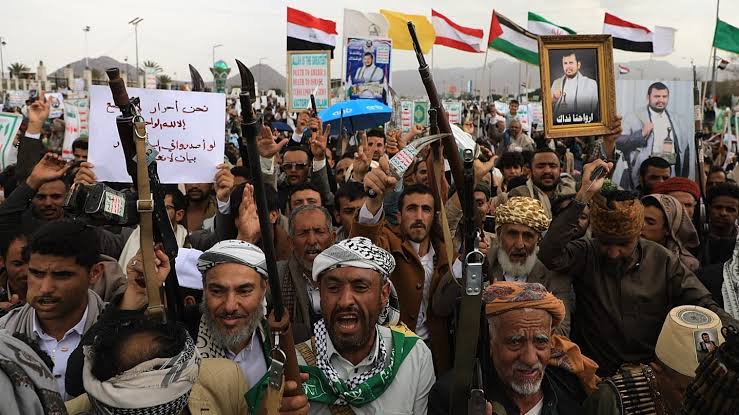
The timing of the pact, coinciding with the expansion of the war in the Persian Gulf and the Levant, the spread of the conflict to Saudi Arabia, and numerous attacks on oil facilities and US military bases in the country, strengthens the perception that the agreement indirectly identifies Iran and its allies—specifically Yemen’s Ansarullah and groups affiliated with the resistance in Iraq—as sources of the threats in question. From this perspective, the pact could be viewed as a warning to Tehran and to proxy groups affiliated with or aligned with the Islamic Republic. At the same time, the multilayered regional rivalries between Ankara and Islamabad and Tehran cannot be overlooked.
The contradictory aspect of this argument, however, is that none of the three governments is engaged with Iran in a zero-sum security equation. Even during the recent war, amid escalating military tensions between Iran and Israel, these governments sought to mediate and maintained bilateral cooperation with Tehran. This also applies to Saudi Arabia.
In reality, reducing, or at least managing, tensions with Iran has not only better served their interests but has also helped prevent the crisis from spreading and becoming prolonged.
The pact’s effectiveness in countering threats also deserves consideration. All three countries possess armies with significant military capabilities, advanced technologies and considerable firepower. Pakistan demonstrated its capabilities during last year’s war with India. Turkey also showcased its military technological capabilities during the Nagorno-Karabakh war through its support for Baku. But are all three countries facing threats of this nature, and are they vulnerable to them? The answer is probably no.
Conversely, all three states are more vulnerable in the realm of asymmetric warfare. One need only look at the role of the Turkish military in the Syrian crisis and its fight against the PKK, the performance of the Pakistani military in confronting the Afghan Taliban and the Pakistani Taliban on either side of the border, or the situation of the Saudi military and its allies during the Yemen crisis.
Against this backdrop, it appears difficult for the pact to prove particularly effective in countering such threats—threats that, precisely because of the region’s current tense and permeable security environment, are increasingly likely to emerge.
From another perspective, however, the pact could be interpreted as being aimed at countering a larger threat facing all three countries—not from Iran, but from Israel’s expansionism and increasingly unconstrained behavior in the region. Officials from all three countries have separately described Israel as a source of national security threats. From this perspective, the Mecca Pact could also be a warning to officials in Tel Aviv.
Implications
The Mecca Pact still has a long way to go before it can be tested and demonstrate its capabilities in countering the main threats to the security of its three members. Beyond the pact’s implementation and technical considerations, the differing priorities of the three member states cannot be ignored.
For Turkey, which remains under NATO’s security umbrella, concerns over Israel’s direct and indirect threats and interventionism will be a major and growing challenge. Pakistan will continue to grapple with its perennial challenge of India and its concern over maintaining strategic depth in Afghanistan. Saudi Arabia, although currently caught up in the ongoing regional conflict in the Persian Gulf, is likely to face more challenges with Israel in the long term.
At the same time, the more significant consequence may be growing disappointment and mistrust among regional states toward the United States, along with greater efforts by US allies to increase their security self-reliance and seek out new partners.
On this basis, more similar pacts involving other regional states may emerge. However, the effectiveness of many of these arrangements should already be viewed with skepticism.