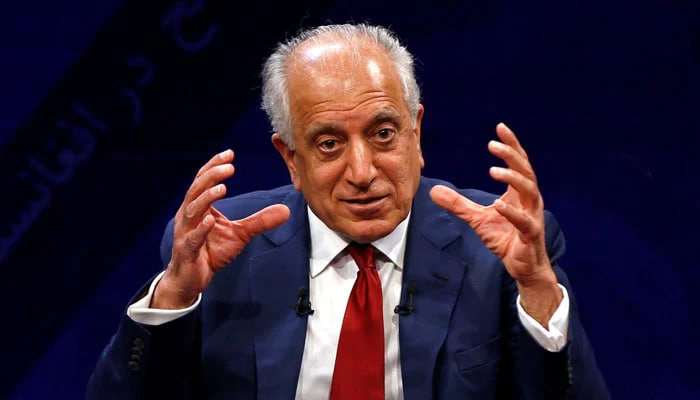
According to Iraf, Zalmay Khalilzad, the former U.S. Special Representative for Afghan Peace, made thought-provoking remarks claiming that Pakistan has consistently pursued a pattern of “simultaneous cooperation with the United States and anti-American groups” over the past 40 years. Referring to recent alleged reports about the possible deployment of Iranian military aircraft on Pakistani soil, Khalilzad emphasized that if Islamabad, alongside facilitating negotiations, had also made its bases available to the opposing side, it would not be “surprising” given the country’s historical record. He cited the presence of Osama bin Laden near Pakistani military facilities and Pakistan’s simultaneous support for NATO and the Taliban during the occupation of Afghanistan as a clear example of this dual policy.
A Crack in Washington’s Trust; Mediation Under Pressure
While Pakistan’s Foreign Ministry rejected the allegations and described the presence of Iranian aircraft at Noor Khan Airbase as solely related to negotiating delegations, a wave of skepticism has emerged in the U.S. Congress. Lindsey Graham, a prominent American senator, openly declared that he does not trust Islamabad’s intentions and called for another party to mediate between Tehran and Washington. This distrust stems from the hidden layers of Pakistan’s diplomacy, which has consistently attempted to maximize gains from both sides of conflicts by positioning itself in the middle.
Tactical Alliances or a Survival Maneuver?
From a strategic perspective, Khalilzad’s remarks should not be viewed merely as historical criticism; rather, they send a message to the U.S. diplomatic establishment to exercise caution in assigning Pakistan a key mediating role. Islamabad, currently under severe economic and border pressures, is trying to revive its geopolitical weight vis-à-vis Washington by using the “Iran” and “Strait of Hormuz” cards. However, Pakistan’s record during the Afghanistan conflict has shown that Islamabad’s security priorities do not necessarily align with the long-term interests of Western allies or even its neighbors.
Consequences for Regional Convergence
At a time when the region needs indigenous and transparent security models, Pakistan’s continuation of its “playing both sides” policy could complicate the peace process with new challenges. The clash of narratives between Khalilzad and Pakistan’s Foreign Ministry indicates that Islamabad faces a serious “credibility” challenge in navigating the current crisis — a challenge that could ultimately lead to the country being sidelined from emerging security arrangements in the Persian Gulf and the Gulf of Oman.