The events of March 2026, and the joint military aggression by the United States and the Zionist regime against Iran mark a turning point in the contemporary history of the Middle East and global relations. The assassination and martyrdom of the Leader of the Islamic Republic, Ayatollah Seyyed Ali Khamenei, at the beginning of this aggression was a tremendous shock for the Iranian nation and the entire region. From the perspective of Iran’s enemies, it was seen as a golden opportunity to portray the Islamic Revolution as leaderless and disorganized and to pave the way for the collapse of the system. However, what unfolded in the hours and days following the incident revealed that the foundations of the Islamic Republic are not based on an individual but on institutions and on popular and legal legitimacy.
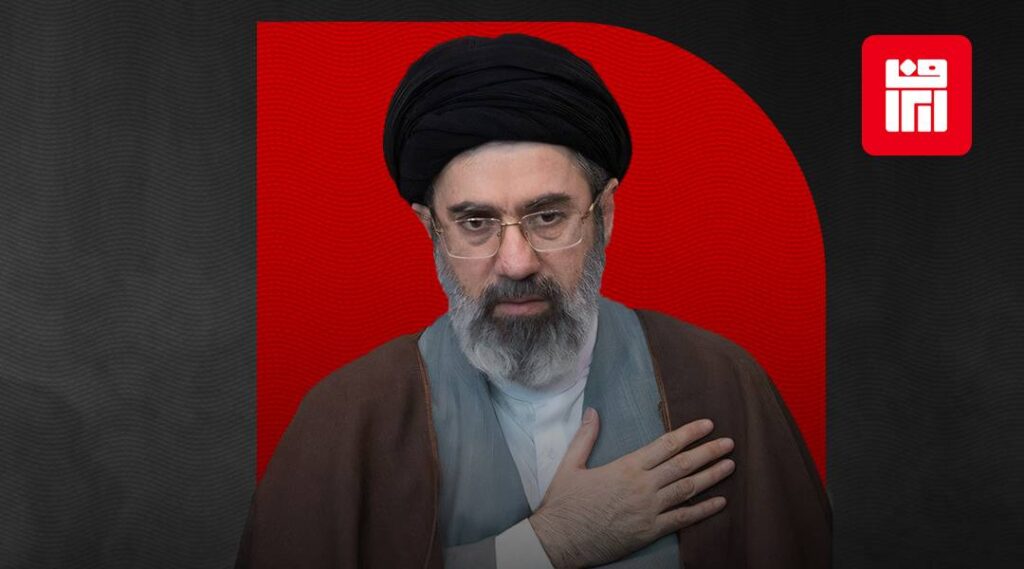
The swift and decisive selection of Ayatollah Seyyed Mojtaba Khamenei as the new leader, in accordance with the mechanisms and criteria outlined in the Constitution, not only preserved the chain of command but also reinforced the credibility and authority of the system of Guardianship of the Jurist (Velayat‑e Faqih) before the eyes of its adversaries.
The failure of the regime‑change project pursued by the United States and Israel for decades through both soft and hard instruments, combined with the selection of the third leader of the Islamic Revolution, conveyed a clear message: the Islamic Republic of Iran is not a fragile political system but a living and resilient civilization that renews itself in moments of crisis.
Continuity of Legitimacy and Political Stability in Times of Crisis
The selection of a new leader at a moment when adversaries expected collapse or chaos within Iran’s power structure represents the most significant sign of institutional cohesion and political maturity in the Islamic Republic. The rapid coordination among legal institutions—from the Assembly of Experts to military and security bodies—strengthened public confidence and ensured continuity in wartime command. On the international stage, this stability sends a clear message: military attacks or assassinations cannot shake the foundations of a system grounded in religious legitimacy and popular support.
Failure of the Regime‑Change Strategy and the Collapse of the Power‑Vacuum Scenario
While many political systems around the world descend into instability or power vacuums during similar crises, Iran relied on the precise mechanisms of its Constitution to implement the succession of leadership quickly and without disruption. This event demonstrated that the aggression was not merely intended to damage Iran’s defensive structure but was clearly part of a regime‑change strategy.
The U.S.‑led project relied on the assumption that eliminating the leadership would create a vacuum and cripple Iran’s decision‑making system. The swift selection of a new leader invalidated this strategy from its foundation. Not only did no power vacuum occur, but the armed forces continued defensive operations with greater coordination, while political institutions demonstrated remarkable unity.
From this perspective, the failure of Washington and Tel Aviv to realize the “Iran after Khamenei” scenario shows that the Islamic Revolution possesses a model of civilizational resilience rather than a temporary political structure. This failure will be recorded in history and will remain a stain on the record of colonial powers such as the United States and Israel, which must now acknowledge that no pathway exists for engineering regime change in Iran.
Redefining Power and the Deep Roots of the Resistance Discourse
One of the key messages conveyed by the selection of Seyyed Mojtaba Khamenei is the continuation of the path of Imam Khomeini and the martyred leader of the Revolution. While adversaries anticipated ideological flexibility or a shift in direction, the new leadership configuration demonstrated that the spirit of jihad, resistance, and independence remains the core principle guiding Iran’s strategic decisions.
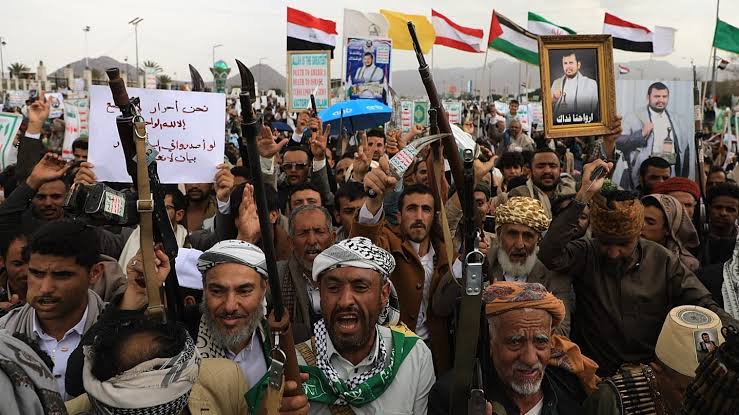
This message carries vital meaning for the Axis of Resistance, from Lebanon to Iraq, Yemen, and Syria, signifying that the chain of resistance has not only been preserved but has been strengthened psychologically and symbolically.
Resistance movements consider themselves heirs to the path of the martyred leader, and their motivation to confront aggression has intensified. This development effectively signals the continuation of unified leadership in the anti‑Zionist front. With the consolidation of new leadership, the international system may witness the emergence of a new framework of soft power, in which Iran—drawing on religious legitimacy, human capacity, and military strength—could become a model of civilizational resistance rooted in faith and genuine popular participation rather than Western models of power.
As a result, global alliances may be redrawn, the unipolar order continues to decline, and a multipolar system may emerge in which the Axis of Resistance stands as one of the new pillars of global power.
The Collapse of the American Regional Order and the “Greater Israel” Project
From the 2003 invasion of Iraq to the Abraham Accords in 2020, the United States attempted to construct a new regional order centered on Israel. However, following the failure of the recent aggression and the consolidation of leadership in Iran, that order has effectively collapsed.
Arab states along the Persian Gulf and even traditional allies of Washington have witnessed that American security guarantees are neither reliable nor stabilizing, but often a source of instability. Statements from regional officials and widespread discussions on social media regarding U.S. military bases in the region reflect this changing perception.
One consequence is that American bases have increasingly become targets for resistance forces, while Arab public opinion is entering a phase of strategic reassessment.
Strengthening Domestic Cohesion and the Concept of Nation‑Ummah
The martyrdom of the leader could have deepened social divisions within Iran; however, the opposite occurred. Iranian society responded with unprecedented unity. Political factions, ethnic groups, and religious communities rallied around the shared goals of preserving independence and confronting aggression.
This national unity not only consolidated the legitimacy of the new leader but also projected a renewed image of Iran to the world. A nation and ummah that remain resilient against ethnic and sectarian division demonstrates that social cohesion is a strategic asset for the decades ahead and that Iran’s soft power is rooted in its popular identity.
Alongside military attacks, adversaries launched an extensive cognitive warfare campaign designed to create confusion within Iranian society. Yet public reactions—including spontaneous demonstrations and expressions of loyalty by cultural figures inside Iran, across the region, and even in Europe and the United States—demonstrated the failure of this effort.
Western media outlets that anticipated a collapse in legitimacy instead encountered the opposite reality: regardless of the outcome of the conflict, public trust in the system has strengthened, and regional rivals increasingly acknowledge Iran’s power under the leadership of the new revolutionary leader.
A Message to Europe: The Failure of Pressure‑and‑Negotiation Strategy
In recent years, Europe attempted to balance economic pressure with limited dialogue in order to push Iran toward concessions. However, the selection of a new leader during a moment of resistance demonstrated that the strategy of “smart pressure” has lost effectiveness.
The rapid selection of a new Supreme Leader shocked many European policymakers. Initially, some attempted to portray the transition as merely symbolic. Yet when the structure of power continued functioning seamlessly alongside strong national cohesion, they were compelled to reconsider their assumptions.
European governments now face a reality in which Iran demonstrates political regeneration precisely when it is perceived as weakest. Strategically, Europe may be forced to adopt a more pragmatic approach toward Tehran, potentially reconsidering its policies regarding energy, migration, and regional security.
Consolidation of Military Power
Another major consequence of this development has been the validation of Iran’s military command structure. The Islamic Revolutionary Guard Corps, the army, and the Basij forces acted without confusion, maintaining readiness and executing responses.
Even at the peak of crisis, the armed forces conducted retaliatory operations without interruption. For global observers, this displayed the professionalism of Iran’s defense system. The continued coordination of the army and the IRGC under the new leadership further reinforced the message that leadership transition in the Islamic Republic signifies continuity rather than disruption.
Geopolitical Implications for the Eastern Bloc and the Non‑Western Axis
Countries aligned with the Eastern geopolitical sphere—including China, Russia, and other emerging powers—carefully analyzed the leadership transition. The message to them was clear: Iran remains a stable and reliable partner.
Redefining Regional Security and the Strategic Role of the Strait of Hormuz
Previously, many outside Iran assumed that regional security depended on the presence of foreign forces. However, the recent aggression and the leadership transition have reinforced the idea that regional security cannot be built upon external intervention. Security cannot simply be purchased; it must be constructed collectively.
Even countries aligned with the United States and Israel increasingly recognize that lasting security emerges from regional cooperation and respect for national sovereignty. The Axis of Resistance, centered on Iran, may therefore play a more prominent role in shaping new regional security arrangements.
Economically, although political upheavals often lead to instability, Iran’s internal markets stabilized rapidly due to consistent command structures and support from governmental and revolutionary institutions. Energy exports continued, sanctions were managed, and new economic resilience policies were introduced.
At the international level, Iran’s control over the Strait of Hormuz has had significant economic implications for Western economies by influencing global energy markets and oil prices.
Social and Cultural Reflections of the Leadership Transition
From a cultural and identity perspective, Iranian society viewed the selection of the new leader not as the end of an era but as the continuation of the path of Imam Khomeini and the martyred leader. Popular slogans emphasized this continuity, reflecting the enduring spiritual dimension of Iran’s political culture.
Concepts such as martyrdom and divine duty were revitalized in public discourse, and spontaneous gatherings in major cities demonstrated a renewed sense of collective sacrifice and unity.
Symbolically, the new leader represents a generational transition within the revolution—moving from the founding generation to a generation committed to continuity while maintaining the core principles of the movement.
Impact on Separatist Groups and Anti‑Iranian Movements
Following the aggression, adversaries attempted to activate separatist groups in border regions. However, the outcome was the opposite: national unity, strong defense forces, and religious and ethnic solidarity prevented the spread of such movements.
Even in regions often targeted by foreign narratives—such as Kurdistan and Sistan‑Baluchestan—families participated in ceremonies supporting national unity and loyalty to the country.
This demonstrated that separatist strategies have failed and that Iran continues to represent one of the most cohesive multi‑ethnic governance models in the region.
Message to Extra‑Regional Adversaries
For the United States, which sees itself as a global superpower, the crisis ultimately demonstrated Iran’s consolidated deterrence and resilience. After decades of sanctions and attempts to destabilize the system, Washington now faces the reality that Iran not only survived the crisis but emerged stronger.
For Israel, the selection of a new leader signifies the continued strength of what it perceives as its principal ideological and strategic rival. Consequently, Israel itself faces growing internal divisions and legitimacy challenges.
Conclusion
Beyond politics, the selection of the new leader conveys an ethical message in an era of global post‑truth politics. The appointment of Ayatollah Seyyed Mojtaba Khamenei as the new Supreme Leader at one of the most critical moments in modern Iranian history demonstrates the continuity of the system of governance rooted in faith, popular participation, and constitutional law.
While adversaries sought to push Iran toward collapse through military aggression and assassination, the result has been the opposite: the strengthening of national power and the revival of the global discourse of resistance.
The Islamic Republic of Iran has demonstrated that it is a system with deep civilizational memory and the capacity to navigate crises peacefully and effectively. Across the region—from the East to the Mediterranean—a new order may gradually emerge, less dependent on external powers and more centered on independent nations.
These developments mark not the end of Iran’s trajectory but the beginning of a new chapter in the history of regional resistance—one in which the Iranian nation, under new leadership and steadfast faith, continues the path of its martyred leader while presenting a renewed model of resilience, rationality, and dignity to the world.