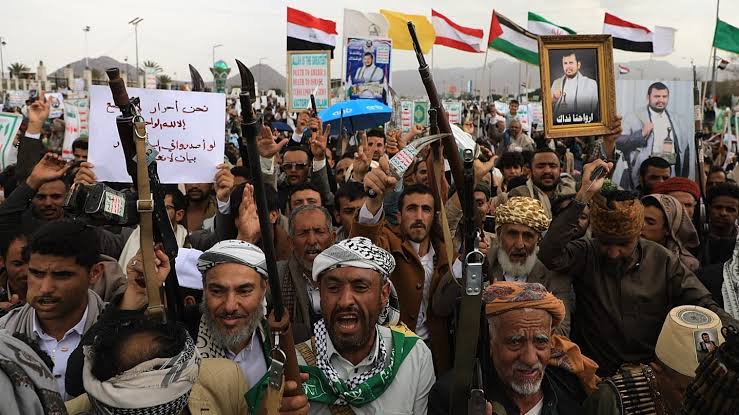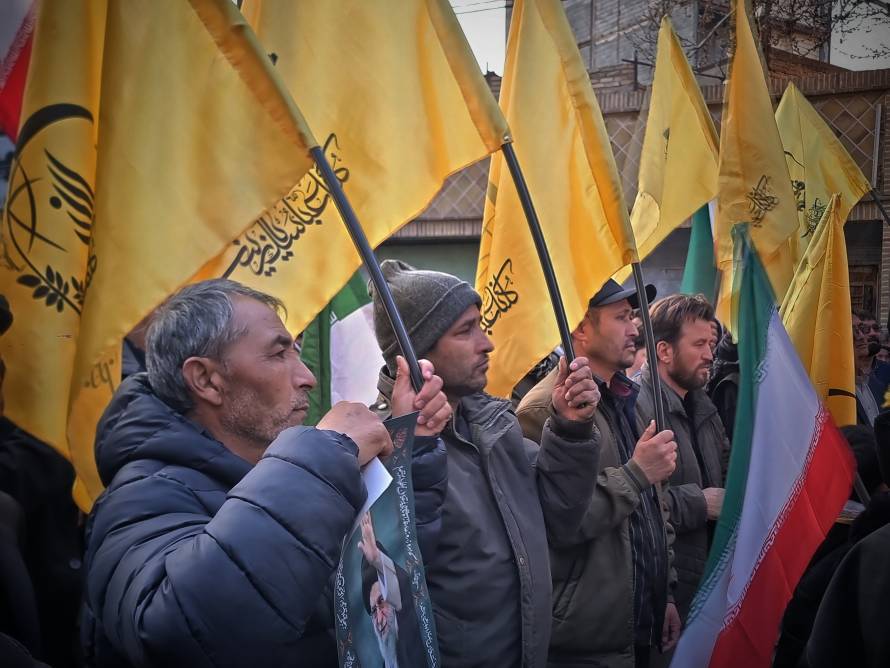
Tehran- IRAF- a large number of Afghan migrants residing in Mashhad gathered in Golshahr Square to mourn the martyred leader.
Among the mourners, the presence of families of martyrs and fighters of the Shrine Defenders was clearly visible.
As I walk through the crowd, everywhere I look there are migrant men and women, young and old, mourning. People are openly crying, and unlike other occasions when they try to hide their faces with their hands, in mourning for the martyred leader no one seems concerned about such matters. It is as if the people of Afghanistan themselves have lost their leader.
One of the children of martyrs, who apparently had previously met the Supreme Leader, says while crying: “We have become orphans again. We, the children of martyrs, did not feel like orphans while the Leader was with us. We felt supported, as if our backs were against a mountain. When we had the Leader, it felt as though we had a father. Now that the Leader is gone, we are orphans again.”
Another mourner, whose pale face shows how deeply the grief has consumed him, says: “Even if we were to die from this sorrow, it would still not be enough. Many people still do not realize what kind of leader we have lost. They are still in shock and cannot yet comprehend it.”
Then, as tears continue to fall, he adds: “When Haj Qassem was martyred, our hearts were strong because the Leader was still there. When President Ra’isi was martyred, we still felt reassured because we had the Leader. When Seyyed Nasrollah was killed, we were again comforted by the presence of the Leader. But now that the Leader himself has been martyred, where should we turn for refuge? There is no one left for us to rely on, no one whose words can calm everyone’s hearts.”
He says: “The Leader was like a father to all of us—whether in politics, for the families of martyrs, or for the Axis of Resistance. The martyred leader was like a father. We have all lost a father. When the father of a family is gone, it is as if the pillar of the house has been struck down. The house is no longer the same. We only pray that God will hasten the reappearance of our Imam Mahdi.”
It seems that everyone is waiting for someone to say something—to speak of the Leader’s virtues, to recall memories of that great man—so that they can weep. Everyone’s hearts are wounded and fragile, and with the slightest reminder, tears begin to flow.
Another son of an Afghan martyr who was among the Shrine Defenders says: “The constant slogan of the fighters was that we obey the command of the Leader. The fighters’ path and ideals were clear—a Shiite Afghan movement that follows the doctrine of the Guardianship of the Jurist. But now that the Leader is gone, what can we say? It was because of him that we existed. He was the support and backbone of the fighters. All the fighters went to the fronts out of love for him. His absence is painful and heartbreaking for every soldier loyal to this path across the entire Axis of Resistance—from Syria and Lebanon to Iraq and Afghanistan.”
In these days, when the entire Islamic world is dressed in black in mourning for the Supreme Leader, the martyred commander of the Ummah, Ayatollah Seyyed Ali Khamenei, Afghan migrants in Iranian cities are also mourning their leader. It does not matter what nationality you are—being part of the front of resistance and the side of the oppressed is enough to feel the pain of this loss.
A massive crowd of migrants has gathered, and it feels as if the atmosphere of the Iran‑Iraq war years has returned, with all segments of the people standing together. In those years, migrants also stood beside the Iranian nation and paid their share by offering more than three thousand martyrs. Today as well, they stand shoulder to shoulder with the noble people of Iran.
One Afghan fighter present at the gathering says: “On the front of Islam, there is no difference between Afghans, Iranians, Iraqis, or Pakistanis. We all fight on the same front against disbelief and arrogance. We believe that in the struggle between truth and falsehood there is no middle path. Everyone must stand on the side of truth and on the right side of history. We have always fought on the side of truth, and if it is needed today, we will once again stand on that front against falsehood until our last breath.”
Gradually, a massive crowd gathers at the end of the Golshahr market. The number of people is so large that it is difficult to walk through them. The ceremony begins, and migrants release their suppressed grief through revolutionary chants. Once again, the familiar slogans are heard: “Death to America, death to Israel!” But this time louder and more forceful. As Imam Khomeini once said: “Shout whatever cries you have against America.” It is as if all the migrants of Golshahr have become one voice, raising their cries for the world to hear.