The return of Zalmay Khalilzad to Afghanistan and his involvement in the country’s emerging economic and political affairs have drawn attention as Kabul seeks to expand its economic ties with regional countries. Saudi Arabia’s growing economic presence in Afghanistan, including energy agreements involving Khalilzad, has raised questions over whether these developments should be viewed solely as efforts to attract investment and promote economic development or whether they could also have broader political and security dimensions.
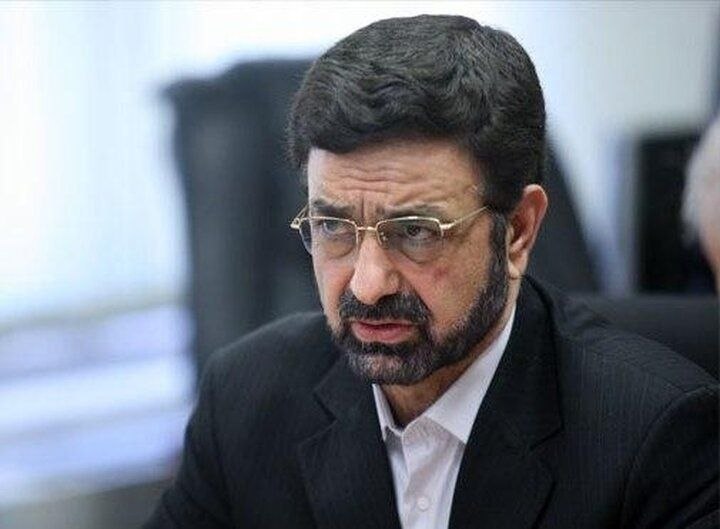
IRAF examined the issue in an exclusive interview with Fadahossein Maleki, Iran’s former ambassador to Afghanistan and a member of the Iranian Parliament’s National Security and Foreign Policy Commission.
Maleki expressed skepticism over Khalilzad’s latest activities in Afghanistan, citing his long record in U.S. policy toward the country and the wider region. He said Khalilzad’s return to Kabul should be examined carefully in light of his previous role and the experience of regional countries with his activities.
The former Iranian ambassador warned that Khalilzad’s role should not be viewed solely through the lens of economic cooperation or commercial agreements. He also urged the Taliban not to come under the influence of what he described as Khalilzad’s “political tactics” and to prioritize Afghanistan’s national interests and the interests of its people.
Khalilzad’s Regional Trips: Why Caution Is Needed
Maleki said Khalilzad’s previous trips to the region had not always produced positive outcomes for regional countries, adding that he was therefore not optimistic about his latest visit to Afghanistan.
He described Khalilzad as a figure with a long history of involvement in U.S. policy toward Afghanistan and said that during his tenure as U.S. ambassador to Afghanistan, Khalilzad sought to influence political and regional dynamics.
According to Maleki, one of the issues that drew Khalilzad’s attention during that period was the relationship among Afghanistan, Iran and Pakistan and the ways in which developments between the three countries could be influenced.
Maleki said this history had contributed to the lack of positive perceptions of Khalilzad among people and governments in the region, particularly in Afghanistan and Pakistan.
The former Iranian ambassador stressed that Khalilzad should not be regarded merely as an economic figure or an intermediary facilitating commercial agreements. Before being presented in some recent arrangements as a facilitator of Afghanistan’s economic relations with Arab countries, he was a prominent figure in U.S. policy toward the region.
Maleki said this background warranted greater caution in assessing Khalilzad’s current activities and that his role should not be judged solely on the basis of the title or function currently assigned to him.
He expressed hope that the Taliban would not be influenced by what he called Khalilzad’s “political tactics” and would instead prioritize Afghanistan’s national interests and the interests of its people.
What Role Does Khalilzad Play in Afghanistan’s Economic Deals?
Maleki also discussed Khalilzad’s role in Afghanistan’s emerging economic relations, including the country’s agreements with Saudi Arabia.
He said his understanding of Khalilzad dated back to the former U.S. diplomat’s activities in Afghanistan and that, for this reason, his current presence could not be assessed solely from an economic perspective.
Referring to the period when Khalilzad was active in Afghanistan, Maleki claimed that concerns had existed even then over his activities and the nature of his involvement in Afghanistan’s political affairs.
Regarding Khalilzad’s involvement in Afghanistan’s economic relations with Saudi Arabia, Maleki said: “If this presence is solely to facilitate investment and carry out economic activities, the issue can be defined within the framework of natural relations between countries; but if this economic activity is a prelude to creating political or security influence, the situation will be completely different.”
Maleki warned that Khalilzad’s renewed presence could signal a stronger U.S. footprint in Afghanistan and suggested that Washington may still be seeking to preserve or strengthen its influence in the country.
He said Afghanistan, after two decades of U.S. military and political presence, was now seeking to pursue a more independent foreign policy and should not allow economic relations to become a means for the return of political influence by foreign powers.
According to Maleki, the Afghan government needs to exercise greater caution in determining the nature of its foreign partnerships and distinguish genuine economic investment from efforts aimed at establishing political or security influence.
Saudi Investment in Afghanistan: Influence Under the Shadow of Economics
Maleki also addressed Saudi Arabia’s growing economic presence in Afghanistan, saying Riyadh had sought in recent years to expand its relations with Afghanistan and establish a stronger foothold in the country.
He stressed that foreign investment in Afghanistan was not inherently negative. If countries enter Afghanistan to develop infrastructure, create jobs, increase production and utilize the country’s economic potential, such investment could benefit the Afghan economy.
However, Maleki argued that the region’s current circumstances made it difficult to assess economic agreements without considering their potential political and security implications.
He said Afghanistan’s important geopolitical position and its proximity to Iran, Pakistan and Central Asia had made developments in the country a matter of concern for both regional and extra-regional powers.
Maleki, who represents Zahedan, added that Saudi Arabia, like other countries, was pursuing its own interests and objectives, and that alongside economic goals, it was natural for Riyadh to seek stronger relations and greater influence in the region.
He said the Afghan people were not indifferent to the conduct of foreign countries and understood which countries were contributing to Afghanistan’s development and stability and which might seek to use the country’s capacities to advance political objectives.
At the same time, Maleki stressed that Iran had no objection to Saudi Arabia’s economic presence in Afghanistan and that if such involvement served the economic interests of the Afghan people, it could be regarded as a natural relationship between the two countries.
Security Dimensions of Economic Agreements
Maleki said the region’s complex circumstances had made it increasingly difficult to separate economic and political developments from security issues.
Referring to the confrontation between Iran and the United States and recent regional developments, he said that under such circumstances, political, economic and diplomatic moves by foreign powers in regional countries could have consequences extending beyond the economic sphere.
According to Maleki, Afghanistan, Pakistan, Iran, Saudi Arabia and other regional countries were all redefining their relationships under new conditions. As a result, economic agreements and diplomatic visits should be assessed within a broader framework.
He stressed that if Saudi Arabia’s presence in Afghanistan remained purely economic, Iran would regard it as a natural development. However, if it were accompanied by political or security objectives or efforts to alter regional dynamics, Tehran would be sensitive to such developments.
Maleki also said the role of the United States in recent regional developments should not be overlooked, adding that the presence of figures such as Khalilzad could raise concerns that Washington was exploring ways to redefine its role in Afghanistan.
He said the experience of the past two decades had shown that the presence of foreign powers in Afghanistan could have long-term consequences for the security of both Afghanistan and neighboring countries. Therefore, he argued, any new developments should be followed closely and with caution.
Iran-Afghanistan Relations: Beyond Changes in Government
The member of the National Security and Foreign Policy Commission also emphasized the historical nature of Iran-Afghanistan relations, saying ties between the two countries went beyond relations between governments.
Maleki described relations between the Iranian and Afghan peoples as rooted in history, culture and civilization and said changes in governments in Afghanistan could not eliminate these deep ties.
He added that Afghanistan had historically sought to prevent its territory from being used as a base for actions against neighboring countries, particularly Iran.
Referring to recent developments and the confrontation between Iran and the United States, Maleki said that during the recent war, the Afghan people had taken positions in support of Iran and that the current Afghan government had also prevented Afghan territory from being used for military action against Iran.
He described this as evidence of the importance of Iran-Afghanistan relations and stressed that the security of the two countries was interconnected and that instability in Afghanistan could affect the security of Iran’s eastern borders.
Maleki said this was why the Islamic Republic of Iran was closely monitoring political and security developments in Afghanistan and remained sensitive to changes in the balance of influence among foreign powers in the country.
Maleki: Iran Has No Problem with Saudi Economic Presence in Afghanistan
In his concluding remarks, Maleki referred to relations between Iran and Saudi Arabia, saying bilateral ties had also entered a different phase in recent years and had moved from a period of tension and strained relations toward greater engagement.
He stressed that Iran had no problem with Saudi Arabia’s economic relations with Afghanistan and that not every Saudi economic activity in the region should necessarily be interpreted as an action directed against Iran.
According to Maleki, what matters is the objectives behind these relations and how economic capacities are used.
He said that if Saudi Arabia operates in Afghanistan with the aim of investment, economic development and creating new opportunities for the Afghan people, Iran would welcome such efforts. However, if these activities were accompanied by political and security objectives or attempts to create divisions among regional countries, they would naturally raise concerns.
Maleki also stressed the need to avoid viewing regional relations in absolute terms, saying Iran and Saudi Arabia could develop their relations within the framework of shared interests.
He noted that the region was moving toward greater interaction among neighboring countries and reduced tensions, and said that in such an environment, all countries should seek to separate economic relations from destructive political and security rivalries.
Background
Zalmay Khalilzad, an Afghan-born American diplomat, is a prominent figure in U.S. foreign policy toward Afghanistan and the wider region. He has held various diplomatic and political positions related to Afghanistan and in recent years served as the U.S. Special Representative for Afghanistan.
Afghanistan has in recent years sought to expand its economic relations with regional countries and attract foreign investment for the development of its natural resources and infrastructure. Saudi Arabia has likewise sought to expand its economic ties with Afghanistan and participate in economic and energy projects in the country.
Against this backdrop, Khalilzad’s presence in Kabul and his role in some arrangements related to Saudi investment have attracted the attention of regional observers.
For Iran, developments in Afghanistan are of particular importance. The two countries share a border as well as extensive historical, cultural and economic ties, while security developments in Afghanistan can directly affect Iran’s eastern borders and wider regional dynamics.
As a result, any increase in the presence of extra-regional powers or any shift in the balance of foreign influence in Afghanistan is being closely monitored by Tehran.