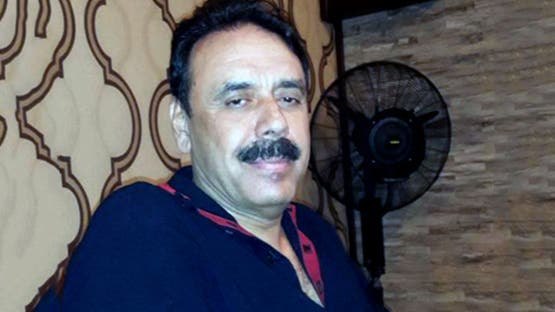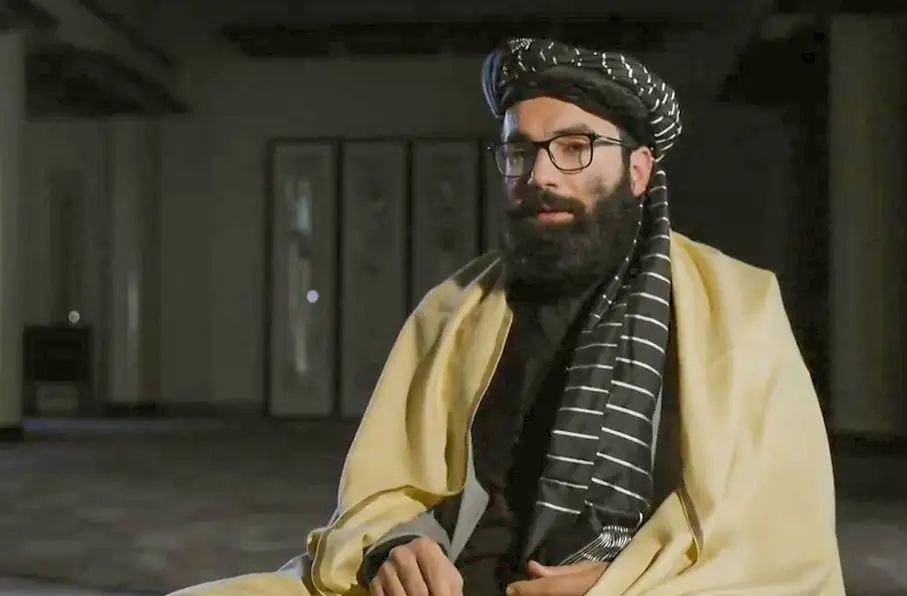
Anas Haqqani, brother and adviser to Taliban Interior Minister Sirajuddin Haqqani, has called for greater political pragmatism and mutual respect in Afghanistan, warning that emotionally driven politics and decisions divorced from realities on the ground could have serious consequences.
As reported by IRAF, in a note published by TOLOnews, Haqqani said political developments were often “more sudden than they appear” and argued that a realistic assessment of events was essential to understanding and anticipating their trajectory.
“Politics without rationality and realism leads to emotional decisions and ill-considered reactions,” Haqqani wrote, urging Afghan politicians and political activists not to sacrifice their ability to recognise realities on the ground to momentary emotions.
“Politicians who surrender themselves to emotions gradually lose the ability to engage rationally with realities on the ground,” he said.
His comments came as Afghanistan marked the anniversary of the political changes in August 2021 that brought the Taliban back to power. Haqqani said he had followed a range of views expressed by politicians and analysts during the anniversary period, describing some of them as instructive.
He singled out Waheed Omar, a former official in Afghanistan’s previous government, praising what he described as a “balanced and moderate” approach.
Haqqani said his assessment did not mean that everyone should agree with Omar, but rather reflected his view that Omar had sought to examine recent developments with some distance from emotional reactions.
Political and social divisions
Haqqani also referred to decades of war, foreign intervention and political instability in Afghanistan, saying they had left behind bitter memories and deep political and ideological divisions.
“Afghanistan is the common home of all Afghans,” he said, warning that any humiliation or damage inflicted on the country would not ultimately be recorded in history in the name of one political movement or government, but would remain associated with the Afghan nation.
Criticism of media and social media discourse
A substantial part of Haqqani’s note focused on Afghanistan’s media environment and social media, which he said had become increasingly emotional and reactive, with mutual respect and tolerance for opposing views losing ground.
“Having an opinion is not enough; we must be prepared to listen to the other side and remain fair even when disagreements are serious,” he wrote.
Haqqani preparing political memoirs
Haqqani said he had spent the past year and a half writing political memoirs covering the period from 2001 to 2021 and had completed a substantial part of the work.
He also said a separate account of his prison experiences was nearing completion and that he hoped to prepare both works for publication soon.
Haqqani stressed that the memoirs should not be regarded as the final word on that period, but rather as “the account of one Afghan” of the developments of the past two decades.
Haqqani is regarded as a senior figure in the Haqqani network. He was held at Bagram prison before being released by the government of former Afghan President Ashraf Ghani at the direction of the United States. He subsequently joined the Taliban’s negotiating team in Qatar and, after the Taliban seized Kabul, became an adviser to his brother, Sirajuddin Haqqani, at the Interior Ministry.
Although Haqqani does not formally play a major role in the Taliban’s executive decision-making, his public statements have often been viewed as reflecting a more moderate presentation of the movement. His latest note appears to follow a similar approach, placing emphasis on political dialogue, pragmatism and restraint.
The Haqqani faction is widely reported to have differences with Taliban supreme leader Hibatullah Akhundzada, based in Kandahar. Some of those tensions are linked to the Taliban leadership’s policies on issues including girls’ education, its treatment of opponents and the concentration of power.