The launch of a pilot transit corridor linking Tajikistan, Afghanistan and Iran could strengthen the three countries’ roles in regional trade as governments increasingly compete to secure positions along emerging economic corridors. In an interview with IRAF, economist Reza Majidzadeh said the route could become a key East-West trade link if supported by political stability, stronger economic cooperation and complementary production networks.
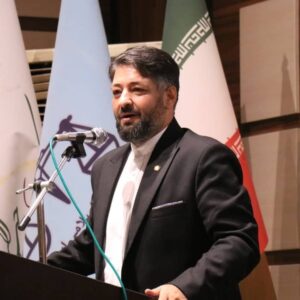
Economist Reza Majidzadeh told IRAF that the proposed Dushanbe–Kabul–Tehran transit corridor should be viewed within the broader competition over global economic corridors rather than as a standalone transport project. According to him, countries are increasingly seeking to position themselves along strategic trade routes to strengthen their role in international supply chains and regional commerce.
Economic Corridors Drive Global Competition
Majidzadeh said economic corridors have become one of the defining features of international economic competition.
He said:
“Today, a significant part of the competition among countries and regional alliances is based on the design and development of economic corridors.”
He added:
“In the new global economy, countries no longer compete only through domestic production and traditional trade. They are also striving to position themselves along the main routes for the movement of goods, energy and services and to benefit from integration into international economic networks.”
Referring to China’s Belt and Road Initiative, he said:
“One of the most important examples of this trend is China’s initiative to develop land and maritime routes connecting East and West. Alongside it, other global projects and initiatives are also being pursued, demonstrating that economic corridors have become a significant part of geopolitical and economic competition among countries.”
He stressed:
“The Tajikistan–Afghanistan–Iran corridor should also be viewed within this framework, as it can become part of the broader East-West connectivity network.”
Iran and Afghanistan’s Geographic Advantage
Majidzadeh said Iran and Afghanistan occupy one of the shortest routes linking East and West, giving both countries a strategic geographical advantage.
He said:
“These two countries are located along one of the shortest routes connecting East and West, and this creates an important advantage for them.”
He added:
“From a logistical perspective, Afghanistan and Iran can serve as a suitable route connecting East Asia, Central Asia and Western markets. Although both countries have faced political, security and international challenges in recent years, their geographical location remains an important economic asset.”
He also referred to air transport potential, saying:
“Iran and Afghanistan possess geographical characteristics that can be taken into consideration in the development of transport connectivity.”
According to him:
“The main advantage of this route is that it is located at the junction of several major economic regions, which could enhance the role of the three countries in the regional trade network.”
Beyond Transit: Building Regional Value Chains
Majidzadeh said the corridor’s significance extends beyond transporting goods and could help establish regional production and value chains.
He said:
“Today’s economy is moving toward global and regional value chains, meaning that countries divide different stages of production across different regions and make use of each other’s complementary capacities.”
He added:
“Iran, Afghanistan and Tajikistan possess economic capacities that can provide the basis for greater cooperation among them.”
He explained:
“Iran and Afghanistan have the potential to cooperate in areas such as metals, agricultural products, cotton, iron and certain industrial goods. Iran also has capabilities in petrochemical products and downstream industries, while Tajikistan has considerable capacities in agriculture and aluminum exports.”
He emphasized:
“If these capacities are incorporated into a joint economic program, the three countries can move beyond a purely commercial relationship toward the creation of shared production and value chains.”
Afghanistan as a Regional Gateway
Majidzadeh said changing regional trade patterns have created new opportunities for Afghanistan.
He said:
“Given the problems that have emerged along some traditional routes, such as the Pakistan route, Afghanistan can redirect part of the flow of goods along the new Silk Road routes toward the West.”
He added:
“Afghanistan can serve as a bridge connecting Central Asia, China and West Asia, while Iran, along the continuation of this route, can connect this network to open waters and global markets.”
He stressed:
“Transforming this route into a sustainable economic hub requires cooperation among the three countries and the creation of favorable conditions for commercial activity.”
Strengthening Iran’s Regional Transit Role
Majidzadeh said the corridor could reinforce Iran’s position as a regional transit hub.
He said:
“One of the most important consequences of developing this route will be strengthening Iran’s role as a connecting link between Central Asia, West Asia and open waters.”
Referring to trade between Iran and Afghanistan, he said:
“At present, trade between Iran and Afghanistan amounts to less than two billion dollars, and the development of this route can create new opportunities for expanding trade and transit.”
He continued:
“The importance of this issue lies not only in increasing direct trade; the main point is positioning Iran at the center of a broader economic network.”
He added:
“The greater the number of countries connected to Iran through an economic network, the greater Iran’s geoeconomic power will become.”
According to him:
“Connecting Iran with Central Asia, Afghanistan and Tajikistan can also strengthen the country’s position along trade routes extending toward Turkey and Iraq.”
Security and Stability Remain Key Challenges
Despite the corridor’s potential, Majidzadeh said its long-term success depends on security and political stability.
He said:
“No transit route can achieve lasting success without security and stability.”
He added:
“Afghanistan’s internal situation is one of the key factors determining the future of this route, because trade development and investment attraction require predictable economic and political conditions.”
Referring to narcotics trafficking, he said:
“Iran, Afghanistan and Tajikistan are all affected by this issue in different ways, and controlling it requires joint cooperation among the three countries.”
He continued:
“In addition to domestic issues, regional relations are also important. Afghanistan’s tensions with Pakistan, as well as regional security challenges, could slow the development of this route.”
Economic Interdependence as the Foundation
Majidzadeh argued that stronger economic integration among the three countries is essential for the corridor’s long-term success.
He said:
“Creating economic interdependence among the three countries can be the most important factor in stabilizing this route.”
He added:
“When the economies of countries become interconnected and each country meets part of its needs through the others, there will be greater motivation to preserve stability and expand cooperation.”
Referring to disputes between Iran and Afghanistan, he said:
“Issues such as water disputes may affect relations between the two countries at certain times, but efforts should be made to separate economic issues from political disagreements.”
He added:
“Trade development can provide a basis for reducing tensions and expanding sustainable cooperation.”
Complementarity Will Determine the Corridor’s Success
Discussing China’s efforts to revive historic trade routes, Majidzadeh said:
“One of the key characteristics of the new Silk Road initiatives is that they are not limited to a single route.”
He added:
“Alongside land routes, China is also pursuing the development of port routes and maritime connections, seeking to establish an extensive network of trade routes.”
He said:
“Routes such as Wakhan, which have historically played a role in regional trade, can once again gain economic significance, allowing the countries located along them to benefit from their potential.”
Concluding the interview, he said:
“The most important factor behind the success of the Tajikistan–Afghanistan–Iran corridor is the creation of economic complementarity among the three countries.”
He continued:
“The experience of some regional organizations such as ECO has shown that merely establishing a framework for cooperation is not sufficient; countries must activate their shared interests and complementary capacities.”
He concluded:
“If Iran, Afghanistan and Tajikistan focus on complementing one another’s capacities instead of competing, this corridor can generate significant economic benefits for all three countries and become one of the region’s major trade routes.”
Tajikistan’s Ministry of Transport has announced that the pilot phase of the Dushanbe–Kabul–Tehran transit corridor will begin in the near future to facilitate commercial cargo transportation between Tajikistan and Iran through Afghanistan. The initiative comes as competition among economic corridors across Asia intensifies, with countries seeking to expand their share of regional and global trade. Analysts say the corridor could strengthen regional connectivity and enhance Iran’s role as a gateway between Central Asia and open waters, although its long-term success will depend on political stability, security, infrastructure development and sustained economic cooperation among the three countries.