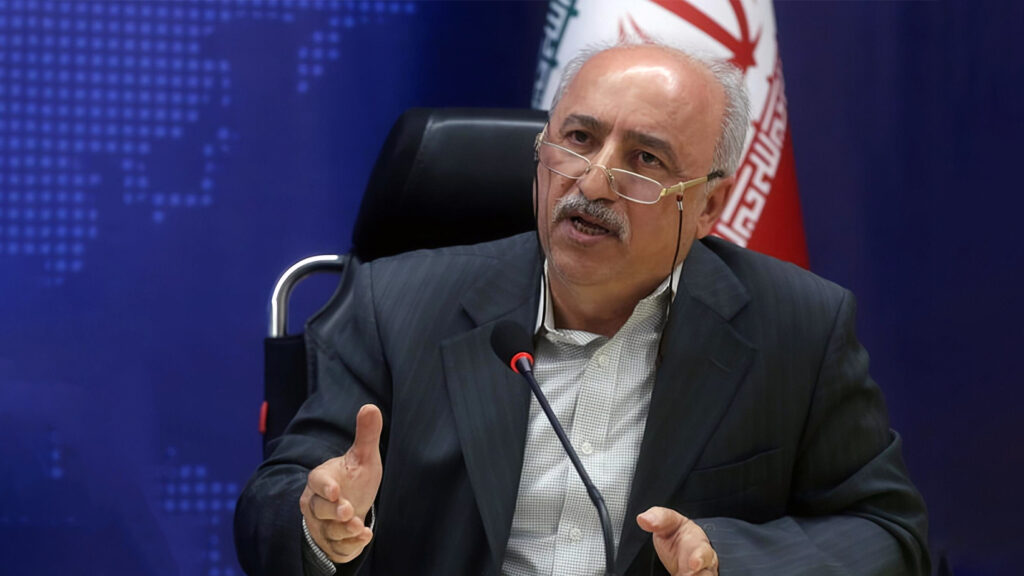
Dr. Seyyed Morteza Afghah, economist, speaking to Iraf and referring to the World Bank report, stated: the economic growth announced for Afghanistan is scientifically and economically acceptable and cannot be considered unrealistic. According to him, Afghanistan’s economy — after years of stagnation, political uncertainty, reduced foreign investment, and the withdrawal of a significant portion of international financial resources — is now showing signs of a gradual return to economic activity.
He added: but one must not forget that economic growth is a macro indicator and does not necessarily reflect the living conditions of the population directly. It is possible for a country’s GDP to increase while a large portion of society continues to struggle with livelihood problems.
The economist explained that one of the common errors in economic analyses is equating economic growth with public welfare, whereas these two concepts are entirely distinct.
He continued: economic growth merely indicates that the volume of goods and services produced within an economy has increased — but who benefits from this increased production, and what share ordinary people receive from this growth, is a separate matter that must be examined independently.
Afghah stressed: in many countries it has been observed that economic growth accrues primarily to specific groups, while a large portion of society receives only a marginal share. Therefore, the mere announcement of a positive growth rate does not signify an improvement in the conditions of all citizens.
He noted that for an accurate assessment of the economic situation of the population, a comprehensive set of indicators — including per capita income, unemployment rate, poverty rate, income distribution, purchasing power, and inflation — must be examined simultaneously.
Economic Growth Without Fair Income Distribution Does Not Create Welfare
Dr. Afghah, elaborating on how the benefits of economic growth are distributed, said: one of the most important issues in Afghanistan’s economy is that even if economic growth has occurred, this growth has not necessarily been distributed in a balanced manner among different segments of society.
He added: in many developing economies, economic growth may be concentrated in limited sectors such as trade, specialized services, mining, or activities associated with particular groups, leaving broad sections of society without meaningful benefit.
He explained that one can speak of economic success only when the effects of growth are also visible in employment, household incomes, and improvements in people’s living standards.
The university professor stressed: if economic growth does not lead to the widespread creation of employment opportunities, ordinary people will feel little impact from it.
He continued: in Afghanistan, a large portion of the population is still contending with poverty, unemployment, or informal employment. For this reason, even if macro indicators improve, the daily lives of the people may show no perceptible change.
Dr. Afghah noted that one of the main problems of Afghanistan’s economy is its limited capacity to absorb labor — a matter that prevents economic growth from rapidly translating into poverty reduction.
He emphasized that the development of the private sector, attraction of investment, and creation of sustainable employment opportunities are among the most essential prerequisites for converting economic growth into public welfare.
The Return of 3.7 million Migrants: A Factor Behind the Decline in Per Capita Output
The economist, responding to a question about the decline in Afghanistan’s per capita GDP despite 4.8 percent economic growth, said: at first glance this may seem puzzling, but from an economic standpoint it is entirely explicable.
He stated: per capita GDP is obtained by dividing total GDP by the country’s population. Therefore, if the population grows faster than the economy, per capita output will decline.
Afghah added: according to the World Bank report, approximately 3.7 million Afghan migrants have returned to the country, and this has caused a considerable increase in the population.
He explained: when millions of people are added to a country’s population, the need for food, housing, education, healthcare, and employment opportunities increases proportionally.
He continued: Afghanistan’s economy, although it has grown, has grown at a slower pace than the rate of population increases. As a result, the income produced is being distributed among a greater number of people, and each individual’s share has diminished.
The economist stressed: the decline in per capita GDP does not mean the economy has contracted; rather, it shows that population growth has outpaced economic growth.
He noted that this issue constitutes an important warning for Afghanistan’s policymakers, as the continuation of this trend could place greater pressure on the country’s economic resources.
Returning Migrants: Potential Opportunity or New Crisis?
Afghah described the large-scale return of migrants as one of the most significant economic developments in Afghanistan in recent years and said: this phenomenon is simultaneously both an opportunity and a threat.
He added: on one hand, the return of migrants can bring labor, new skills, and human capital into Afghanistan’s economy.
But on the other hand, if the economy lacks the capacity to absorb this population, unemployment rates will rise and pressure on the labor market will intensify.
He explained: creating employment for millions of people in a short period of time is an extremely difficult task and requires extensive investment across various economic sectors.
The economist said: if proportionate employment opportunities are not created, returning migrants — rather than becoming a development asset — may turn into a social and economic challenge.
He added: the increased demand for housing, public services, and basic goods could also place additional strain on the economy.
Afghah noted that sound management of this population can contribute to economic growth in the long term, but in the short term it will impose heavy costs on both the government and society.
Inflation: The Second Factor Pressuring Afghan Households
The economist, in another part of the conversation, referred to the rising inflation rate in Afghanistan and said: the increase in inflation from approximately 3.6 percent to 7.6 percent is one of the most important factors behind the public’s failure to feel the effects of economic growth.
He added: even if individuals’ incomes remain constant, rising prices of goods and services erode purchasing power.
Afghah explained that low-income households are more severely affected by inflation than other segments of society, as the bulk of their income is spent on meeting basic needs such as food, housing, and transportation.
He continued: under such conditions, it is possible for the economy to grow while the cost of living rises simultaneously — leaving people feeling that their situation has not improved.
The university professor noted that rising inflation alongside declining per capita output has placed compounded pressure on the livelihoods of the Afghan population.
He said: in simpler terms, the people of Afghanistan today are both receiving a smaller share of national output and paying more to purchase the goods they need.
Why Do Afghanistan’s People Still Not Feel Any Improvement?
Afghah said: when people make judgments about the economy, they do not look at macro statistics — they assess the state of their table, their income, their employment, and their purchasing power.
He added: if a person does not have a suitable job or cannot meet their family’s needs, economic growth will hold no tangible meaning for them.
The economist stressed that for economic growth to translate into public welfare, economic policies must move toward job creation, support for production, inflation control, and a more equitable distribution of opportunities.
He emphasized: Afghanistan’s economy is experiencing signs of improvement, but until this improvement is seen in the lives of the people, one cannot speak of complete economic success.
The World Bank in its latest report has announced that Afghanistan’s economy grew by approximately 4.8 percent in 2025. However, the return of around 3.7 million migrants, rapid population growth, and rising inflation have caused per capita GDP to decline by 5.6 percent. Experts believe that the main challenge for Afghanistan’s economy in the coming years will not merely be sustaining economic growth, but converting that growth into employment, increased household incomes, and improved public welfare.