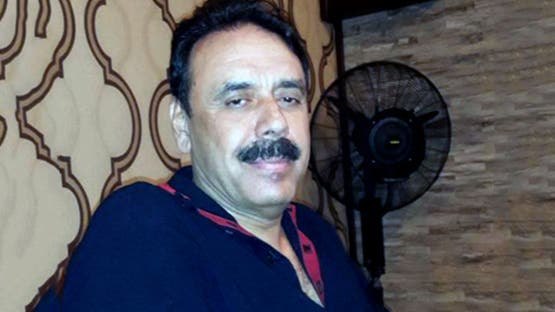
According to Iraf, on the night of 18 Thawr/Ordibehesht 1384, the concert hall was packed with people gathered to hear the famous Afghan singer. The concert, held in celebration of Mother’s Day, ended tragically for the young artist. A young man, seeking an autograph, struck Parsa, causing his death. The incident shocked Afghanistan’s artistic community and, even two decades later, is remembered as one of the darkest tragedies in the country’s music history.
From Kabul’s Dusty Streets to Hamburg’s Pavements: A Tumultuous Journey
Nosrat Ali Parsa was born on February 22, 1968 (3 Hut/Esfand 1347) in Kabul. From a young age, he began learning classical music and singing under the tutelage of Ustad Mohammad Hossein Sarahang, one of Afghanistan’s musical greats.
With the escalation of insecurity following the Soviet occupation, Parsa’s family was forced to leave Afghanistan in 1981, when he was only 13 years old. They first moved to Pakistan and then to India. In New Delhi, Parsa’s talent flourished; he studied music under renowned teachers such as Daish Pandi and Manur Ali Khan and became familiar with instruments like the tabla and harmonium.
After several years, the Parsa family migrated again, this time settling in Germany. Nosrat made Hamburg his home, where he began his professional career performing at weddings and family gatherings, gradually gaining recognition.
At the Height of Fame: Ten Albums in Sixteen Years
During his artistic career (1987–2005), Parsa released ten albums, widely acclaimed by the public. His music blended soft rock, pop, ghazal, and classical styles. Among his most notable works are Dargah, Dunya, Gahr, Saye, Negah, and Naz. His final album, Del, was released posthumously.
The Night of the Tragedy: A Blow That Ended a Life
In May 2005, Nosrat Parsa traveled to Vancouver, Canada, to promote his latest album, Del, and perform a concert. On May 7 (17 Thawr), he held a Mother’s Day concert at the Queen Elizabeth Hall.
According to eyewitness reports, three young men approached Parsa during the concert, insisting that he perform lively songs. While Parsa continued with the planned calm repertoire, some reports indicate that he did perform two upbeat songs in response to their requests.
After the concert, Parsa returned to his hotel. The three young men followed him and attacked him on the hotel stairs. Some reports suggest they initially wanted an autograph, while others indicate they intended to strike him from the start. One of the attackers, a 19-year-old taekwondo practitioner named Ahmed Sir Forough, punched Parsa in the face.
The punch threw Parsa off balance, causing him to fall down the hotel stairs and sustain a severe head injury. His companions pursued the attackers but found Parsa unconscious and bloodied on the stairs upon returning.
Despite immediate efforts to revive him, Parsa was eventually transported to a hospital by ambulance. A crowd of fans gathered outside the hospital upon hearing the news.
A Bitter Ending in the Hospital
Parsa was admitted in critical condition. Doctors reported severe brain swelling and said his chances of survival were very slim. Various sources confirm that at least seven surgeons examined him, but all attempts to save him failed.
Ultimately, Nosrat Ali Parsa passed away on May 8, 2005 (18 Thawr 1384), seven hours after being hospitalized, at the age of 37 and at the peak of his artistic career. At the family’s request, his body was transferred to Germany and buried in Mainz.
Incomplete Justice: A Verdict That Angered the Family
Canadian police arrested the main attacker, Ahmed Sir Forough, in the hotel parking lot. In 2008, a court convicted him of “manslaughter.” The judge stated, “If the punch had not occurred, Nosrat Parsa would not have fallen.”
However, under Canadian law, Forough was released on bail and sentenced to two years of house arrest and three years of probation. The sentence drew strong protests from Parsa’s family, who believed justice had not been fully served. For years, they pursued the case through their lawyers but achieved little.
Although Nosrat Parsa passed away two decades ago, his voice and works remain alive among Afghan music enthusiasts. His unique style, blending Eastern classical music with modern melodies, continues to inspire many young artists after him.