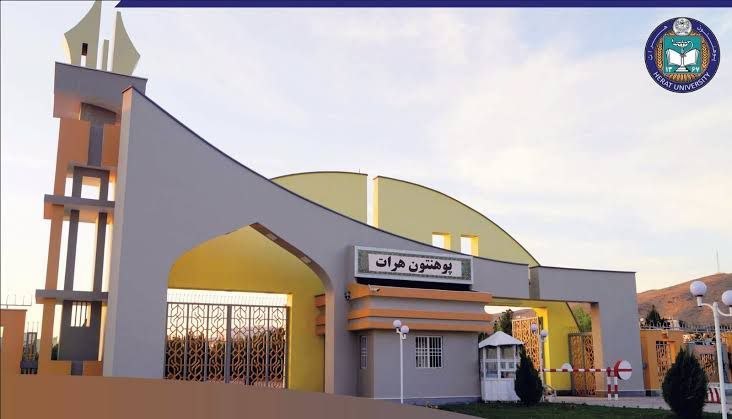
According to Iran Afghanistan News Base, recent reports from Herat indicate that the Taliban, who have been accused by international organizations of widespread human rights violations, have once again expanded their restrictive policies into academic institutions.
At one private university in the province, a 14-point pledge form has been distributed among students, with authorities declaring its signature mandatory. One of the main clauses requires students to confirm that they “follow the Imam Abu Hanifa school of thought, like the people of Afghanistan.”
Shiite students have described the measure as direct pressure to change their sect and a clear violation of religious freedoms.
According to students who spoke to media outlets on Monday, May 11, university officials operating under Taliban management warned that refusal to sign would be recorded as a violation and that no student had the right to object.
One Shiite student, expressing concern, said the pledge “effectively amounts to the forced acceptance of the Hanafi sect” and turns the educational environment into an ideological space.
From Religious Control to Social Restrictions
According to a copy of the document obtained by media outlets, the Taliban require students to comply with religious rules defined by the group, including mandatory participation in congregational prayers, compulsory “Islamic and Afghan” dress codes, a ban on music, a ban on the use of images of living beings, and mandatory beard requirements for male students.
Any political activity outside the Taliban framework has also been declared prohibited.
Some clauses further state that students who violate any article “have no right to file complaints” regarding the punishments imposed.
Broader Taliban Policy to Eliminate Religious Diversity
The measure is not limited to a single university. Local sources say the Taliban have distributed similar pledges in several public and private universities in Herat and other provinces in recent months.
Since returning to power, the Taliban have declared the Hanafi school the “only official sect,” effectively removing the legal status of Shiite jurisprudence.
In the same context, the Taliban’s newly introduced penal code explicitly states that all criminal rulings are to be drafted and implemented solely on the basis of Hanafi jurisprudence — a move observers view as part of a broader structural effort to eliminate religious diversity from Afghanistan’s legal and educational systems.
In some provinces, including Bamiyan, schools have also reportedly been instructed to teach only Hanafi jurisprudence, a measure teachers say has severely restricted religious freedom.
Warnings Over Security Risks for Shiites
Shiite political figures, including Karim Khalili and Mohammad Mohaqiq, have previously warned against the trend, describing it as part of an organized policy aimed at weakening Shiite and Hazara communities.
They have stressed that universities should not become instruments of ideological pressure and warned that the policy could pave the way for further violence against minorities.
Rising Concerns Amid Targeted Attacks
At the same time as these religious pressures, Herat has witnessed targeted attacks against Shiite civilians in recent months.
In one such attack, at least 11 people, including women and children, were killed.
Analysts say the overlap between these attacks and the Taliban’s hardline religious policies has heightened concerns over the safety of religious minorities.
Latest UNAMA Report: Religious Restrictions Increasing
The United Nations Assistance Mission in Afghanistan (UNAMA), in its quarterly 2026 report, stated that religious, civil, and social restrictions against Shiite communities have increased significantly.
The report points to a broader trend in which Taliban policies in universities can also be understood within the same framework.