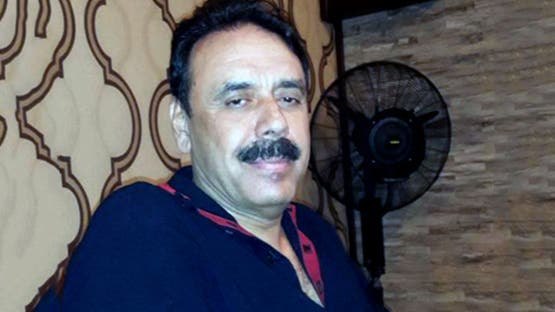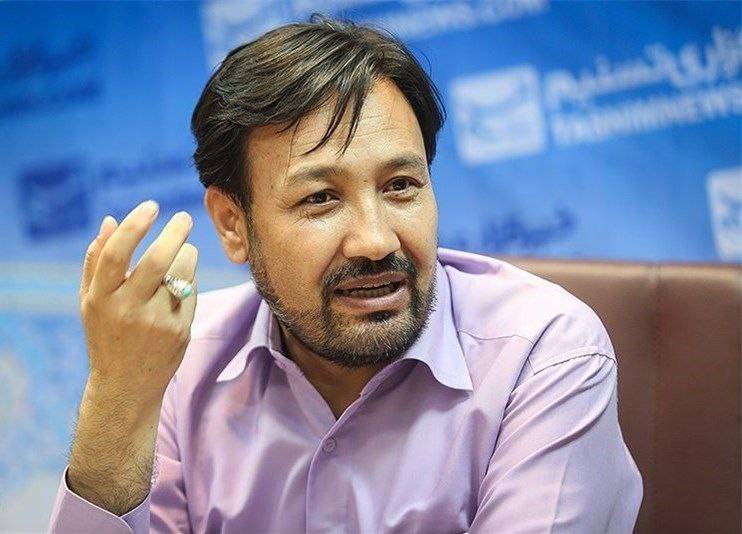
In an exclusive interview with IRAF, Seyyed Aboutaleb Mozaffari, a prominent Afghan migrant poet, stated: The leader of any country has a significant impact on professions, guilds, and various segments of society. If a country’s leader is interested in a particular field, that profession flourishes; and if not, it declines.
He added: In the years following the Revolution, poets were fortunate in that the Leader of the Revolution had a deep interest in poetry and literature.
Changing the Discourse of Poetry and Literature
Referring to the Leader’s interest in poetry and literature and the annual poetry nights, Mozaffari said: In our clerical society, literature and poetry were considered a taboo and a reprehensible act. The first thing he did was to transform this reprehensible act into a legitimate one. In the holiest month of the year, the month of worship, and on nights close to Laylat al‑Qadr, he would consistently hold poetry gatherings.
He emphasized: He granted poetry both legitimacy and sanctity. Another important point is that he kept poetry away from his own personal sphere and persona. Many times, we witnessed that if someone recited a poem praising him personally, he would advise them not to enter that space.
Mozaffari continued: The Leader paid attention to all dimensions of poetry and did not focus solely on religious or ritual poetry. He regarded poetry as an important and practical art for expressing human emotions, not merely as a tool for ritual functions. All of this stemmed from his deep understanding of literature.
Referring to poets who historically composed poems at royal courts to praise kings, Mozaffari said: throughout history, poets have had relationships with courts. In general, a connection with power was a self‑evident principle in classical culture.
He added: revolution means transformation and change. Just as the Supreme Leader changed many discourses, he also transformed the literary discourse.
Mozaffari stressed: a religious leader, a jurist meeting all qualifications, gathering poets every year in the holiest month of the year, listening to their poetry as a lasting tradition, represents the most important change in this field.
He said: this action removed the stigma from poetry and elevated it to a legitimate practice. As a result, literature gained prestige and poetry rose to a higher status.
The Leader’s Special View of Afghanistan and Migrants
In another part of the interview, Mozaffari told IRAF NEWS : Relations between Iran and Afghanistan have historically suffered from several weaknesses: first, political maneuvering, political border divisions, and tensions; second, a lack of mutual understanding.
He added: historically, policymakers on both sides were never concerned with eliminating alienation; rather, they contributed to its spread.
Mozaffari explained: Afghanistan attempted to emphasize nationalism by cutting itself off from Iran, while Iran, by overlooking Afghanistan, sought to magnify the idea of historical Iran within its current borders.
He continued: A third factor is that due to the previous two issues, Iran lacked prominent and knowledgeable experts on Afghanistan, either among elites or within society. This lack of understanding was so deep that many people in Iran did not even know what language Afghans speak.
The Afghan poet noted: this issue is even more evident among politicians. As a result, Iran lacks strong experts on Afghanistan, whereas it has many distinguished experts on other countries.
Referring to the Leader’s deep understanding of Afghan issues, Mozaffari said: In such circumstances, throughout all these years, the leader of this country happened to be a person who had a profound familiarity with Afghanistan. Why? Because for many years, enlightened Afghan seminarians in Mashhad were among his students.
He added: For example, Martyr Mahmoudi and many other Afghan revolutionary figures had been his students in Mashhad, and he had long‑standing revolutionary ties and close relations with them.
Mozaffari stated: From early on, the Supreme Leader was familiar with Afghanistan and its intricate issues, and he had long been acquainted with Afghan poets as well.
Recalling the Leader’s poetry gatherings, he said: when we attended poetry sessions, he would remind us that a certain poet had recited a verse to him forty years earlier and that he still remembered it—while we, as Afghan poets, did not even know that poet.
Mozaffari emphasized: the Leader knew Afghanistan well and genuinely cared about it. His concern for migrants and Afghanistan went beyond all political considerations.
He added: He was always sensitive to the fate of migrants. Sometimes this concern became public, such as in the case of his directive to register all migrant students in schools; at other times it remained unseen. But in any case, he consistently carried that concern for migrants.
In conclusion, the director of the Dari Institute stated: even until very recent days, he was concerned about identifying the roots of migrant‑hostile currents. Such a leader in Iran was an opportunity and a stroke of luck for Afghanistan and for migrants. We may not have realized it at the time, but now, and from now on we must understand it.