A former university professor has criticized the Taliban Ministry of Higher Education’s recent decision to gradually eliminate political science and international relations programs from Afghanistan’s private universities, arguing that the move goes beyond an administrative decision and reflects an effort to weaken the humanities, eliminate intellectual and academic spaces for challenging power, and reshape the education system around the Taliban’s ideological interpretation.
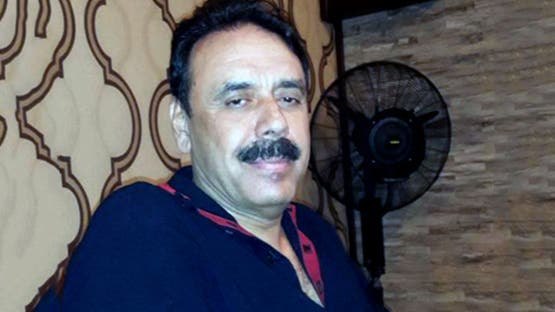
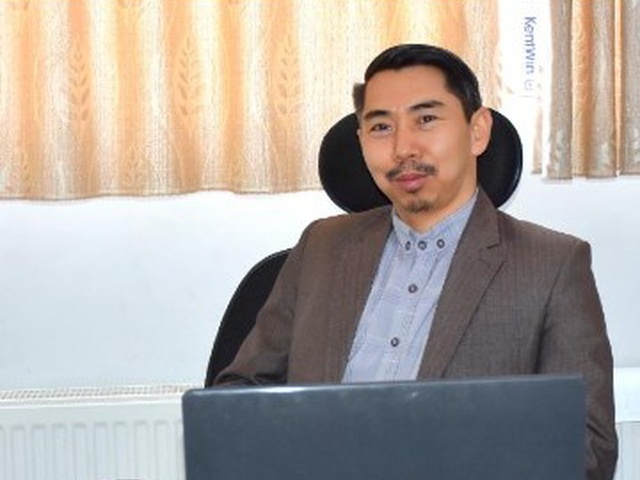
Dr. Gholam Ahya Hosseini, a former university professor, told IRAF in an exclusive interview that the Taliban Ministry of Higher Education’s recent order to gradually eliminate law, political science and international relations programs from private universities and later public universities is far more than a purely administrative decision. He said the move should be viewed within the broader strategy of the group to redefine national identity and dismantle independent and critical institutions.
He added that the Taliban’s official justification, namely the declining number of students and limited job opportunities for graduates of these fields, could be examined from an economic and statistical perspective, but at a deeper level it could serve as a cover for a broader political and ideological project aimed at homogenizing the education system in line with the Taliban’s particular interpretation of Sharia.
Elimination of Political Science and International Relations: Part of Ideological and Intellectual Control
Hosseini said the main reason behind the move should be sought in the structure of power and the Taliban’s concerns about any form of knowledge or institution capable of challenging their political and religious authority.
“Political science and law explain concepts such as the modern state, democracy, human rights, the rule of law and civic participation, and from this perspective, eliminating these fields means removing the conceptual foundation for the formation of alternative systems and silencing critical voices.”
He continued:
“The Taliban know very well that the new generation, because of its familiarity with modern legal and political concepts, can become a center for criticizing the existing order, and therefore, restricting these academic fields can be considered part of the group’s policy of intellectual and social control.”
Addressing the ban on women’s education, the former professor said the prohibition has roots that can be traced to rural traditions and Pashtunwali, but also serves the Taliban as a bargaining card in its engagement with the international community.
“Preventing women from studying, in addition to roots that can be found in rural traditions and Pashtunwali, is also a bargaining card for the Taliban in interaction with the international community. According to him, highlighting the issue of women can sometimes divert public opinion and elites from other harmful policies against ethnicities, religions and social groups.”
Hosseini said the ministries of education and higher education play a crucial role in Afghanistan’s cultural structure, and that policies adopted by these institutions can have a decisive impact on educating and shaping future generations.
“In his view, the continuation of restrictive and ideological decisions by these two ministries should be examined within the framework of this very approach.”
Asked what objectives the Taliban is pursuing through such measures, Hosseini said:
“The Taliban is in fact carrying out an all-out project to present the ugliest possible face of Islam. This group, by mixing tribal traditions, including Pashtunwali, with a one-dimensional interpretation of Hanafi jurisprudence, presents an exclusivist interpretation of Islam that has no connection with the historical, jurisprudential and rational heritage of Islamic civilization and the requirements of the contemporary world.”
Religion, Cultural Restrictions and the Consolidation of Power
The former professor further argued that the Taliban’s approach has transformed religion from a source of moral guidance and social cohesion into an instrument of public regulation and repression.
“In this framework, religion is reduced from the sphere of moral guidance and social cohesion to a tool for public regulation, behavioral engineering and suppression of dissenting voices, and any form of civic demand or questioning of the legitimacy of government can be met with the label of apostasy or disobedience to divine command.”
Hosseini also pointed to restrictions imposed on art, music and Afghanistan’s cultural and linguistic elements.
“Weakening art and music and removing deep-rooted elements of cultural and linguistic identity is a deliberate action to sever the new generation’s connection with its intellectual and historical sources and creates the conditions for imposing a one-dimensional order.”
He warned that the consequences of this approach extend beyond Afghanistan’s borders.
“This approach also has dangerous consequences at the transnational level, because the violent and exclusivist representation of Islam creates a distorted image of this religion in world public opinion and provides a suitable pretext for Islamophobic and far-right currents to portray Islam as inherently incompatible with rational thinking, human rights and the dignity of women.”
Hosseini also highlighted what he described as a contradiction between the Taliban’s Salafi-like rhetoric and its use of modern technology.
“There is a serious contradiction between the Taliban’s Salafi-like slogans and their use of modern tools; in such a way that while depriving citizens, especially women and girls, of their fundamental rights, the ruling structure uses modern communication systems, digital surveillance and technological tools for informational control and consolidation of its authority.”
Consequences of Eliminating Specialized Programs for Afghanistan’s Future
Hosseini warned that the elimination of political science and international relations programs, combined with the ban on women’s education, would have long-term consequences for Afghanistan.
“This decision, alongside the ban on women’s education, delivers two simultaneous blows to Afghanistan’s future, and its consequences will be visible not only inside the country, but also in the regional balance of power and Afghanistan’s international standing for several generations.”
He said eliminating these programs would disrupt the country’s ability to produce specialized human resources in governance, diplomacy and international law.
“Eliminating these fields means cutting the chain of producing specialized human resources in the fields of governance, diplomacy and international law, and Afghanistan will face a serious shortage in the coming years of experts who can defend the country’s interests in negotiations, international organizations and relations with neighbors.”
Hosseini said the impact would be particularly significant in Afghanistan’s foreign relations.
“In the field of foreign relations, the consequences of eliminating political science and international relations are very broad, because Afghanistan in the coming decades will face a shortage of specialized personnel to negotiate with neighbors, participate in international organizations and draft trade and security agreements, and will inevitably become dependent on personnel outside the country or foreign advisers.”
He added that when this policy is combined with the exclusion of women from medical education and other fields, it points to deeper structural problems.
“When this policy is accompanied by the elimination of women from medical sciences and other fields, an image of a society undergoing internal erosion is formed. Eliminating women from medicine means reducing the capacity to provide healthcare services to half of the country’s population, and this issue can have serious consequences for the health of women and mothers.”
Hosseini stressed that Afghan academics and intellectuals need to move beyond symbolic protests and take a more active role in preserving the country’s human capital and academic heritage.
“In such circumstances, the duty of professors, students and intellectual leaders of Afghanistan goes beyond symbolic protests, and they should redefine their role as guardians of the country’s human capital and scientific heritage.”
He proposed establishing informal educational and research networks online and among Afghan migrant communities to compensate for restrictions within the formal education system.
“Given the existing restrictions in the formal education system, informal educational and research networks should be created in cyberspace and among Afghan migrant communities so that professors and students outside the country can provide specialized education in fields such as political science, law and medicine to students inside and outside Afghanistan.”
The former professor also called on Afghan intellectuals to document and internationally highlight the Taliban’s restrictive policies.
“Afghanistan’s elites should also accurately document the Taliban’s restrictive policies and reflect them at the international level, and should not limit the issue solely to the ban on women’s education, but should also pay attention to the consequences of eliminating the humanities, medicine and other scientific fields.”
Elite Silence and the Need for Collective Intellectual Action
Hosseini attributed the limited reaction among Afghanistan’s intellectuals to the environment of fear and repression inside the country, as well as frustration among parts of the diaspora.
“The atmosphere of intimidation and repression inside the country has placed many intellectuals in a state of survival and forced isolation. Outside the country as well, some intellectuals and thought leaders, because of years of failure of political projects and the absence of a united front, have faced fatigue and despair.”
He added:
“The most important problem is the absence of effective and united intellectual and organizational leadership among Afghanistan’s diaspora that can transform the existing discontent into an organized social and intellectual movement.”
Hosseini concluded that preventing Afghanistan’s scientific and human collapse requires the country’s intellectuals to move beyond individual inaction and toward coordinated action.
“Saving Afghanistan from scientific and human collapse requires the elites to move out of individual passivity and toward intelligent and collective activism; an activism that, instead of relying on foreign powers, is based on the human capital of Afghans and the preservation of the country’s scientific and civilizational identity.”