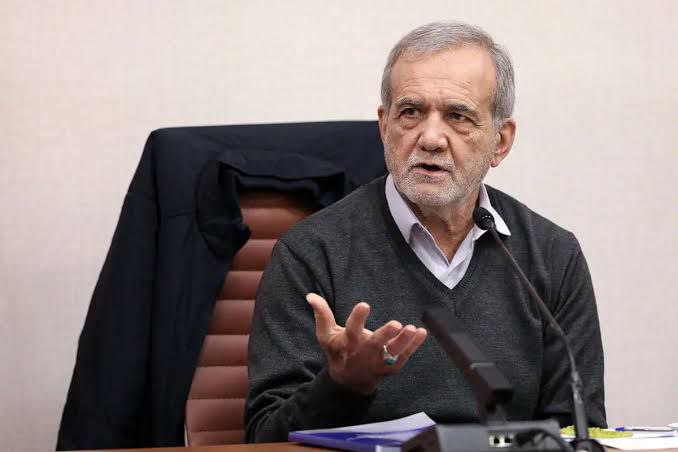
According to Iraf News Agency, Abbas Aliabadi, the Minister of Energy, who spoke yesterday (Monday, January 5), on the sidelines of the launch of a 710 MW renewable power plant and 100 MW optimization projects, highlighted the remarkable growth in solar energy capacity. He stated: “At the start of this administration, the installed solar energy capacity was around 600 MW, but today it has surpassed 4,000 MW.”
In another part of his speech, the Minister of Energy addressed the issue of Iran’s water rights from the Herat River, stating: “both Iran and Turkmenistan are entitled to water from this river, but Afghanistan has constructed the Salma Dam upstream. In order to secure our share, we are forced to negotiate, and yesterday, the President also assigned all the country’s political bodies to intensify their efforts in pursuing this issue.”
He further commented on the multiple negotiations with the Afghan side: “Last year, due to insufficient cooperation, Iran’s full water share was not met. However, with better rainfall this year, we hope the situation will improve. I have invited Afghan officials to Iran twice, and I’ll invite once again. If there is no response, we are prepared to send a delegation to Afghanistan to pursue the issue on the ground.”
Aliabadi emphasized that the issue of water rights is one of the key and contentious matters between Tehran and the current Afghan authorities, with Iran striving to reclaim its water rights through negotiation and persuasion.
According to reports, the issue of the Herat River water rights has recently become a central focus in Tehran’s diplomatic discussions with the Afghan authorities. Sources stress that the noticeable reduction in water flow into the Doosti Dam, which Iran and Turkmenistan jointly use, has been exacerbated by Afghanistan’s use of the Salma Dam. This has heightened the need for both technical and political follow-ups.
In this context, reports indicate that over the past year, the Iranian government has invited Afghan officials to Tehran multiple times and has simultaneously attempted to review the status of water release from the Salma Dam through expert channels. However, due to a lack of precise information from Kabul and the limitations imposed by recent droughts, a significant portion of Iran’s water rights remained unmet last year.
Government sources have also pointed out that the President’s recent orders to activate political institutions represents a new phase of coordinated diplomatic pressure, especially as Iran has stated that; if invitations continue to go unanswered, it is ready to dispatch a specialized team to Afghanistan to conduct field investigations.
Experts in the field of water management believe, this approach could pave the way for greater transparency regarding the actual flow of the Herat River and how it is managed in Afghanistan.