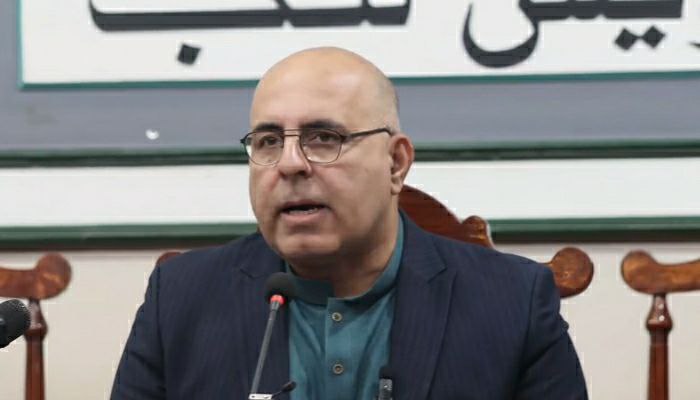
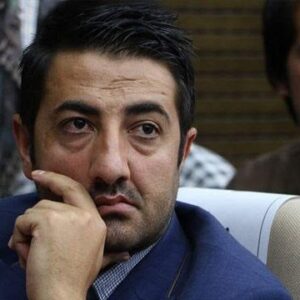
In an exclusive interview with Iraf News Agency, Dr. Karim Pakzad, a researcher at the French Foundation for International and Strategic Studies, described the U.S. attack on Venezuela and the arrest of Nicolás Maduro as an obvious violation of the United Nations Charter, stressing that the action has no legal foundation within the international system.
Violation of the Most Fundamental Article of the UN Charter
According to Dr.Pakzad, aside from advocates of U.S. military intervention in Venezuela, legal scholars and political leaders in Western countries largely agree that this military action lacks any form of legal legitimacy.

The UN Charter obliges its member states to refrain from the threat or use of force in international relations in any manner that jeopardizes the territorial integrity or political independence of another member state.
Referring to the limited exceptions outlined in the UN Charter, Pakzad added that the use of force is permitted only under specific circumstances—most notably when the UN Security Council determines that the actions of a member state threaten international peace, such as in cases of military aggression against another country. In such situations, the victim state may, in accordance with a Security Council resolution, resort to force to defend its territorial integrity and political independence.
He cited the U.S.-led military intervention in Afghanistan in 2001 as a clear example of such a case, noting that it followed the September 11 terrorist attacks in New York and Washington, the refusal of Mullah Omar and the Islamic Emirate to expel Osama bin Laden, and was carried out under UN Security Council authorization. Pakzad emphasized that the U.S. intervention in Venezuela bears no resemblance to this precedent and instead clearly violates the most fundamental provision of the UN Charter.
Legal Immunity of Heads of State
The international relations researcher further described the arrest of a sitting president as entirely unacceptable under international law, stating that the president or head of state of a UN member country enjoys legal immunity. This immunity, he stressed, has no connection to the nature of the political regime, the structure of power, or the domestic policies of the country in question. The United States, he asserted, has no right—under any circumstances—to arrest the president of a country it opposes or considers hostile.
To further clarify this point, Pakzad referred to established international practice, noting that all presidents of Iran—including Mahmoud Ahmadinejad, during whose presidency relations between Tehran and Washington were at their most strained—have attended and addressed the annual UN General Assembly sessions in New York. Even in instances where the U.S. imposed visa restrictions or limitations on Iranian delegations, Iran pursued legal channels and filed complaints with the UN Secretary-General. Nicolás Maduro himself addressed the UN General Assembly last year.
International Organizations Have Condemned the Action
Pakzad went on to discuss the role of international organizations, explaining that they fall into two categories. Organizations such as the International Labour Organization (ILO), UNICEF, UNESCO, and the World Health Organization operate under the UN system, and their positions on major crises are articulated by the UN Secretary-General.
UN Secretary-General António Guterres, he said, summarized the UN’s position on the U.S. action along three main lines: expressing deep concern over the U.S. move, emphasizing the necessity of respecting international law, and warning against the creation of a dangerous precedent in the global system.
According to Pakzad, the reactions of international civil organizations as well as governments worldwide—including U.S. allies such as the European Union—have largely moved toward condemning the action.
Trump is Unpredictable
Regarding the likelihood of similar actions by Donald Trump in the future, Pakzad stated that the majority of observers believe Trump’s decisions are inherently unpredictable.
During the first year of his second presidential term, Trump has repeatedly demonstrated contradictory positions on major international issues, including the war in Ukraine, the future of NATO, the presence of U.S. forces in Europe, a military attack against Iran while indirect negotiations were underway, tariff policies targeting U.S. allies, and simultaneous practical support for Israel’s genocidal policies in Gaza.
Nevertheless, Pakzad highlighted one defining characteristic of Trump, stating that Trump is the first leader of a major global power who, when U.S. interests are at stake, does not use diplomatic language in major international matters. Instead, he articulates his objectives in a concise, blunt, and easily understandable manner—and then proceeds to act on them.
Referring to growing international concerns, Pakzad added that there is widespread anxiety that the United States, as the world’s largest military and economic power, may pursue an imperialist policy exactly as Trump has openly declared. In this context, other countries—such as Colombia, a major drug-producing country in Latin America—could emerge as Washington’s next targets.
Cuba, Maduro’s principal ally, is also on Trump’s list of potential targets. Panama, due to the Panama Canal, as well as issues related to restricting Chinese and Iranian commercial shipping, has likewise drawn Washington’s attention.
Trump Eyes the Seizure of Greenland
Pakzad further addressed the role of U.S. Secretary of State Marco Rubio, noting that Rubio is the son of an anti-communist Cuban immigrant and has made no secret of his objective to overthrow the Cuban government.
In addition, what has deeply disturbed European public opinion is Trump’s insistence on seizing Greenland—an island that is part of Denmark and therefore considered a member of the European Union, and which possesses vast underground resources.
According to Pakzad, Trump believes Greenland is of vital importance to U.S. national security and argues that Denmark lacks the capacity to manage it. Washington’s primary concern, he explained, is that China could establish a strategic foothold on the island, which lies close to U.S. territory.
Venezuela as a Victim of U.S.–China Rivalry
In conclusion, the researcher at the French Foundation for International and Strategic Studies identified U.S.–China rivalry as a major factor behind the Venezuela crisis, stating that China is now the world’s second-largest economy and is projected to become the leading global power by 2035. This competition, he argued, plays a significant role in the assault on Venezuela and the abduction of Maduro.
The U.S. justification of accusing Maduro of drug trafficking, Pakzad said, has failed to convince global public opinion. Venezuela has been outside U.S. influence since 1990, and following the Bolivarian Revolution, Hugo Chávez established a socialist system.
Nicolás Maduro, Chávez’s successor, has continued along the same path and expelled U.S. oil extraction companies from Venezuela—actions that Pakzad described as serving Venezuela’s national interests.
Trump’s illegal actions, he concluded, not only damage the international standing of the United States but also increasingly expose Trump’s imperialist intentions to the world.