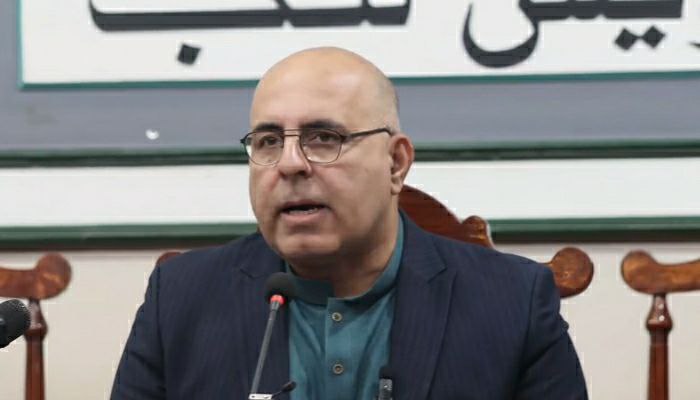
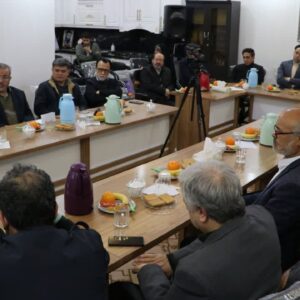
According to Iraf News Agency, On Tuesday, January 4, Seyyed Roohollah Hosseini, Cultural Counselor of the Islamic Republic of Iran in Afghanistan, emphasized the complementary role of the Persian and Pashto languages in the flourishing of the country’s literature during a meeting with young poets from Balkh.
Speaking at the literary gathering, Hosseini stated that Afghanistan’s two official languages—Persian and Pashto—are not rivals but complementary to one another, playing a vital role in the development of the country’s language and literature. Referring to remarks attributed to Taliban leadership, he noted: “Focusing on one of the two official languages while neglecting the other amounts to a betrayal of the second language.” He described the two languages as a source of unity and brotherhood among the people of Afghanistan.
During the event, the Iranian cultural counselor recited several of his own ghazals(traditional Persian poems) and, while reviewing and critiquing the works of the young poets present, praised the poetic talents of the Balkh region. He also stressed the importance of observing linguistic structures for the advancement of learning and knowledge.
Expansion of Iran–Afghanistan Cultural Cooperation
Recalling Afghanistan’s illustrious literary and scientific heritage—figures such as Abu Rayhan al-Biruni, Mawlana Jalal al-Din Balkhi (Rumi), and Sana’i of Ghazni—Hosseini pointed to a “generational gap” in nurturing new talents, describing it as the missing link in the country’s cultural and civilizational development.
He concluded by expressing hope for an increase in Afghanistan’s literary and scholarly output and for the expansion of cultural cooperation between Iran and Afghanistan, two countries with deep-rooted shared civilizational ties.
This comes as the Taliban have installed new signage at universities and government offices, removing Persian and Uzbek terms. Observers believe this move is part of a broader strategy aimed at the gradual elimination of the Persian language from Afghanistan’s official and educational spheres.