Tehran- IRAF- Nader Gholi Ebrahimi, a member of the parliamentary water commission, referred to the water rights treaty between Iran and Afghanistan, noting that both countries reached a legal agreement in 1972. According to this agreement, Iran’s legal share from the Helmand River to the Hamun wetland is about 820 million cubic meters. Therefore, Iran is entitled not only to this legal share but also to any excess flows and floodwaters—making this a two-part issue.
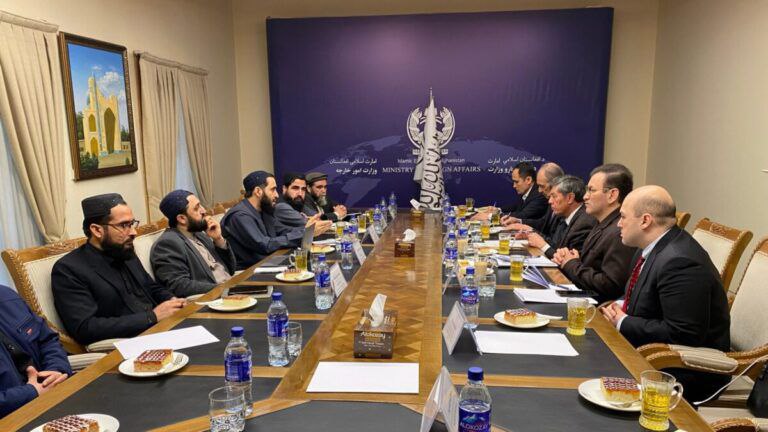
Referring to remarks by Shina Ansari, head of Iran’s Environmental Protection Organization, regarding negotiations with the Taliban over water rights, Ebrahimi explained that the matter concerns the Hamoon International Wetland, which is a vital regional ecosystem located on the Iran-Afghanistan border. He emphasized that serious follow-up is required in water diplomacy, and agencies such as the Environmental Protection Organization, Ministry of Energy, and Ministry of Foreign Affairs must actively claim Iran’s rights.
Parliamentary Follow-up on Securing Iran’s Water Share
The MP added that he has been pursuing the issue in Parliament as head of the Water Committee and as parliamentary observer in the Supreme Water Council, requesting that Iran’s rightful water allocation from the Helmand River be delivered to the Hamoon Wetland. He stressed the importance and seriousness of the matter.
Drought Has Limits
Responding to Taliban claims regarding drought in Afghanistan, Ebrahimi said: “The Afghan side usually sets schedules and says they need to review conditions, but the reality is clear. In the Kajaki and Kamal Khan dams, nearly all water has been extracted. Drought has its limits; however, the water presents upstream, and even the last dam built at the border, has diverted all available flows—so they do not allow a single drop to reach Iran.”
He stressed that considering climatic conditions, rainfall, and existing opportunities, Iran’s legitimate water share must be delivered through the sluices of Kajaki Dam, Kamal Khan Dam, and the final dam built at the border.
International Law and Water Diplomacy
Regarding the legal regime governing territorial waters and transboundary rivers, Ebrahimi explained that water diplomacy and the rights of border rivers, like other resources and border issues, must be implemented within clear frameworks. International law is fundamentally based on these principles, and without them, relations between states and international interactions would lack meaning.
The Need for Stronger Negotiating Power with the Taliban
Finally, he emphasized that Iran’s negotiating power must increase. “We have extensive trade relations with Afghanistan, supplying many of their food and basic needs through border crossings, and even part of their fuel,” he said. “Therefore, exchanges must be conducted with authority, and if limitations are imposed, Afghanistan will also comply with its obligations.”