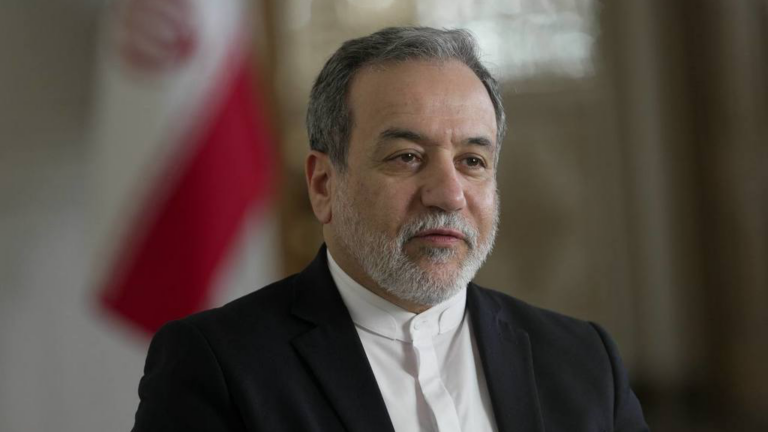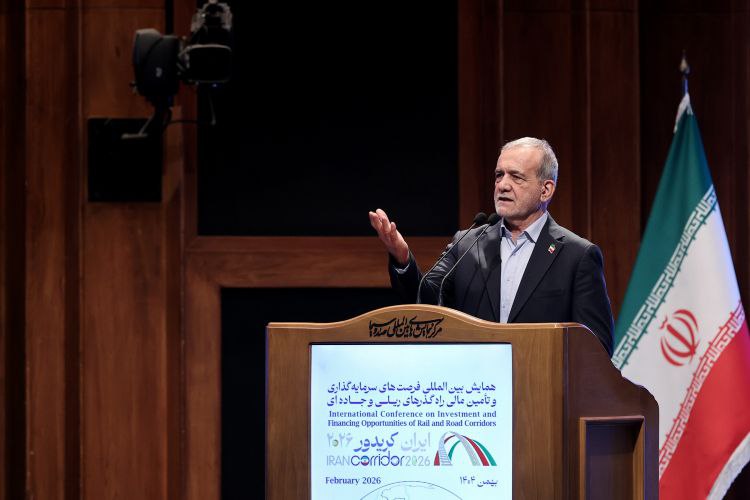
Tehran-IRAF- the International Conference on Investment and Financing Opportunities for Rail and Road Corridors, titled “Iran Corridor 2026,” was held yesterday on 15 February 2026, with the participation of President Mas’oud Pezeshkian and Farzaneh Sadegh, Minister of Roads and Urban Development. The event was hosted by the Islamic Republic of Iran Broadcasting (IRIB) and was widely attended by domestic and international economic stakeholders.
Reviving Ancient Regional Bonds
At the conference, President Pezeshkian spoke about reviving long-standing regional ties.
Reflecting on the historical depth of Iran’s relations with neighboring countries, he described political borders as “glass walls” that have failed to weaken deep cultural and human connections.
He said:
“We do not see neighboring countries merely as neighbors, but as brothers, friends, and relatives. From ethnic ties with the Republic of Azerbaijan to kinship relations with Iraq and the Kurdistan Region, our historical and cultural commonalities with Turkey, Afghanistan, Pakistan, Turkmenistan, and other regional nations date back thousands of years.”
From the Silk Road to Sustainable Peace
In another part of his speech, the President described the development of transport infrastructure as going beyond an economic project, calling it a path toward strengthening collective solidarity and friendship.
He emphasized:
“We are determined to revive these ancient ties. The routes that connect nations are, in fact, roads of peace, knowledge, affection, and capability. By opening these pathways, we can ensure collective security, strengthen our economies, and share our experiences in medicine, industry, and agriculture.”
Pezeshkian also referred to the fragility of geographical borders in the modern communications era, stating:
“Today’s world has become so small that, on a cosmic scale, we are almost insignificant. So why should we not move toward building a bright future for our youth and the next generations in peace and tranquility? No country has benefited from war and violence, and human experience has shown that real progress is achieved through interaction and stability.”
A Middle East Without Intermediaries
Dr. Pezeshkian praised the cooperative approach of regional countries and expressed appreciation for the constructive role of neighboring states in reducing tensions.
He noted: “The valuable efforts of leaders of countries such as Azerbaijan, Turkey, Iraq, Saudi Arabia, Egypt, Qatar, the UAE, Oman, Pakistan, and Afghanistan in the path of dialogue and cooperation reflect the political maturity of the region.”
He added: “Our belief is that the countries of the region are fully capable of sitting around one table and resolving all issues with their own strength and wisdom, without the need for foreign intervention.”
Previously, President Pezeshkian had also emphasized maximizing the border capacities of Sistan and Baluchestan Province to expand economic exchanges with Afghanistan.
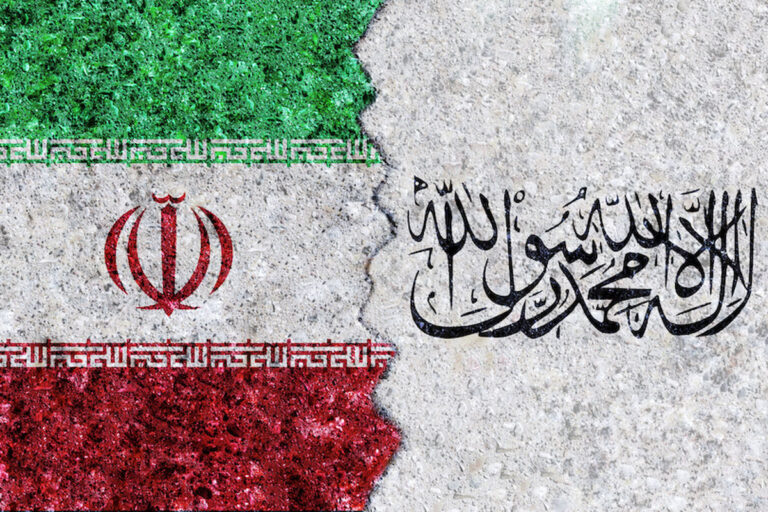
He further highlighted the importance of border, trade, and security cooperation with Afghanistan, describing such efforts as being in the mutual interest of both neighboring countries.