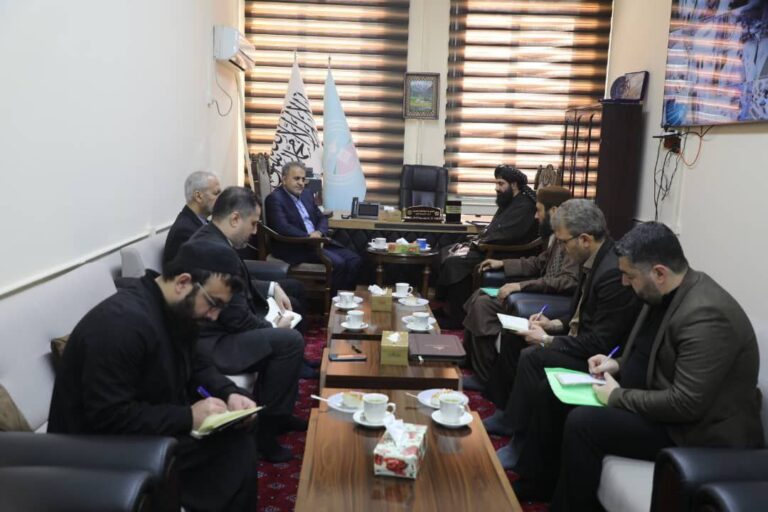
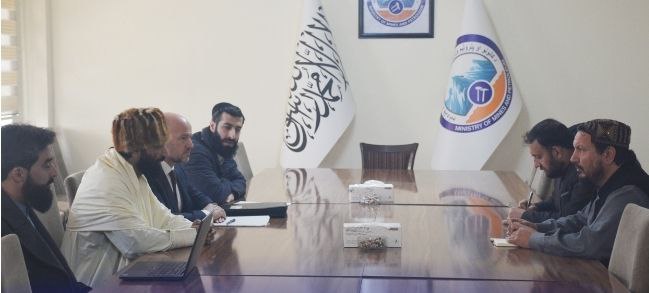
Tehran – IRAF – Referring to recent developments in Afghanistan, Fitrat stated that the country currently needs cooperation and engagement more than ever, and that repeating failed policies of the past is not rational.
He expressed appreciation for the positions of China and Russia opposing the continuation of sanctions and called on Western countries to reconsider their policies toward Afghanistan.
UN Security Council Extends Sanctions
This reaction comes after the United Nations Security Council on Thursday, February 12, extended sanctions related to the Taliban for another year.
The decision was adopted unanimously by the members of the Council and maintains measures such as asset freezes, travel bans, and arms embargoes against the Taliban and individuals associated with the group.
At the same time, the mandate of the Analytical Support and Sanctions Monitoring Team, which is responsible for assessing the implementation of Resolution 1988, was extended for another year.
Earlier, Zabihullah Mujahid, spokesperson for the Taliban, had also described the extension of sanctions as a “repetition of failed policies of the past,” claiming that such approaches had yielded no results over the past four years. He stated that the decision does not align with the “progress achieved” in Afghanistan and urged the international community to pursue a path of “constructive engagement.”
Travel Exemptions for Some Taliban Leaders Not Renewed
As part of the new Security Council decision, travel exemptions previously granted to certain Taliban leaders to attend international meetings were not renewed. This move indicates that Council members have not observed signs of improved behavior by the Taliban and, in some areas, have even seen growing concerns.
Reasons for the Extension of Sanctions, according to the Security Council
According to reports submitted to the Security Council, the continued presence of terrorist groups operating within Afghanistan, extensive restrictions imposed on women and girls , including bans on secondary and higher education , the absence of an inclusive government and the lack of meaningful participation by ethnic groups and political factions in the power structure, as well as the lack of progress in human rights and governance reforms, were among the key factors that persuaded Council members to extend the sanctions.
These reports emphasize that over the past two years, the Taliban have taken no tangible steps toward reforming the governing structure or upholding the fundamental rights of citizens. As a result, the international community remains distrustful of the group’s performance.