Tehran-IRAF-These lawmakers argue that after two decades of military presence in Afghanistan, during which thousands of Afghans were recruited to assist U.S. forces—Washington is now leaving those same individuals in conditions where they face direct threats of detention, torture, and even death.
Critics say this conduct demonstrates that the United States is not honoring its commitments even to its closest partners.
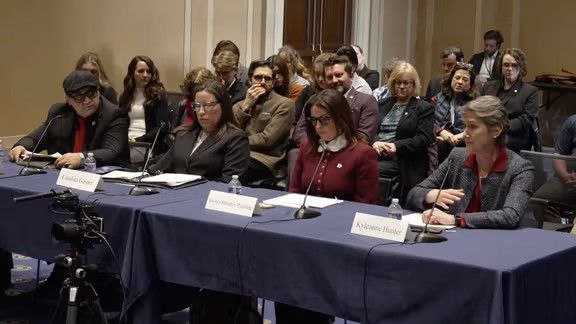
Representative Gregory Meeks, a Democrat and host of a recent House Foreign Affairs Committee session, warned that abandoning these individuals would deal “a serious blow to America’s global credibility.”
Other Democrats stressed that the policies are “not only immoral, but also indicative of a structural disregard for America’s humanitarian responsibilities.”
Transfer of Afghans to Third Countries; A Policy to “Keep Them Off U.S. Soil”
Paul Kapur, a U.S. State Department official, announced that the Trump administration plans to transfer dozens of evacuated Afghans from Qatar and the United Arab Emirates to third countries—primarily in Africa.
Critics have described the move as “informal exile” and part of a broader policy aimed at preventing Afghans from entering U.S. territory.
According to data from Afghan Evac, the relocation process for eligible Afghans has effectively been halted since January 2025. Currently, more than 212,000 people inside Afghanistan and 60,000 others in over 90 countries remain in complete limbo.
Zia Ghafouri, a former interpreter for U.S. Special Forces, described the situation of Afghan partners as “catastrophic,” saying many are at risk of deportation and torture in neighboring countries.
Kaylin Hunter, a U.S. military veteran, said Washington’s commitment to these individuals is “non-negotiable.”
Paying to Return of Stranded Afghans; Critics: “Economic Pressure on Vulnerable People”
While thousands of Afghans have spent years awaiting resettlement at Camp Es Siyliyeh in Qatar, the U.S. State Department has launched a plan offering cash payments in exchange for voluntary return to Afghanistan.
Critics describe the move as an attempt to “shed responsibility” and as “indirect pressure on defenseless individuals.”
According to Reuters, about 150 people have so far accepted the offer.
The payment is set at $4,500 for the principal applicant and $1,200 for each family member.
However, there is no guarantee that these individuals will later be transferred to third countries.
Parallels to Germany’s Controversial Policy
The U.S. initiative has drawn comparisons to a program implemented by Germany in 2025, under which Afghans who withdrew from resettlement programs were offered between €2,500 and €10,000. Only 62 individuals accepted the offer, and human rights organizations described the policy as “pressure on vulnerable individuals.”
Critics argue that the U.S. policy follows a similar path: “Paying money to return people to a situation that America itself helped create.”