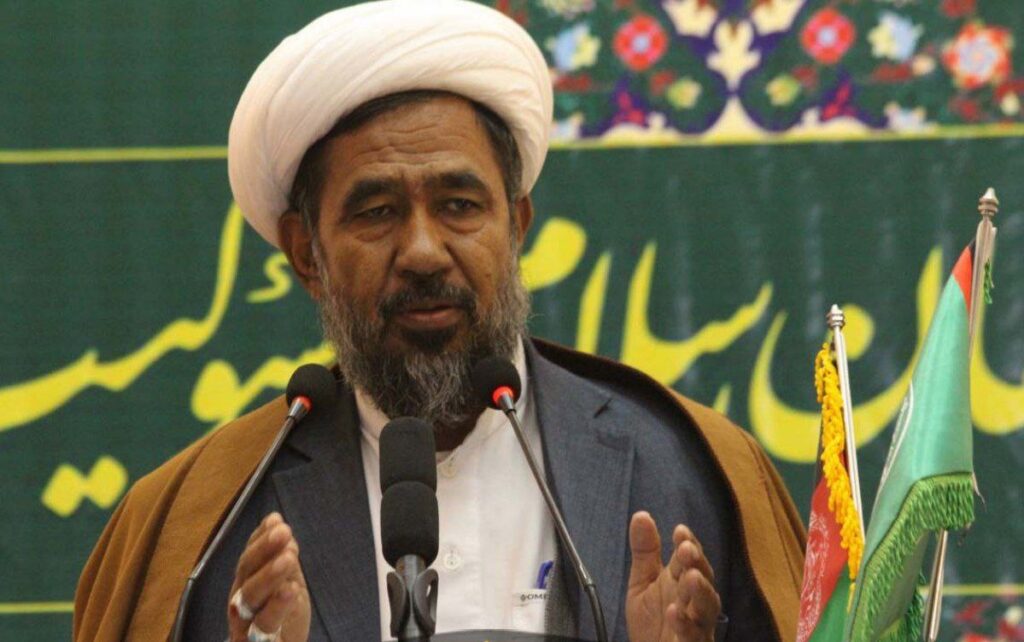
Tehran-IRAF- Hojjatoleslam Sheikh Musa Rezaei, a member of Afghanistan’s Shia Cleric Council and a cultural and religious activist from southwestern Afghanistan, said in an exclusive interview with IRAF that within the framework of the Islamic nation envisioned by Imam Khomeini (RA), there was no distinction between Iranians and Afghans, as all were Muslim brothers and sisters.
He added: “Anyone who follows the path of the Islamic Revolution and its lofty ideals is part of the single Islamic nation. From this perspective, we all belong to one nation.”
The Islamic Revolution Removed Political Borders
Hojjatoleslam Rezaei stated that the victory of the Islamic Revolution had a profound impact on the people of Afghanistan, saying:
“When the Islamic Revolution, under the leadership of Imam Khomeini, triumphed in Iran, it brought with it a wave of pure and revolutionary sentiments.”
He added that following the Revolution’s victory, the people of Afghanistan—who at the time were living under tyrannical rule—gained revolutionary spirit and renewed hope for their future.
Rezaei noted: “As Imam said, our Revolution was an explosion of light. The victory of the Islamic Revolution had a broad impact on the determination and will of the oppressed and revolutionaries around the world.” He emphasized that at the time, there was no distinction between Afghans and Iranians, explaining: “Everyone considered themselves revolutionaries. All felt victorious and regarded themselves as participants in the ocean of the Revolution.”
Victory of Islam Over Tyranny
Referring to the Islamic Revolution as the victory of Islam over disbelief and tyranny, Rezaei said:
“The people of Afghanistan made no distinction between themselves and the people of Iran. They felt equally invested in the Revolution and equally joyful about its victory, because it was Islam—not nationality—that served as the common ground for all.”
The Islamic Republic: A Successful Model of Islamic Governance
In another part of his remarks, Hojjatoleslam Rezaei said that the export of the Revolution began after its victory, adding:
“Following the collapse of the corrupt monarchy in Iran and the triumph of the people, all oppressed nations realized that it was possible to defeat tyranny. This Revolution became an enduring model of Islamic governance in the contemporary era.”
Referring to Imam Khomeini’s well-known statement that ‘Islam has no borders,’ he stressed:
“At that time, anyone who thought and acted in the path of Islam was considered part of the Islamic nation. Where someone came from was meaningless. Everyone identified themselves as part of the nation and was ready to make sacrifices.”
He said that during those revolutionary days, everyone sought to fulfill their duty and contribute to the victory of truth, whether in marches or demonstrations, under the leadership of Imam Khomeini.
Afghan Revolutionaries Carried the Experience Back Home
Rezaei stated that Afghan revolutionaries who participated in the victory of the Islamic Revolution later transferred their experiences to Afghanistan, using them in the struggle against the communist government.
He added :“This revolutionary spirit was evident in both behavior and speech—whether inside Iran or Afghanistan. There were no borders in the geography of the Revolution.”
He noted that nationality was irrelevant among revolutionaries, saying:
“We were all brothers and comrades. With this outlook, the movement of the Afghan people against the Kremlin-backed communist regime took shape and eventually led to victory.”
Afghanistan’s Jihad and Revolution: A Reflection of Iran’s Revolution
Hojjatoleslam Rezaei emphasized that the Islamic Revolution had far-reaching effects on the Afghan people, whether migrants or those living inside Afghanistan.
“After the Revolution’s victory, Afghans sought to connect themselves to this great revolutionary wave and benefit from its unique experience. In fact, the Afghan people’s movement was a reflection of Iran’s Revolution,” he said.
He added that many Afghan revolutionaries were trained in Iran and then returned to Afghanistan to fight against the communist regime, noting that central regions of Afghanistan were among the first to achieve victory by following the Iranian revolutionary model.
“This courage and fearlessness in confronting the greatest eastern superpower stemmed from the revolutionary spirit influenced by Iran,” he said.
The Role of Afghan Migrants Before, During, and After the Revolution
In another part of his remarks, Rezaei highlighted the role of Afghan migrants in the Revolution, saying:
“Migrants not only played a role in the victory of the Islamic Revolution, but also stood alongside the Iranian people in all stages afterward.”
He added that during the eight years of the Sacred Defense, Afghan migrants actively participated, sacrificing more than 3,000 martyrs and thousands of wounded in defense of the Revolution and Islam.
He also referred to their role in defending the shrines of Ahl al-Bayt (AS) in Syria, stating:
“If we had not fought there, we would have had to fight the enemy on the borders of the Islamic Republic.”
Rezaei described the presence of the Fatemiyoun Group within the Axis of Resistance as a turning point in the contemporary history of Afghan migrants in Iran, calling it “a golden page in the shared blood sacrifice of the Afghan and Iranian nations.”
Imam and Leadership Are Red Lines for Migrants
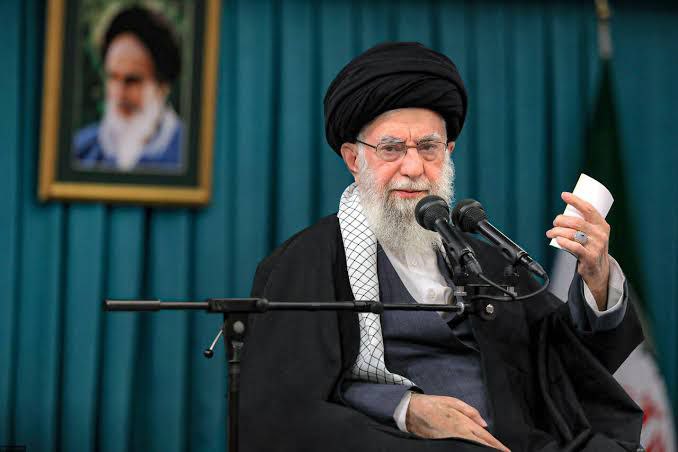
Hojjatoleslam Rezaei emphasized the special status of Imam Khomeini and the Supreme Leader among the Afghan people, particularly Shia communities.
“We first recognize Imam Khomeini and the Supreme Leader as religious authorities, and obedience to a religious authority is obligatory for the Islamic Ummah,” he said.
He added that because they are defenders of the oppressed worldwide, they hold a special place in the hearts of the Afghan people.
Rezaei warned that if the United States or its allies issue threats against Iran or its leadership, the Afghan people will stand firmly alongside the Iranian nation.
“The Afghan people have shown throughout history that they follow the path of Imam and the Leader and have sacrificed everything along this path,” he said.
He concluded that; “This system is paving the way for the government of Imam Mahdi (AJ). Therefore, Imam Khomeini and Imam Khamenei hold a unique position among the Afghan people—especially among Shias. If circumstances arise and the United States commits any miscalculation, the Afghan people are ready to defend the sanctity of the Guardianship and the Supreme Leader.”