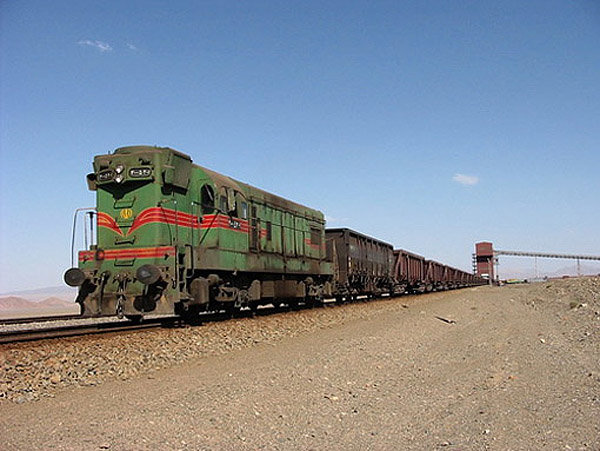
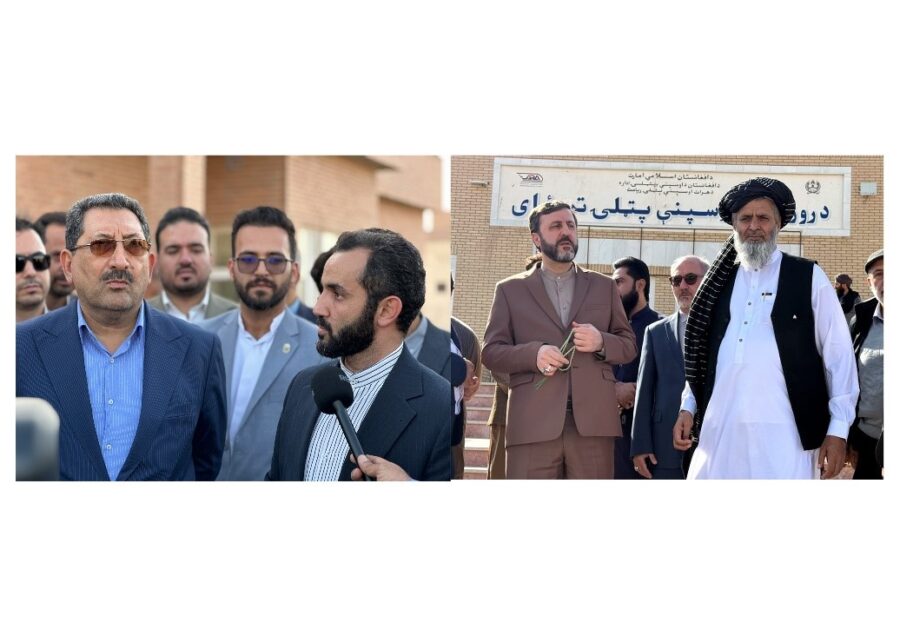
Tehran- IRAF- Reza Shahriari, Executive Deputy of the Afghanistan Railway Development Consortium, discussed recent developments of the Khaf–Herat railway corridor in an interview with ISNA:
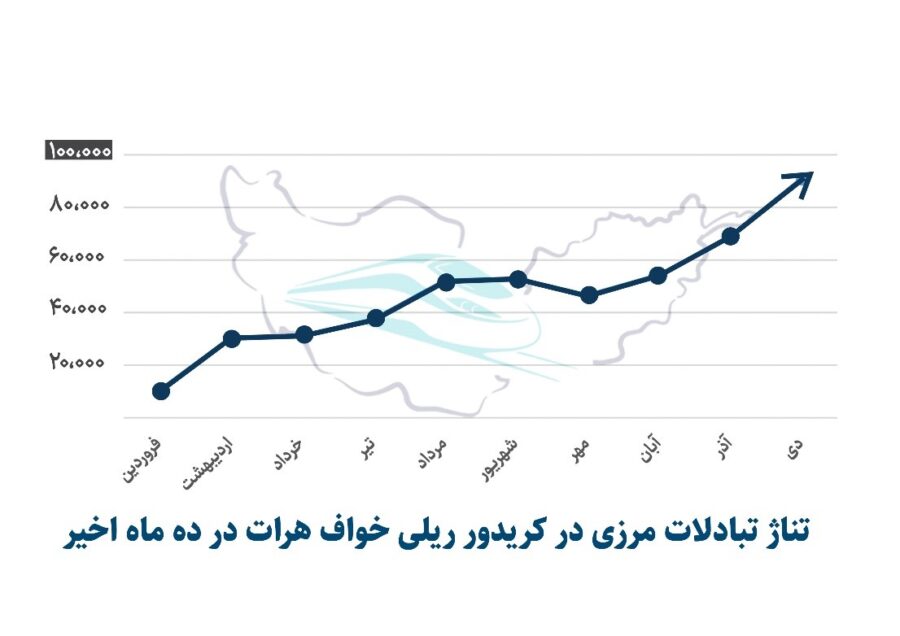
With less than two months remaining until the end of March 2026, the Afghanistan Railway Development Consortium has succeeded in transporting nearly half a million tons of cargo through this corridor, setting an unprecedented record. Compared to the same period last year, this represents an 18-fold increase. The growth trend has been entirely upward, rising from 10,000 tons in the early months of the year to 90,000 tons in the month of January. The consortium aims to reach 100,000 tons per month and surpass one million tons annually by 2026–2027.
One of the key drivers behind this surge has been the shift in Afghanistan–Pakistan trade relations. This change redirected a significant portion of Afghanistan’s export and transit needs—previously routed through Pakistan via the Torkham and Spin Boldak border crossings—toward Iran. As a result, the strategic importance of the Khaf–Herat corridor increased substantially, prompting both Iranian and Afghan sides to make concerted efforts to expand its capacity.
It is worth noting that despite the remarkable growth of the Khaf–Herat railway corridor, the Dogharoun border crossing has not experienced any reduction in capacity or operational performance. The increase in railway traffic reflects the transfer of part of Afghanistan’s trade from Pakistan to Iran; therefore, these two routes are not competitors. Rather, both are reinforcing Iran’s role in border and regional trade.
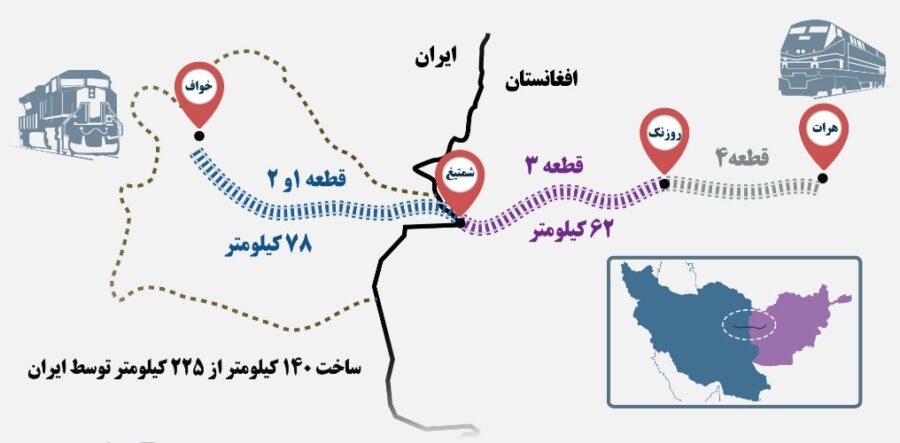
Within Afghanistan, the development of standard railway lines is also being pursued with seriousness. It is expected that by the end of this year, or at the latest by early March–April, the standard railway line will reach Herat (Robat-e Paryan logistics station). However, this is not the end of the route, but rather the beginning of expansion toward the north and Mazar-e-Sharif. The significance of this lies in the fact that the consortium is constructing international-standard railway tracks in Afghanistan—the same standards used in Iran, Turkey, China, and Europe. This choice represents, in the truest sense, the revival of the Silk Road.
Today, the Khaf–Herat corridor is no longer merely a bilateral route; it has evolved into a regional artery, facilitating the transit of goods from countries such as the United States, Europe, Turkey, the United Arab Emirates, China, and Malaysia to Afghanistan and vice versa. This broad geographical reach demonstrates that the corridor is rapidly becoming one of the principal trade axes of the region.
From a macro perspective, Iran’s future economic power is closely tied to the corridors that pass through its territory—whether the East–West corridor, of which Khaf–Herat is a part, or the North–South corridor. Historically and up to the present day, Iran has functioned as an economic crossroads, a position that has consistently attracted the attention—and ambitions—of foreign powers. The railway consortium seeks to play its role effectively in this equation and transform this corridor into one of the main pillars of regional transit.