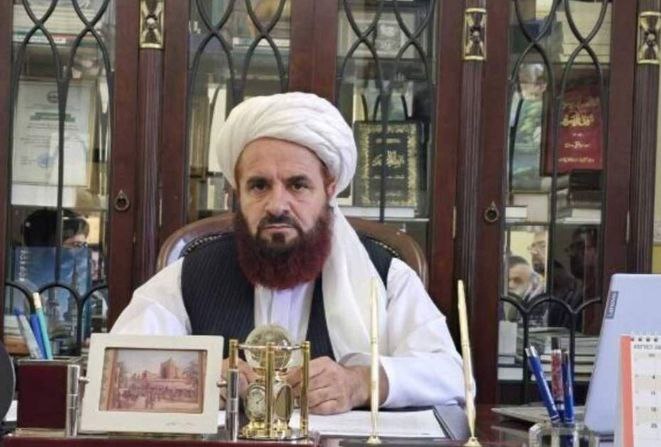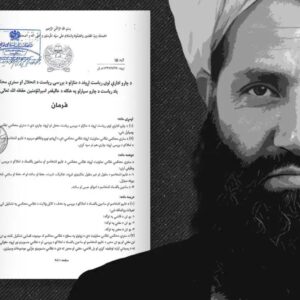
Tehran- IRAF- In the latest incident, Habib Ebadi, a professor at Takhar University, announced in a social media post that he and several of his colleagues had been dismissed from their positions. Following the dismissal of Ebadi and a number of other professors by the Taliban’s Ministry of Higher Education, a new wave of concern has emerged regarding the state of education and academic life in Afghanistan.
In a note published on his Facebook page yesterday, Ebadi attributed his dismissal and that of his colleagues to what he described as the Taliban’s illiteracy and lack of capacity. He wrote: “Knowledge should not be considered a crime, and capacity should not be reduced to silence.”
Ebadi further stated that; under Taliban rule, the competence of professors and students is measured solely by their obedience to government directives, while academic standards and scholarly merit have been predetermined and marginalized. He added that in such circumstances, the status of science and teaching has been pushed to the sidelines, and universities have increasingly turned into arenas for testing political loyalty rather than centers of learning.
These concerns are not limited to Takhar University. Previously, Shafiqullah Shafaq, a former professor at Balkh University, reported the dismissal of at least 33 professors across various provinces, including Balkh, Faryab, Takhar, Baghlan, and Samangan. He warned that the actual number is likely far higher.
These dismissals have largely occurred due to professors’ disagreements with Taliban policies or their opposition to the group’s ideology. As part of this ongoing policy, the Taliban have appointed individuals as university professors primarily based on ideological alignment with the group and the absence of objections to its cultural policies.
Systematic Elimination of Academic Elites
Political and educational analysts believe that the Taliban’s removal of university professors and academic elites is a deliberate attempt to replace expertise with ideology. Under these conditions, universities no longer function as centers for the production of knowledge and scientific research, but rather as tools for promoting the Taliban’s extremist worldview.
Many professors and academic activists argue that this trend will lead to a significant decline in the quality of education in the country and will severely damage Afghanistan’s academic standing at the global level.
Persian Language Suppression and the Issuance of Unsubstantiated Degrees
One of the notable issues within the Taliban’s educational system is the persistent suppression of the Persian (Dari) language, which has become increasingly evident in the group’s educational policies. Persian, a formal and scholarly language of the country and the medium of many scientific and cultural resources, has come under sustained pressure since the Taliban returned to power.
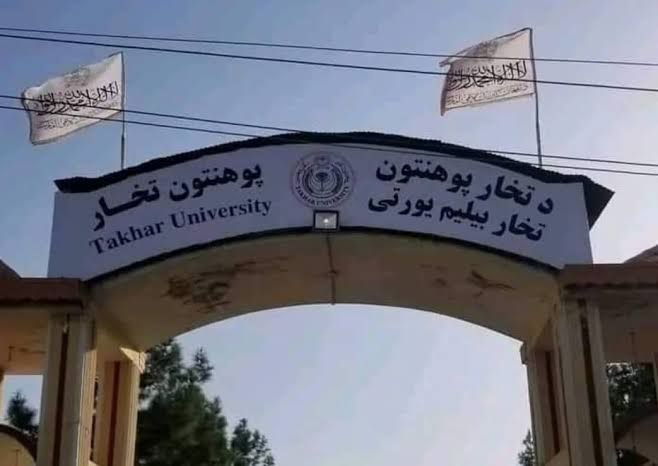
The removal of Persian and Uzbek from university signboards is one recent example of this language-based discrimination that has drawn media attention in recent months. The Taliban are attempting to reduce the presence of Persian in educational institutions and replace it with Pashto. However, experts believe that such policies not only weaken education overall but also negatively affect the cultural and scientific identity of Afghanistan’s people.
At the same time, alongside the dismissal of professors and pressure on the Persian language, there are reports that the Taliban have been granting academic degrees to their members and certain commanders without requiring them to undergo formal academic or educational processes.
This practice has intensified concerns about the quality and credibility of higher education in Afghanistan—particularly given that the current educational system prioritizes ideological indoctrination and political loyalty over scientific training and professional expertise.
The dismissal of university professors and the expansion of language suppression policies within the Taliban’s educational system demonstrate a broader trend that threatens scientific education and academic research in Afghanistan. With the systematic removal of academic elites and the prioritization of political loyalty over competence, the future of universities and scientific institutions in the country appears bleak.
The Taliban’s cultural policies toward universities and academic centers have caused a large segment of professors and the intellectual community to feel increasingly insecure about their future.