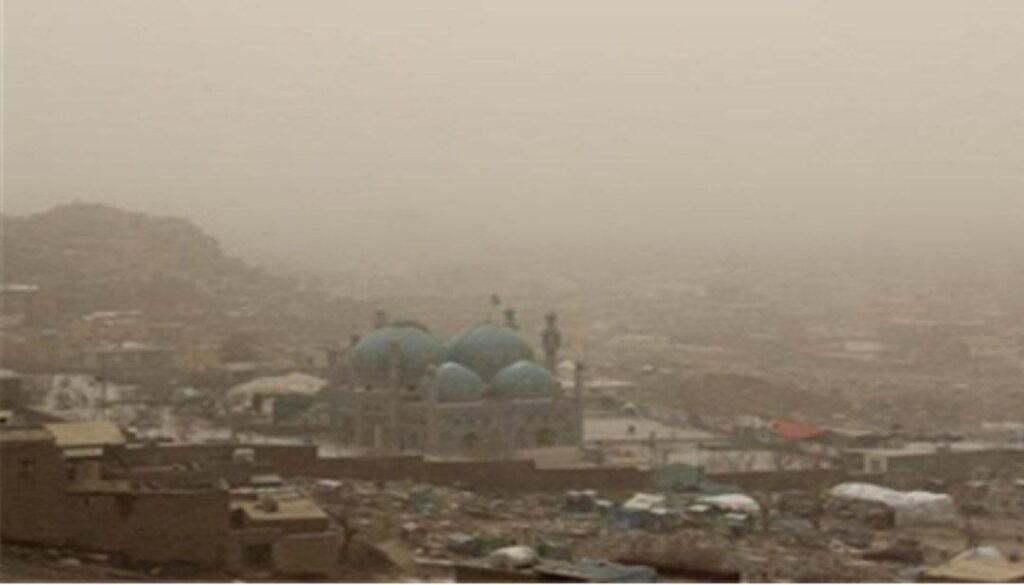
Tehran- IRAF- As cold weather arrives, Kabul turns into a city where breathing becomes difficult. Air pollution intensifies every year with falling temperatures, and this year as well, millions of Kabul residents are facing a silent yet serious crisis—one whose consequences go far beyond daily discomfort and directly affect public health, the environment, and overall quality of life. An examination of Kabul’s air pollution situation shows that this problem is not a recent phenomenon; rather, it is the result of years of poverty, unbalanced urban development, weak management, and the continuation of ineffective environmental and urban policies—a trend that began during the republican era and has persisted to this day.
Factors to Air Pollution in Kabul
Environmental experts believe that a combination of human, economic, and managerial factors has turned Kabul into one of the most polluted capitals in the region. Rapid population growth, lack of green spaces, widespread use of coal, plastic, and low‑quality fuels in homes, bathhouses, and heating systems, the capital’s specific climatic conditions, inadequate urban infrastructure, and widespread poverty have all contributed to severe winter air pollution in Kabul.
In addition to these factors, the absence of effective oversight has allowed non‑standard fuels and inefficient heaters to enter the country with ease—a situation that has continued without serious regulation during both the republican period and the current administration.
According to experts, an unrestrained free market has not only undermined quality standards but has also forced people, due to poverty and lack of alternatives, to rely on fuels that generate the highest levels of pollution. The widespread use of coal during winter is considered one of the main sources of Kabul’s air pollution; coal ash is regarded as even more dangerous than coal itself, as its fine particles easily penetrate the human respiratory system.
The Role of Transportation in Air Pollution
Alongside solid fuel consumption, worn‑out vehicles play a decisive role in intensifying air pollution. According to official statistics from environmental institutions, about 70 percent of Kabul’s air pollution is caused by transportation, while nearly 30 percent results from the use of coal and other solid fuels. It is estimated that more than 1.2 million vehicles are currently operating in Kabul—many of them old, highly polluting, and lacking environmental standards. This situation has not changed significantly in recent years and remains one of the main challenges of urban management in the capital.
Particulate Matter and Hazardous Gases: A Silent Threat to Health
Kabul’s air pollution is not limited to visible smoke; it also includes toxic gases and dangerous particulate matter that pose serious threats to humans, animals, and plants. According to reports by international organizations, Kabul’s air contains significant levels of nitrogen dioxide, sulfuric acid, carbon monoxide, and carbon dioxide. Experts warn that particulate matter not only increases respiratory, cardiovascular, and eye diseases, but also reduces direct sunlight by up to 30 percent and, in combination with sulfur, nitrogen, and carbon compounds, contributes to the formation of acid rain.
Aggravating Factors Behind Air Pollution
Other factors have also intensified this crisis, including decades of war, deforestation, destruction of green spaces, reduced vegetation cover, barren lands, lack of urban culture, and low public awareness. These structural issues have turned air pollution in Kabul into a multidimensional problem that requires comprehensive and long‑term policymaking to resolve.
Government Measures to Reduce Pollution
Government institutions during both the republican era and the Taliban’s second period in power have announced programs aimed at reducing air pollution. These measures include converting some bakeries, hotels, restaurants, and bathhouses to gas, mid‑term plans to fully convert heating systems to gas, paving parts of urban roads, and initiatives to collect hazardous waste. However, many experts believe these efforts have been fragmented, slow, and insufficient, and have failed to produce a noticeable improvement in air quality.
Solutions: A Crisis Beyond Changes in Government
According to analysts, the root of the crisis lies in the absence of coherent economic and environmental policies.
They emphasize that without preventing the import of low‑quality fuels, promoting the use of clean energy such as gas and solar power, banning non‑standard heaters, creating urban green belts, controlling worn‑out vehicles, and raising public awareness, Kabul’s air pollution situation will not improve. Incorporating environmental education into the education system and employing specialized experts are also among the measures that could prove effective in the long term.