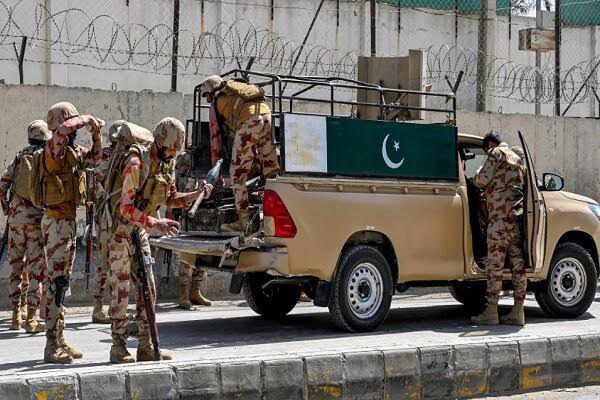
Tehran- IRAF- Several simultaneous attacks took place early Saturday in different cities across Balochistan. Pakistan’s army announced that since January 30, these attacks have left at least 125 people dead.
Among the casualties are 15 security personnel, 18 civilians, and 92-armed attackers.
The attacks occurred in Quetta, Mastung, Nushki, Dalbandin, Kharan, Panjgur, Turbat, Gwadar, and Pasni. Pakistani officials say that women, children, workers, and elderly people are among the civilian victims.
Silence from Kandahar and Rising Political Pressure
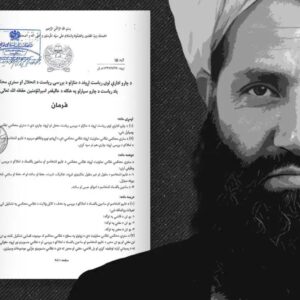
An informed source told IRAF that, despite Islamabad’s expectation of an official condemnation, the Taliban leadership in Kandahar has so far issued no statement regarding the attacks.
Sources close to the Taliban say, the decision-making team in Kandahar has not yet authorized the release of any statement. Given the already tense relations, Pakistan has interpreted this silence as a sign of “non-cooperation.”
Pakistan on Military Alert
Local sources in Spin Boldak, Khost, and Nangarhar told Eeraf that Pakistani forces have been placed on full alert, with increased military movements observed at several border points.
According to these sources, the nature of the deployments and activities suggests that Islamabad does not rule out military action, and tensions along the border have noticeably intensified.
Fresh Accusations from Islamabad
In response to the recent attacks, Mohsin Naqvi, Pakistan’s Interior Minister, accused India of “organizing and supporting” the operations, stating that the attacks were carried out in cooperation with groups that Islamabad labels as terrorist organizations.
Meanwhile, Pakistan’s Permanent Representative to the United Nations stated that the rise in cross-border attacks originating from Afghan territory has become “unbearable” for Islamabad and called on the Taliban to fulfill their security commitments.