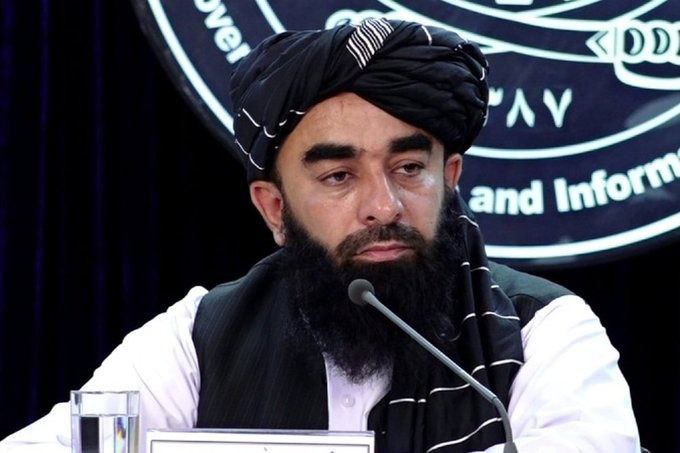
Tehran-IRAF- Mujahed, in response to Guterres’ recent statements, announced that the issues raised by him “relate to Afghanistan’s internal affairs,” and the Taliban believes that the interests of the people are secured within the current system.
He emphasized in a media interview that “the interests of the Afghan people are secure in the current system,” and the Taliban government is working to establish stability and security in the country.
This reaction comes as the UN Secretary-General, in his latest statement, expressed concern about the current political structure of Afghanistan and emphasized that the lack of an inclusive government is the main obstacle to achieving sustainable peace in the country.
Guterres: Excluding ethnic groups and women hinders sustainable peace
Antonio Guterres criticized the single-ethnic power structure in Afghanistan, stating that until all ethnic groups, social groups, and political currents are represented in the power structure, long-term stability cannot be expected.
He warned that excluding broad sections of society from the decision-making process has deepened social divisions and led to a deadlock in the peace process.
Serious concerns about women’s situation
The UN Secretary-General, referring to the widespread restrictions against Afghan women and girls, emphasized that respecting their rights is a “precondition for any meaningful progress” in Afghanistan.
He stated that the international community cannot remain indifferent to the systematic exclusion of women from education, employment, and social participation.
Taliban and international legitimacy challenge
Guterres warned that without addressing the international community’s concerns about human rights, security, and political structure, the Taliban cannot expect to improve relations and open up internationally.
He emphasized that Afghanistan’s path to development and stability lies in “constructive engagement and respect for people’s fundamental rights.”
The Taliban has been accused of forming a single-ethnic government, excluding other ethnic groups from the power structure, widespread human rights violations, and imposing severe restrictions on women and girls since taking control of Kabul and then Afghanistan on August 15, 2021.
These restrictions include banning girls’ secondary and university education, employment restrictions, travel restrictions, and complete exclusion of women from public life.