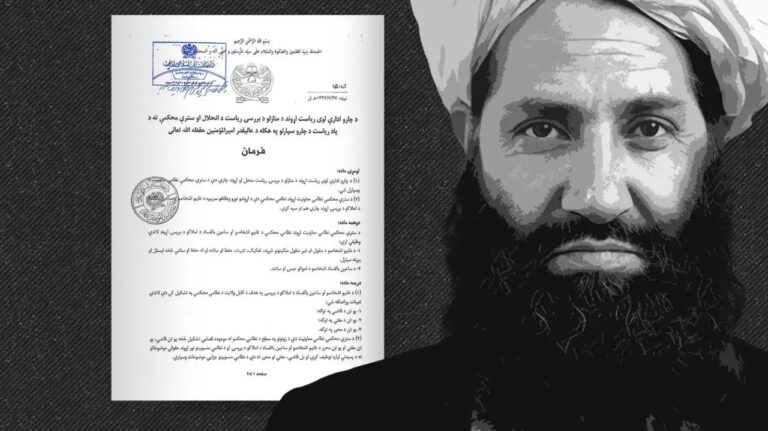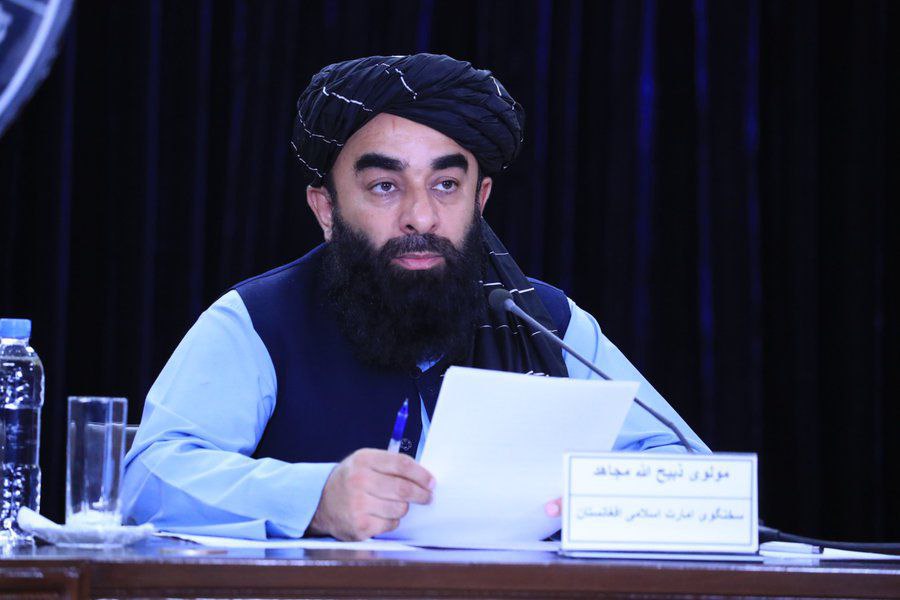
Tehran- IRAF- Mujahid said in an interview with the BBC that this code is not a substitute for a constitution, but has merely been drafted to regulate judicial procedures within the Taliban’s current governing structure.
He also rejected criticisms regarding the existence of “social stratification” or “religious discrimination,” describing them as the result of “misinterpretations” and a lack of information.
Taliban Ministry of Justice: Protest is a Crime
As reactions continued, the Taliban’s Ministry of Justice adopted a hardline stance, declaring that opposition to the group’s laws constitutes a “religious crime.”
The ministry claims that all Taliban regulations are derived from the Qur’an, the Sunnah, and authoritative sources of Hanafi jurisprudence, and that any objection to them is considered “an objection to Sharia.”
In a statement, the ministry said that critics are either “ignorant” or “pretending to be ignorant,” and in both cases must be referred to the Taliban’s judicial institutions.
Human Rights Organizations’ Concerns: Legitimizing Slavery and Erasing Women’s Rights
The publication of this document has triggered a wave of strong reactions from human rights organizations.
In a report, the human rights organization; Rawadari stated that in this code, the Taliban label followers of non‑Hanafi schools of thought as “heretics (mubtadi‘)” and have even legitimized concepts such as slavery and the division of society into social classes.
The organization warned that, under this document, violence against women and children is considered a crime only if it is “severe and physical,” with no reference to psychological or sexual violence or to structural restrictions imposed on them.
The document also describes political opponents of the Taliban as “baghi” (rebels)—a term in traditional jurisprudence that can provide religious justification for killing opponents.
Potential Consequences: Increased Repression and the Elimination of Fair Trial
Legal experts believe that the Taliban’s new code not only falls far short of human rights standards, but could also pave the way for an increase in arbitrary arrests, torture, and the complete elimination of fair judicial processes in Afghanistan.
Some regional analysts have also noted that through this document, the Taliban are attempting to make their legal system “uniform and ideological”—a move that could further deepen religious and social divisions in Afghanistan.