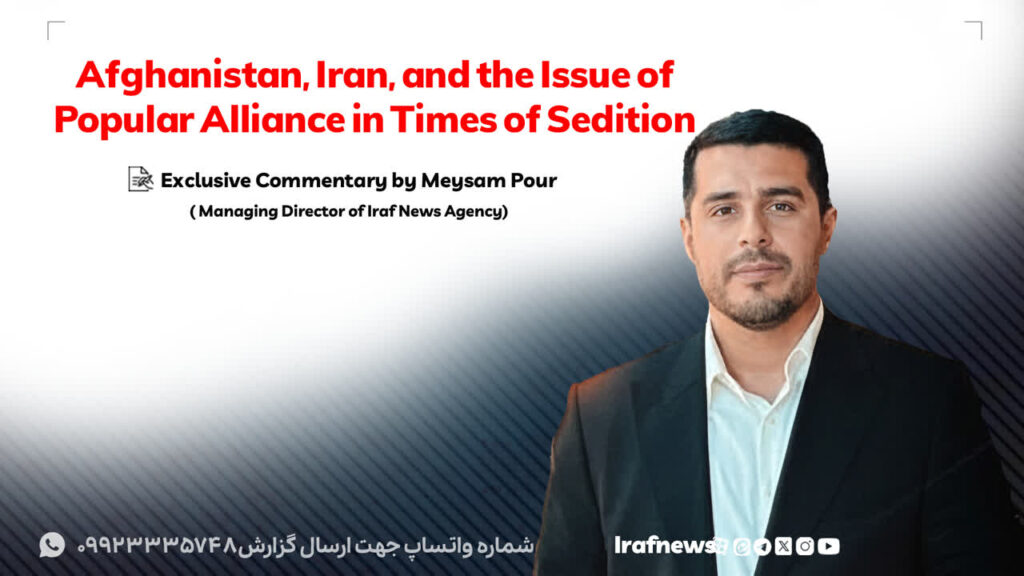
Tehran- IRAF- As direct U.S. threats against Iran escalate and coincide with terrorist actions inside the country, signs of mutual commitment and declarations of solidarity have emerged in several regional countries, particularly Iraq and Lebanon. Afghanistan, up to this point, has also adopted cautious yet relatively aligned positions. Nevertheless, the key question remains: despite their understanding of the nature of this sedition and its long-term consequences for themselves, will the current caretakers of Afghanistan’s governance allow the formation of popular cooperation and grassroots convergence with Iran?
To answer this question, a distinction must be made between “threat perception” and “the model of engagement with social action.”
There is no doubt that Afghanistan’s current rulers are aware of the United States’ destabilization project in the region. The experience of occupation, security maneuvering, and the subsequent abandonment of power has fostered a structural distrust toward Washington. From this perspective, the threat against Iran is not perceived merely as a bilateral crisis, but as part of a chain of regional pressure from which Afghanistan itself will eventually be affected.
However, such an understanding does not necessarily translate into granting permission for cross-border popular mobilization.
In countries such as Iraq and Lebanon, social alliance with Iran takes shape within a context where influential social bases possess the capacity for public and responsible participation in the political sphere. In these societies, organized social action constitutes a natural component of political life and is defined within the balance of power, rather than being viewed as a threat to the essence of sovereignty.
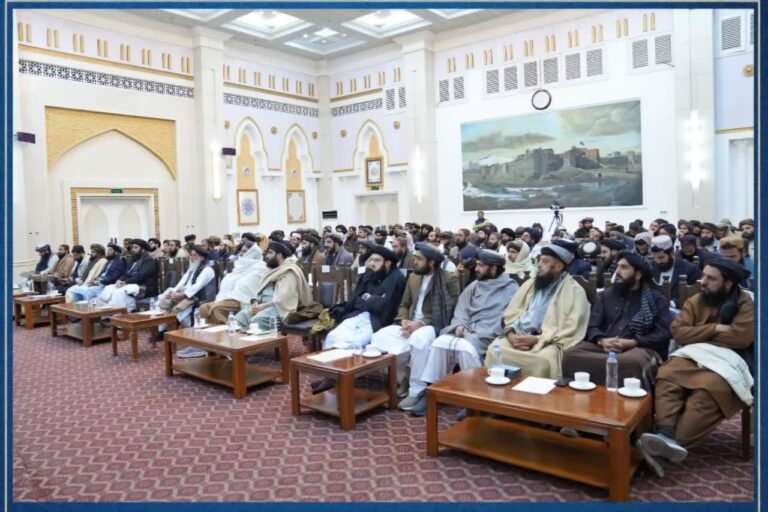
Afghanistan, however, follows a different model of power structure. The historical experience of the Taliban—both in the past and in the current situation—has been based on the maximum concentration of authority and a high level of sensitivity toward any social movement beyond direct control. Within such a framework, even aligned actions, if they become independent and widespread, can potentially turn into a security issue.
From this standpoint, the formation of an overt popular partnership with Iran entails certain considerations for Afghanistan’s rulers, including concerns over opening pathways for other social demands, activating identity-based fault lines, and creating opportunities for intelligence exploitation by external actors.
Accordingly, the most probable path of cooperation between Iran and Afghanistan lies not in popular mobilization or street demonstrations, but rather at a controlled, non-demonstrative, and state-centered.