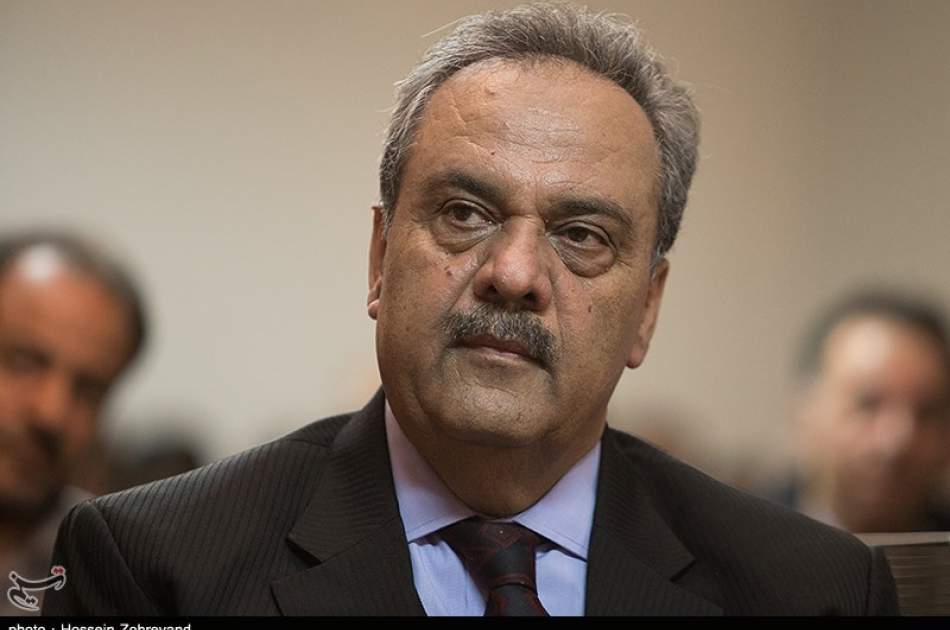
Tehran- IRAF- Asef Durrani, former Special Representative of Pakistan for Afghanistan Affairs, said last night on January 22, in reaction to the announcement of the Taliban courts’ judicial code, in a post on X, that the Taliban regime’s introduction of a penal law to administer the criminal justice system has raised serious concerns both inside and outside Afghanistan.
He emphasized that this judicial code is not only alarming but also poses the risk of dragging Afghan society back into a dark past. According to Durrani, it is unbelievable that under such a system, religious scholars would be immune from legal prosecution, the law would fail to encompass the country’s elites, while at the same time groups such as “slaves” would be subjected solely to punishment.
Durrani wrote on his X account: “We must not forget that we are talking about a primitive society, and the Taliban are a reflection of this very reality.”
He added that it is still unclear how Afghan society will respond to the Taliban’s orders and policies.
This comes as the Taliban courts’ judicial code has triggered sharp national and international reactions, with critics describing it as contrary to Islamic values, human rights, and internationally accepted standards of justice.
Rahmatollah Nabil, former head of Afghanistan’s National Directorate of Security, also criticized the Taliban courts’ penal code, stating that the experience of many nations shows religion remains respected only when it is not turned into an instrument of political power.
Nabil added that the politicization of religion and rigid, instrumental interpretations create no future for the country. He said the time has now come for extremism to be consigned to the past and for religion to be freed from the captivity of violent and politicized interpretations.
Meanwhile, Fazl Ahmad Manawi, former Minister of Justice of Afghanistan, described the judicial code as a disgrace, stating that the Taliban’s code presents Islam, Sharia, and Afghanistan to global public opinion in a frivolous and ridiculing manner.
The Jamiat‑e Islami Afghanistan Party, in a statement, also condemned the Taliban’s code, referring to it as a “deviation document,” and said that by institutional politicization of religion and rigid, instrumental interpretations create no future for the country. He said the time has now come for extremism to be consigned to the past and for religion to be freed from the captivity of violent and politicized interpretations.
On the other hand, Foozieh Koofi, a women’s rights activist and former member of the Afghan parliament, said that the Taliban are seeking to establish a closed, tribal form of authoritarianism. She warned about the implementation of this code and the fate of Afghan women.
Women’s rights activists have described the code as contrary to international standards and say it violates women’s rights.
The Afghanistan Freedom Front also described the Taliban’s code as a clear move to institutionalize discrimination and repression, saying it strips people of human dignity and suppresses society. This group has condemned the code.
The High Council of National Resistance for the Salvation of Afghanistan also reacted to the code, saying it would return Afghanistan to the Middle Ages. In its statement, the council said the Taliban’s move to implement the penal code of the judicial courts is a deliberate attempt to distort the image of Islam in global public opinion.
Meanwhile, the Women’s Movement for Peace and Freedom, condemning the code, said that the Taliban courts’ penal code will legalize and institutionalize violence in Afghanistan. The movement called on the people of Afghanistan not to allow the Taliban to normalize their actions under any pretext and turn them into law.
Continuing the reactions to the Taliban’s penal code, Richard Bennett, the United Nations Special Rapporteur on Human Rights, expressed concern over the implementation of the document, saying he is reviewing it from the perspectives of human rights and Sharia.
He wrote on his X account: “The implications of this code for the people of Afghanistan are deeply concerning.” Bennett added that he would release a detailed statement on the document at an appropriate time.