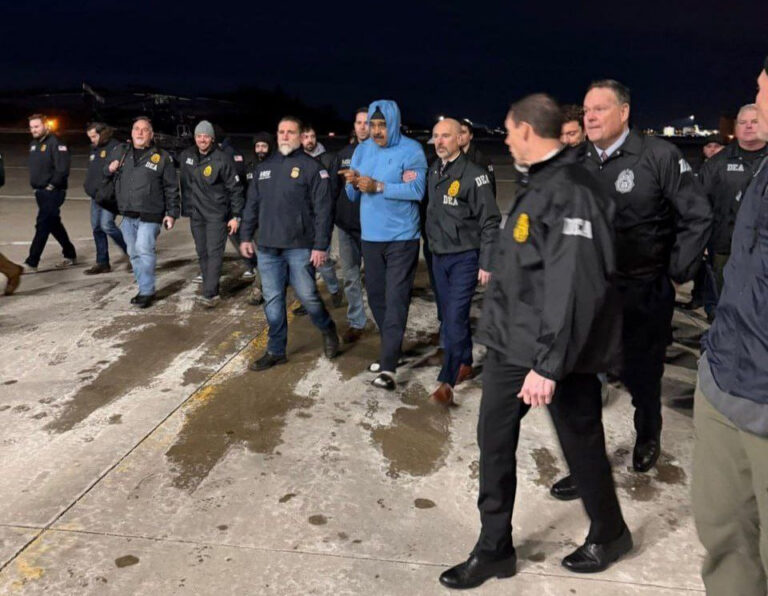
According to Knack, images emerging from Caracas in recent days, from American helicopters flying over the capital to nighttime explosions and the arrest of Nicolás Maduro and his wife—shocked many observers. The European media outlet notes that Trump has described the operation as a “victory against drug trafficking,” but for those familiar with U.S. interventions in Latin America, these scenes are above all reminiscent of repeating old patterns.
A Promise Broken
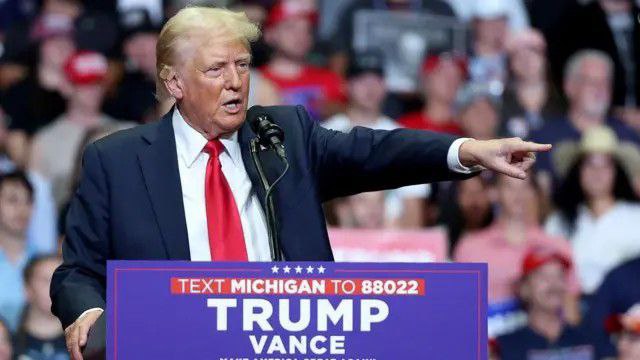
Knack recalls that Trump came to power in 2016 pledging to end “endless wars,” stop “foreign adventurism,” and oppose “regime change” in countries like Iraq and Afghanistan. These slogans, the publication notes, were appealing and hopeful to millions of Americans weary of the costs of foreign wars. Yet, the Venezuela operation, according to Knack, has rendered those promises completely meaningless.
The outlet writes: “How can one describe an attack on a sovereign country, the arrest of its sitting president, and Washington’s declaration of administration over the country as anything other than regime change?”
Official Justifications and Hidden Motives
The U.S. government claims Maduro heads a drug trafficking network and that Venezuela plays a role in fentanyl transit. However, Knack, citing experts, emphasizes that Venezuela produces almost no fentanyl, and only a small portion of cocaine passes through Venezuelan routes.
The publication argues that the primary motivation lies in oil: Venezuela holds the world’s largest oil reserves and exports a significant portion to China and Russia. A Republican representative told Knack: “Venezuela could represent a massive opportunity for American companies.”
Repeating a Historical Pattern
Knack traces the history of U.S. interventions in the region—from the 1954 coup in Guatemala to the 1973 overthrow of Chile’s government, support for the Contras in Nicaragua, and the 1989 invasion of Panama—emphasizing that the recent operation fits within the same framework. The publication cites a Harvard study showing that between 1898 and 1994, the U.S. intervened over 40 times in regime changes across Latin America.
“Patterns are always the same: first, an ethical justification is presented, but the true motives are economic and geopolitical.”
Paradox at the Heart of Trump’s Doctrine
Knack notes that Trump built his political empire on the promise of ending foreign interventions, yet he now carries out the very actions he once criticized. The publication emphasizes that the Venezuela operation “differs in no way from the regime-change model in Iraq,” showing that the so-called “America First” doctrine is in practice a “new form of interventionism.”
Divisions Among Republicans
According to Knack, the Venezuela operation triggered varied reactions within Trump’s so-called “mega” faction. Some Republican figures called it a “betrayal of campaign promises,” with one saying: “This is not what we voted for.” Nonetheless, a significant portion of party leadership supported the administration’s action. Knack writes that despite dissatisfaction among some Trump-aligned media figures, he managed to secure support from most of the party structure.
Public Opinion and Domestic Concerns
The publication cites a CBS poll showing that 70 percent of Americans opposed military action in Venezuela. Knack adds that even within Trump’s base, discontent is growing: “When you promise not to spend taxpayers’ dollars on distant wars, but then bomb Venezuela, you violate voter trust.”
Unanswered Questions About the Future
Knack notes that despite the operation’s initial success, important questions remain: Who will govern Venezuela? What will be the cost of U.S. involvement? And is there a risk of becoming embroiled in a long-term conflict similar to Iraq or Afghanistan? The outlet warns that history shows “initial rapid victories” do not necessarily lead to long-term stability.
The Belgian publication concludes: “What happened in Venezuela is not a sign of isolationism but a return to the old imperialism—imperialism with a new face, entirely at odds with Trump’s campaign promises.”