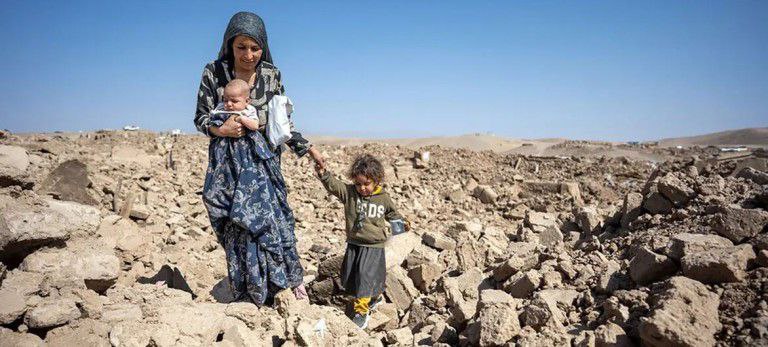
According to Iraf News Agency, citing The European Sting, the United Nations and its humanitarian partners have warned that Afghanistan will remain one of the world’s largest and most complex humanitarian crises in 2026.
In a newly issued appeal seeking $1.7 billion in funding, the agencies aim to provide life-saving assistance to nearly 18 million people across the country. Nearly half the population in need of urgent aid.
45% of the population needs immediate help
The report says; years of conflict, worsening food insecurity, repeated natural disasters, the impacts of climate change and a mass return of displaced people have left 21.9 million Afghans — about 45% of the population — in need of humanitarian assistance next year.
Of those, 17.5 million people have been prioritized for immediate support, more than three-quarters of them women and children, it said.
Food and health crises deepen ahead of winter
The European Sting reported that food security and healthcare remain the most urgent needs in Afghanistan.
Predictions indicate that during the 2025–2026 lean season, more than one-third of the population will face crisis-level food insecurity or worse, forcing many households to sell essential assets to secure basic daily food.
Severe drought has destroyed nearly 80% of rain-fed wheat crops in some areas, leaving many families with no food reserves as winter approaches.
Health conditions are also deteriorating, with 25% of households lacking access to safe drinking water, while 37% do not have soap to meet basic hygiene needs, the report said.
Mass migrant returns putting pressure on counties
The outlet said Afghanistan is now experiencing one of the world’s largest return movements of migrants.
Around five million people have returned to the country this year alone, including more than 2.6 million from Iran and Pakistan, many forced back due to tighter immigration policies and reduced protection measures.
Most returnees have gone back to districts already struggling with poverty, drought, food insecurity and limited basic services, placing additional strain on fragile local capacities.
Lower funding, broader goal
Despite shrinking resources, humanitarian partners plan to expand aid coverage in 2026, The European Sting reported.
The funding requirement has been set at $1.71 billion, 29% lower than in 2025, yet agencies aim to assist four million more people than last year.
The United Nations said the shift reflects “more targeted prioritization, increased efficiency and a move toward lower-cost and more sustainable interventions.”