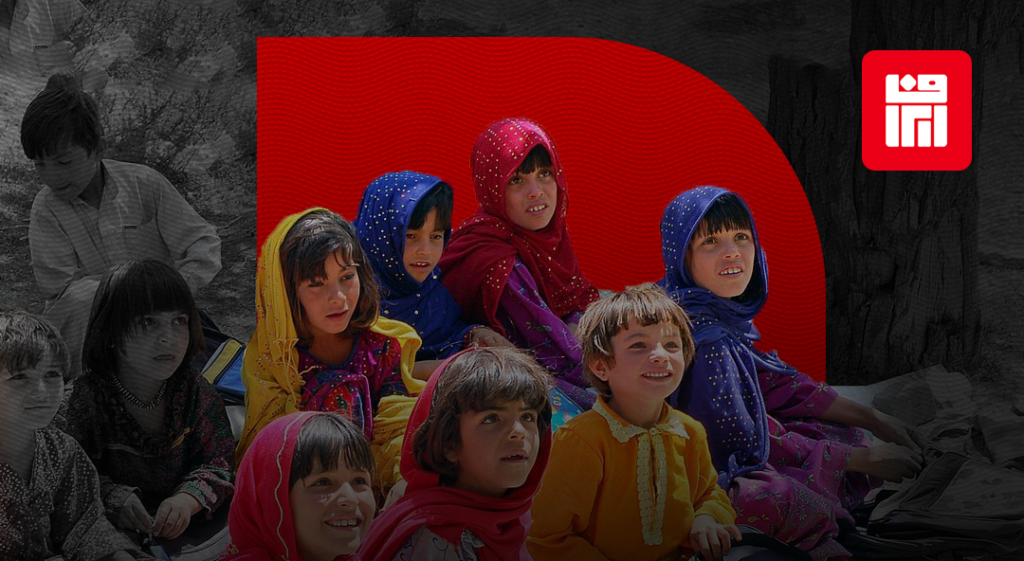
According to IRAF News Agency, education in Afghanistan has always reflected the political, intellectual, and managerial state of governance. Every change in power has directly or indirectly affected the course of education, leaving it suspended between the poles of tradition and modernity. These continuous fluctuations have not only prevented the formation of a stable and purposeful education system, but also left deep, long-term effects on the country’s human capital, effects that are more visible today than ever.
Over recent decades, Afghanistan has experienced an unstable and fluctuating journey toward a semi-modern education system, one that at times approached educational ideals but was diverted under political, social, and managerial pressures. When rulers embraced modern educational approaches, there were quantitative and qualitative improvements in teachers, increased material and moral support, and better educational outputs, generating relative progress within the education system. Conversely, whenever governance emphasized rigid traditional approaches, a large portion of these educational achievements faced serious challenges.
Such approaches have weakened school-centered and critical thinking education, and despite limited internal and external resistance, efforts to compensate for the damage to the education system have taken years. Simultaneously, mismanaged educational administrations, often aligned with changing governments, have worsened instability and triggered recurring educational crises. Education is a gradual, time-intensive process that requires decades or even centuries of planning. Short-term educational policies have inflicted the greatest damage on students, teachers, and educational institutions, eroding the continuity required for intellectual and skill development.
The widening gap between what is taught in textbooks and schools and the evolving realities of society and the world has created profound generational gaps in the education system. As a result, Afghanistan today faces a serious shortage of skilled and competent managers suited to the country’s real needs. In many cases, either graduates of a flawed education system have taken the reins, or those educated abroad, despite having academic knowledge, enter management without a deep understanding of Afghanistan’s local realities.
Moreover, the lack of clear and purposeful direction in educational content has created a sense of intellectual and educational disorientation among students, teachers, and educational institutions—a situation that requires sustainable policies and long-term planning, rather than short-term or hasty decisions. In such circumstances, skills training and the development of critical thinking remain missing links in Afghanistan’s education system, a challenge that undermines the foundations of social and economic development over time.
Focusing merely on maintaining the appearance of the education system without attention to its depth and quality has intensified the problem, making it difficult for many educational experts to draw authorities’ attention to these issues. In addition to inadequate content, the shortage of educational facilities, stemming from flawed policies, has left generations of students extremely vulnerable, and pushed the educational standards of institutions to their lowest levels. Consequently, the current trajectory of education casts doubts on the prospects for structural and content-based reform.
The overall assessment shows that Afghanistan’s education crisis is not simply a result of resource shortages or security conditions, but rather the product of a lack of strategic and long-term vision for education. Without a consensus on the nature, purpose, and function of education, any superficial or cosmetic reforms are doomed to fail.
Rebuilding the education system requires moving away from ideological and short-term approaches toward scientifically grounded, locally informed, and time-intensive policies, focusing on skills development, critical thinking, and aligning education with Afghanistan’s societal realities. Otherwise, the education system will continue to reproduce itself in a flawed cycle, perpetuating crises in management, expertise, and development across Afghanistan.